Handheld Vacuum Buying Guide: When Portable Makes Sense
Handheld vacuums, compact cordless or corded units typically weighing 1–1.5 kg, make sense for quick, localized cleaning of cars, stairs, upholstery, and small spills where pulling out a full-size vacuum is impractical.
Portable vacuums solve a specific frustration. The mess is small, the location is awkward, and your upright is three rooms away. For car seats caked with kids' snacks, carpeted stairs covered in pet hair, or a kitchen counter dusted with crumbs after dinner, a handheld gets there faster than any full-size machine. Most buyers in this category are using one as a second tool alongside a larger vacuum, not as their only cleaner, and that's the right way to think about it. A studio apartment or dorm room is the exception, where a high-end handheld can cover the whole space.
Runtime is where most buyers get burned. Manufacturers measure battery life on the lowest power setting, so a 40-minute advertised runtime translates to roughly 20 minutes on medium and about 7 minutes on maximum suction, according to testing data from Vacuum Wars. That gap matters more than almost any other spec on the box.
Pet owners, parents of young children, and renters will find the most useful part of this guide is the scenario-by-scenario breakdown, matching suction thresholds, runtime, and attachments to the exact job they're buying for, so there's no guesswork at checkout.
What is a handheld vacuum and who actually needs one?
A handheld vacuum is a compact, one-handed cleaning unit, typically cordless, built for targeted spot cleaning rather than sweeping an entire floor. Car seats, upholstery, stairs, countertops, and small spills are its territory. Pulling out a full-size machine for a handful of cereal under the kitchen table makes no sense. This does.
Three categories get lumped together under "portable vacuum," and they're different tools. A true handheld vacuum is a standalone unit you hold in one hand, usually with a short nozzle and a small dustbin. A cordless stick vacuum with a detachable handheld mode is a two-in-one. It cleans floors as a stick, then separates into a handheld for above-floor jobs, though the handheld portion is often heavier and more awkward to use one-handed than a dedicated unit. Then there's the mini USB desktop vacuum, a tiny gadget designed for keyboard crumbs and desk dust, running off USB power with minimal suction. That last category is mostly novelty. It won't handle anything beyond the lightest surface dust.
Each of these three categories matters to identify before you spend a dollar. A cordless stick that converts to handheld might be all you need, or it might be too heavy and bulky to use comfortably in a car or on stairs. A dedicated handheld solves that, but it adds another device to store and charge.
Dedicated handheld buyers fall into a few clear groups. Car owners without a garage outlet need something battery-powered that travels with them. Pet owners targeting couch cushions and carpeted stairs need a unit light enough to use one-handed overhead. Renters in small apartments want something that stores in a cabinet without taking up half the shelf. Parents cleaning up after kids need a grab-and-go tool that's ready in seconds, not something that requires uncoiling a cord. And anyone with limited grip strength or joint pain benefits from a lighter secondary tool that doesn't require maneuvering a heavy upright around furniture.
A handheld is a second vacuum for most of these buyers, not the only one. The exception is a compact living space like a studio or dorm room, where the square footage is small enough that a high-end handheld or a cordless stick vacuum designed for studio apartments can realistically cover everything. In a larger home, a handheld fills the gaps a full-size machine can't reach conveniently. It doesn't replace it.
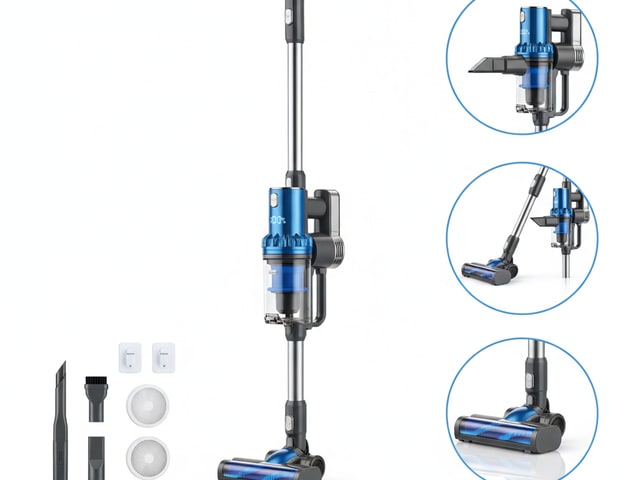
Handheld vs stick vs upright: when does portable make more sense?
Each vacuum format wins in a different situation, and the decision comes down to five things. How much floor you're covering, how much storage space you have, how long you need to run it, how heavy it feels in your hand, and how much suction the job actually requires all factor in. The table below maps those criteria across the three main formats so you can see at a glance where a handheld earns its place, and where it doesn't.
Criterion | Handheld Vacuum | Cordless Stick Vacuum | Upright / Canister Vacuum |
|---|---|---|---|
Typical cleaning area | Spot cleaning: car seats, stairs, upholstery, countertops, workbenches, RVs | Small-to-medium rooms. Whole-floor coverage in apartments and mid-size homes | Large homes. Extended whole-floor sessions over 30 minutes |
Storage footprint | Smallest, fits in a drawer, glove box, or cabinet shelf | Medium, needs wall mount or closet space for the wand and charging dock | Largest, requires dedicated closet or utility space |
Weight during use | 1.0–1.5 kg. One-handed use on stairs and overhead | Two-handed for floors, awkward one-handed in cars or on furniture | Pushed on the floor, not lifted. Impractical for above-floor jobs |
Battery runtime | 9–25 minutes (Consumer Reports lab range). Enough for spot jobs, not whole rooms | Covers most apartments in one charge | Unlimited (corded). No runtime concern for extended sessions |
Suction range | 3,000–45,000 Pa depending on model. Adequate for crumbs, pet hair, and sand at mid-to-high end | Mid-to-high suction. Handles most floor types including low-pile carpet | Highest sustained suction. Best for deep carpet cleaning and high-traffic areas |
Handheld vacuums are the clear choice for car interiors, stairs, upholstery, countertops, and any job where you need to clean one-handed in a tight space. A cordless stick vacuum covers whole-room floors in smaller homes and can double as a handheld in a pinch. An upright or canister is the right tool when you're cleaning a large home, running the vacuum for more than 30 minutes, or need maximum suction for deep carpet work. If you want to dig into how those two formats compare for pet hair specifically, the upright vs stick vacuum for pet hair comparison covers that in detail.
Do you need a separate handheld if your stick converts?
Cordless stick vacuums with detachable handheld modes look like a two-for-one deal, but the detachable portion is often heavier and more front-weighted than a dedicated unit. That extra weight is fine for a few seconds of spot cleaning, but tiring fast when you're working through a car interior or cleaning carpeted stairs one-handed for 10 minutes straight.
A simple test tells you whether your stick's handheld mode is good enough. Detach the handheld portion and hold it at arm's length for 60 seconds while pretending to vacuum a car seat. If your wrist starts to strain, the weight distribution is wrong for that job. Dedicated handheld vacuums are engineered to balance in one hand, with the motor and dustbin positioned closer to the grip, which is why they feel lighter in use even when the spec sheet shows a similar weight.
Car cleaning, stairs, and upholstery are the use cases where a second dedicated unit makes sense, especially if you're doing those jobs regularly. Occasional countertop sweeps don't justify a second device, and the detachable mode on your stick is probably enough. For anyone who finds their current stick too heavy to maneuver comfortably, the lightweight vacuums under 8 pounds guide covers formats that are easier to handle across all these tasks.
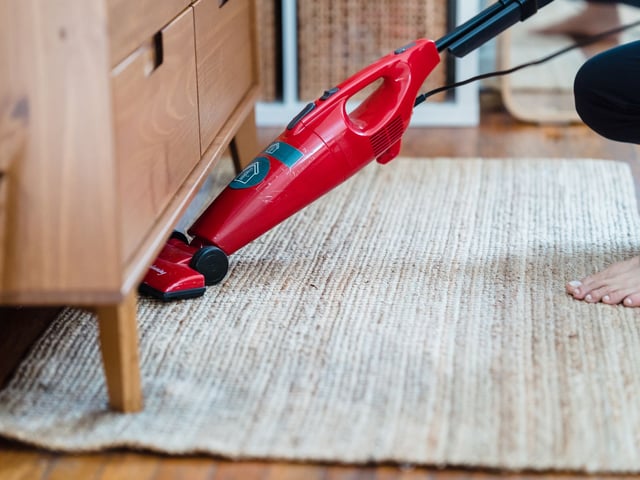
What specs actually matter? Suction, runtime, and weight explained
Air Watts, Pascals, and CFM are the three numbers that dominate handheld vacuum spec sheets, and they measure different things, so you can't swap them directly when comparing models.
Each unit captures something different about cleaning performance. Air Watts (AW) combine airflow and suction pressure into a single figure, making them the most useful all-around measure of real cleaning ability. Pascals (Pa or kPa) measure sealed suction force, how hard the motor pulls against a blocked nozzle, which is useful but doesn't always translate to better pickup on open surfaces. CFM, or cubic feet per minute, measures the volume of air moving through the machine. High CFM helps sweep up light debris quickly but tells you less about pulling embedded dirt out of upholstery. For a deeper breakdown of how these units relate to each other, the Vacuum Suction Power Guide: What Do CFM and Airwatts Actually Mean? covers the math in plain language.
Suction thresholds by task are where this gets practical. Light dust and crumbs, countertops, keyboard debris, dry cereal, need roughly 3,000–5,000 Pa or 60–100 AW. Pet hair on upholstery and sand in car mats require at least 6,000 Pa or 80–100 AW to pull fibers and grit out of fabric weave. Heavy-duty tasks, like embedded dirt in low-pile carpet or heavy debris in a car trunk, need more than 10,000 Pa or 150 AW. At that point, you're looking at high-end cordless handhelds or hybrid stick-handheld units rather than compact grab-and-go models.
Advertised runtime vs actual runtime: what to expect
Manufacturer runtime claims are measured on the lowest power setting, which is rarely the setting you'll actually use. Vacuum Wars, an independent testing publication that evaluates cordless vacuums across multiple power modes, found that a 40-minute advertised runtime translates to roughly 20 minutes on medium power and about 7 minutes on maximum suction. Consumer Reports, which lab-tests handhelds under controlled conditions, found real runtimes ranging from 9 to 25 minutes across the handhelds in their test pool. Wirecutter measured one of their top-rated picks at 18 minutes of actual runtime, and that was considered a strong result.
Halve the advertised runtime to estimate medium-power use. If you're cleaning a complete car interior, you need at least 20 real minutes, which means looking for a model claiming 40 minutes or more. For quick countertop sweeps or a single flight of stairs, 15 minutes of real runtime is enough.
Dreame Technology's buying guide frames runtime in tiers that are useful as a benchmark even accounting for the gap between claims and reality: starter models advertise under 40 minutes, mid-tier units around 60 minutes, and high-end models 90 minutes or more. Apply the halving rule to each tier and you get a realistic sense of what you're actually buying.
Charging time matters too. Wirecutter noted that many handhelds take 3–4 hours to recharge, while faster models top up in under an hour. If you grab the vacuum, drain it cleaning the car, and want it ready again the same day, charge time is as important as runtime.
Weight and ergonomics: where the numbers get physical
Weight thresholds for handhelds aren't arbitrary. For sessions lasting more than 15 minutes, a complete car interior, a set of carpeted stairs, a large sectional, aim for a unit in the 1.0–1.4 kg range. TechRadar sets under 4 lbs as a general ceiling for comfortable one-handed use, and Good Housekeeping UK's tested recommendations land in the 1–1.5 kg range for the same reason: above that, arm fatigue sets in faster than most people expect.
Balance matters as much as raw weight. Front-heavy designs, where the motor sits far ahead of the grip, create a lever effect that strains your wrist on stairs and overhead surfaces. A well-balanced handheld feels lighter in use than its spec sheet suggests, while a front-heavy one at the same weight will tire you out in half the time. If you can hold the unit before buying, grip it at arm's length and tilt it toward a car seat angle. You'll feel the difference immediately.
Brushless motors, now standard in mid-range and higher handhelds, extract roughly 10–15% more suction per watt than older brushed designs. Paired with lithium-ion batteries, which replaced heavier nickel-cadmium and nickel-metal hydride cells in most current models, they let manufacturers hit useful suction levels in lighter, more compact housings. That combination is why newer handhelds at 1.2 kg can outperform older units that weighed nearly twice as much.
Which tasks match which specs? A scenario-based guide
The right handheld vacuum spec depends on what you're cleaning. A unit that handles kitchen crumbs perfectly will frustrate you in a car, and a car-cleaning spec is overkill for a countertop sweep. The table below maps four common scenarios to the numbers that actually matter, so you can match your use case to a realistic budget before you buy.
Scenario | Recommended Suction | Real Runtime Needed | Key Attachments |
|---|---|---|---|
Car interior (weekly cleaning) | ≥6,000 Pa or ≥80 AW | 20–30 min | Crevice tool, brush attachment, USB-C charging |
Stairs and upholstery (pet owners) | ≥80–100 AW | 20–25 min | Motorized mini pet brush, dustbin ≥0.3 L |
Kitchen counters and quick crumbs | 3,000–5,000 Pa | 15–20 min | Brush nozzle. Compact form for drawer storage |
Studio apartment or dorm (primary vacuum) | ≥150 AW | 60+ min (advertised) | Floor nozzle, crevice tool, motorized brush |
Each scenario has a different bottleneck: runtime for car cleaning, weight and brush type for pet hair on stairs, storage size for kitchen use, and raw suction plus runtime for anyone trying to replace a full-size vacuum entirely.
Car interior: runtime and charging matter as much as suction
Car seats, floor mats, and trunk carpets trap sand and debris in fabric weave, so you need at least 6,000 Pa or 80 AW to pull it out rather than just skim the surface. Runtime is the harder constraint. Look for a model advertising 40 minutes or more and then apply the halving rule covered earlier.
USB-C charging is worth prioritizing here. If you clean the car away from home, a unit that tops up from a power bank or car USB port means you're not stuck waiting hours for a proprietary charger. A crevice tool is non-negotiable for seat rails and door pockets. A brush attachment handles upholstery without scratching. For a broader look at which tools do what, the Vacuum Attachments Explained guide breaks down every common nozzle type.
Stairs and upholstery: weight and brush type are the real specs
Embedded fur on carpeted stairs and couch cushions is one of the hardest jobs a handheld faces. The hair works into fabric rather than sitting on top, and you're working one-handed at awkward angles for the whole session. Suction of 80–100 AW is the minimum, but the attachment matters just as much: a motorized mini pet brush spins to agitate and lift embedded hair, while a plain suction nozzle mostly skims it.
Weight under 1.4 kg is the ergonomic threshold for this use case. Overhead stair cleaning and reaching across a sectional sofa puts the full weight of the unit on your wrist, and anything heavier causes fatigue before you finish. Dustbin capacity of at least 0.3 L is the other number to watch. Pet hair compresses poorly and fills a small bin fast, forcing you to stop mid-task to empty it. The Best Handheld Vacuums for Pet Hair guide covers six specific models under $100 that hit these thresholds.
Kitchen counters: storage size beats peak suction
Crumbs, flour dust, and dry cereal are light debris that any handheld in the 3,000–5,000 Pa range handles without issue. Spending more for higher suction here doesn't improve results, because the debris isn't embedded in anything. What actually determines whether you use this vacuum daily is whether it fits in a kitchen drawer or sits unobtrusively on the counter, because a model that requires a trip to the closet gets ignored.
Budget models in the $40–$60 range, like the Tzumi handheld vacuum at $40.49 with 4–6 kPa suction and up to 20 minutes of runtime, are sufficient for this job.
Studio apartment or dorm: this pushes into stick vacuum territory
High-end handhelds can work as your only vacuum in a compact living space like a studio or dorm, but the spec requirements shift dramatically. You need at least 150 AW for heavy-duty tasks, a claimed runtime of 60 minutes or more, and attachments that cover multiple floor types, not just a crevice tool and brush nozzle.
Prices at that spec level climb quickly, and the unit starts to resemble a compact cordless stick vacuum rather than a true handheld. If you're in this scenario, it's worth comparing directly against entry-level stick vacuums before committing, since a stick with a detachable handheld mode may cover both jobs for a similar price. The Best Cordless Stick Vacuums for Studio Apartments guide covers that comparison in detail.
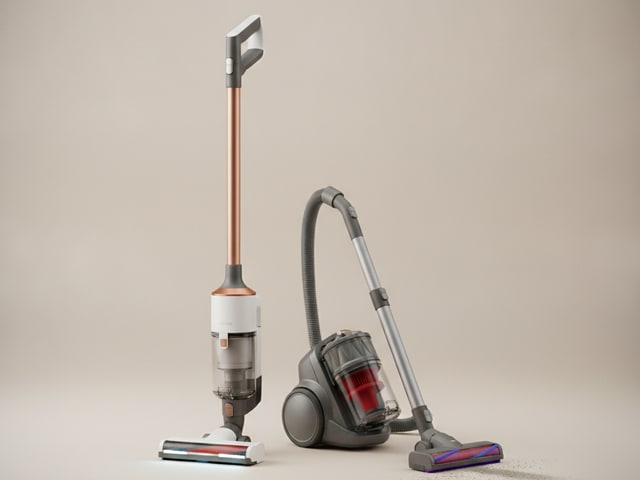
Corded vs cordless handheld vacuums: pros and cons
Cordless handhelds cover more situations, but corded units win on raw performance, and which matters more depends on where you plan to use the vacuum most.
Cordless handheld vacuums
No outlet required. Car seats, carpeted stairs, and upholstery are the natural home for a cordless unit. You can reach any spot in the car without hunting for an extension cord, and newer models with USB-C charging can top up from a power bank or your car's USB port between uses.
Grab-and-go convenience. A cordless handheld sitting in its charging dock is ready in seconds. That immediacy is what makes people actually use it for quick spills and crumbs. A corded unit stored in a closet rarely gets pulled out for a two-minute job.
Runtime is the real constraint. Consumer Reports lab tests found real handheld runtimes ranging from 9 to 25 minutes across tested models. A unit at the low end struggles to finish a full car interior, while one at the high end handles stairs and upholstery in the same session.
Capacity loss over time. Lithium-ion cells, now standard across virtually all cordless handhelds, lose capacity with each charge cycle. A sealed, non-replaceable battery can leave you with noticeably shorter runtime after regular use, with no fix short of buying a new unit.
Suction drops under sustained load. Cordless handhelds generally run at lower sustained suction than corded equivalents at the same price point. Brushless motors close that gap, but a cordless unit still can't match a corded one running off mains power indefinitely.
Corded handheld vacuums
Unlimited runtime. Plug it in and run it as long as the job takes. For a workshop bench, a garage floor, or a detailed car clean that stretches past 30 minutes, a corded unit never leaves you waiting for a recharge.
Stronger, more consistent suction. Drawing directly from mains power, a corded handheld maintains full suction from the first minute to the last. There's no power curve dropping off as a battery drains.
No battery to replace or degrade. The motor is the only component that wears out over time, and a decent motor lasts years of regular use without any maintenance cost.
Cord limits your reach. In a car without a nearby outlet, a corded handheld is impractical without an extension cord. On stairs, the cord catches on steps and pulls against you. Any job that requires moving freely around a space, or away from a wall, becomes awkward fast.
Less spontaneous for quick cleanups. Uncoiling a cord, finding an outlet, and coiling it back up adds two minutes to a 90-second job. That friction means corded handhelds tend to stay in the closet for small daily messes, which defeats the point of having a grab-and-go tool.
Which one to choose
Cordless is the right call for car cleaning, stairs, or spot cleaning around the house, anywhere you're moving between locations or away from an outlet. The runtime limitation is real, but for those jobs, 20 minutes of actual runtime is enough when you buy a model with a realistic advertised figure. Fast-charging models that recharge in under an hour make the battery constraint much easier to live with day-to-day.
Fixed-location jobs are where corded handhelds make more sense: a garage workbench, a workshop, a laundry room, or any space where an outlet is always within arm's reach and sessions run long. If that describes your main use case, the Cordless vs Corded Stick Vacuums: Battery Life vs Suction comparison covers how the same trade-off plays out across larger vacuum formats, which is useful context if you're also deciding on a primary floor vacuum.
Filtration, dustbin design, and allergy considerations
HEPA filters in a handheld vacuum matter most for allergy and asthma sufferers. A standard filter catches visible debris but lets fine dust, pollen, and pet dander pass through the exhaust. True HEPA filtration captures much finer particles, the size range that triggers most respiratory reactions. If that's your situation, the HEPA Filter Explained guide breaks down the difference between True HEPA and HEPA-type labeling, a distinction that matters more than most manufacturers let on.
Washable filters are the practical middle ground for most buyers. They reduce the ongoing cost of replacements, but they only maintain suction if you clean them on a regular schedule. A clogged washable filter is one of the most common reasons a handheld loses pickup power, and most users mistake it for a motor problem. Rinse it, let it dry fully before reinstalling, and the suction usually comes back. Those with respiratory sensitivities will find five affordable vacuums with strong filtration covered in the HEPA Filters for Pet Allergies guide.
Dustbin capacity: where small bins cause real problems
Dustbin size is easy to overlook on a spec sheet and annoying to discover mid-task. Good Housekeeping UK, which tests handheld vacuums hands-on, recommends a minimum of 0.3 liters to avoid constant interruptions. GearLab, an independent product testing publication, sets its threshold higher at 0.5 liters, and for fur and dander that extra capacity makes a noticeable difference. Pet hair compresses poorly, so a tiny bin fills up in a single pass across a couch cushion.
Small bins aren't just inconvenient. They actively reduce suction because airflow drops as the bin fills. If you're cleaning stairs or a complete car interior in one session, stopping repeatedly to empty the bin breaks the rhythm and adds time to a job that should take minutes.
Emptying mechanism and hair wrap: two details that affect daily use
Emptying design separates a handheld you'll actually use from one that stays in the drawer. One-button release mechanisms drop the contents directly into a bin without you touching the debris, a real advantage for anyone with sensitivities to dust and dander, and for anyone emptying over a trash can in a small space. Designs that require reaching inside the dustbin to pull out debris are a consistent complaint in user forums: the act of digging out compacted hair and dust releases a small cloud back into the air, which defeats the purpose of filtering it in the first place.
Hair wrap around internal brush components is the other maintenance issue worth checking before purchase. Long hair, human or pet, winds around spinning brush parts and can strain the motor or reduce suction. Anti-tangle brush designs and easy-access brush heads let you pop the cover and pull hair out without tools. If neither feature is mentioned in the product listing, assume you'll be picking hair out with scissors after every few uses.
Long-term costs: batteries, filters, and replacement parts
Purchase price is only part of what a handheld vacuum actually costs you. Replacement filters, battery wear, and spare parts add up over two to three years of regular use, and a cheap unit can end up costing more per year than a pricier one that lasts.
Lithium-ion batteries, which power virtually every cordless handheld on the market today, lose capacity with each charge cycle. A sealed, non-replaceable battery can leave you with noticeably shorter runtime after regular use, and once it degrades past the point of usefulness, the whole unit becomes disposable. Vacuum Wars recommends choosing models with user-replaceable batteries and verifying that the manufacturer actually sells replacement cells before you buy. That second step matters. Some brands list "replaceable battery" in the specs but don't stock replacements anywhere you can find them.
Replacement HEPA filters are the other recurring cost most buyers don't factor in at checkout. Washable filters reduce that cost, but they still need regular cleaning to stay effective, as covered in the filtration section above.
Warranty length is a useful signal for how long a manufacturer expects their product to hold up. HDSupply, a commercial cleaning equipment supplier, notes that a two-year warranty is generally a positive sign for handheld vacuum quality. Read the fine print carefully, though. The Vacuum Warranty Guide: What's Covered and What's Not breaks down exactly what to look for in the terms before you commit.
Total cost of ownership changes the value calculation. A $40 handheld with a sealed battery that degrades in a year costs $40 per year. A $90 model with a replaceable battery, washable filter, and a two-year warranty costs $45 per year at worst, and likely less if the battery lasts longer. Spending more upfront on a unit built to be maintained is usually the better value. For practical steps to extend any handheld's lifespan, the Vacuum Maintenance 101 guide covers filter care, battery storage habits, and the small things that keep suction from dropping off prematurely.
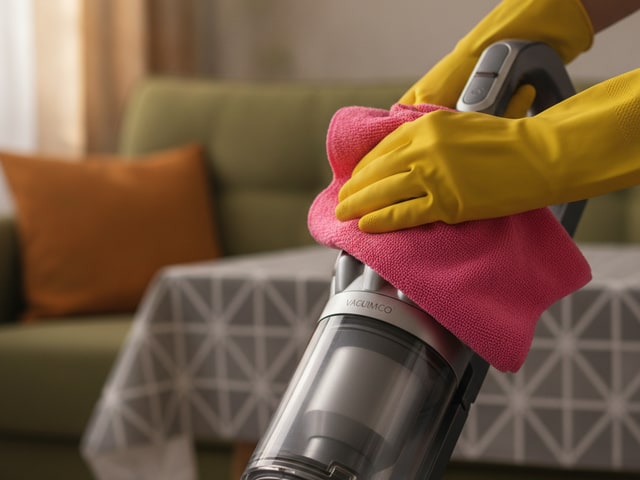
How to keep your handheld vacuum working well
Regular upkeep, not replacement, is what keeps most handheld vacuums running at full capacity. A few minutes of maintenance keeps suction where it should be and adds months to the battery's useful life.
Clean or replace the filter every 2–4 weeks. A clogged filter is the single most common cause of suction loss, and most owners mistake it for a motor problem. Washable filters, the kind found on most mid-range handhelds, need a rinse under cold water and a full dry before going back in. HEPA filters, which trap finer particles for allergy sufferers, need replacing rather than washing once they're visibly grey or airflow drops noticeably. Either way, a clean filter restores pickup power faster than any other fix.
Empty the dustbin after every use. Small dustbins, the kind common on compact handhelds, lose airflow quickly once they're even partially full. You don't need to wait until the bin looks stuffed. Emptying after each session takes ten seconds and keeps the motor working against debris, not against restricted airflow.
Pull hair tangles off the spinning brush and intake ports regularly. Long hair winds around spinning brush components and can strain the motor or choke suction at the nozzle. Check the spinning brush and the intake opening every few uses, especially after cleaning upholstery or carpeted stairs. Most tangles pull free by hand. A pair of scissors handles anything more stubborn. If the design requires tools to access the brush, that's worth factoring in before your next purchase.
Avoid leaving the lithium-ion battery at extremes during long breaks. Leaving a cordless handheld fully charged on the dock for weeks at a time accelerates capacity loss in lithium-ion cells. If you're not using the vacuum for more than a few days, unplug it once the indicator shows a partial charge. Running the battery completely flat before recharging also shortens its cycle life. Both extremes are harder on the cells than staying in the middle range.
Check the dustbin door seals periodically. Air leaks around the bin door or lid reduce usable suction even when the motor is running fine and the filter is clean. Press the dustbin firmly closed and run the vacuum. If suction feels weaker than usual but the filter is clear, run your finger around the seal while it's running to feel for escaping air. A warped or cracked gasket is usually the culprit, and on most models it's a cheap replacement part.
None of this takes long, the full routine runs under five minutes. For a more detailed breakdown of filter care schedules and battery storage habits across different vacuum types, the Vacuum Maintenance 101 guide covers the specifics that keep any cordless vacuum running at full capacity for longer.
Red flags to avoid when shopping for a handheld vacuum
No suction spec, inflated runtime, and missing accessories are the warning signs that separate a handheld vacuum worth buying from one that will disappoint you within a month. Most of them are visible on the product listing before you spend a dollar.
No suction spec listed anywhere. Air Watts (AW) and Pascals (Pa) are the two numbers that tell you whether a handheld can actually pull debris out of fabric and carpet weave. If a manufacturer doesn't publish either one, the number is too low to advertise. Brands with competitive suction lead with it. Brands that bury or omit it are hoping you won't notice until after checkout. Skip any listing that describes suction only as "strong" or "high-powered" without a number attached.
Runtime advertised only on the lowest power setting. A "40-minute battery life" claim means nothing on its own if the listing doesn't say which mode that figure applies to. Vacuum Wars found that a 40-minute low-setting claim translates to roughly 20 minutes on medium and about 7 minutes on max. If the product page shows one runtime figure with no mention of power modes, assume the real usable runtime at medium power is half that number. Listings that show runtime across multiple modes, low, medium, max, are the ones worth trusting.
Sealed, non-replaceable battery with no spare available from the manufacturer. A removable battery is one of the most important long-term value signals on a cordless handheld. Lithium-ion cells lose capacity over charge cycles, and a sealed design turns a degraded battery into a disposal problem. Before purchasing, check whether the manufacturer sells a replacement battery for that specific model. If you can't find one on their site or from a major retailer, treat the vacuum as a disposable product and price it accordingly.
No crevice tool or brush attachment included. A crevice tool, the slim, pointed tip, is non-negotiable for car seat rails, door pockets, couch cushion gaps, and stair edges. A brush attachment handles upholstery and countertops without scratching. These are the two jobs most people buy a handheld for in the first place. A unit that ships with only a bare nozzle forces you to buy accessories separately, often at a cost that pushes the total price past better-equipped competitors. If the box contents aren't listed clearly, that's a red flag on its own.
Dustbin capacity under 0.3 liters with no easy-empty mechanism. Good Housekeeping UK sets 0.3 liters as the minimum dustbin size worth considering, and GearLab recommends 0.5 liters for anyone cleaning pet hair or car interiors. A bin smaller than 0.3 liters fills mid-task on almost any real job, a single car seat, one flight of carpeted stairs, or a medium-sized couch cushion. Pair that with a design that requires reaching inside to pull out debris rather than a one-button release, and you're emptying a dust cloud into the air every few minutes. Check the dustbin capacity in the spec table and look for "one-touch empty" in the product description before purchasing.
Listings that hide specs, inflate runtime, or skip basic accessories aren't always cheap. Some mid-range models fall into the same traps. For a broader look at deceptive patterns across vacuum categories, the Red Flags When Buying Vacuums guide covers eight warning signs that apply beyond handhelds. And if you're shopping on Amazon, the Amazon Vacuum Reviews: How to Spot Fake Reviews guide walks through how to tell inflated ratings from genuine ones before you trust a four-star average.
Frequently asked questions
Can a handheld vacuum replace a full-size vacuum?
For most households, no. A handheld works best as a secondary tool for spot jobs, stairs, and upholstery rather than a whole-home solution. The exception is a studio apartment or dorm room where your total floor space is small and you clean in short bursts. Covering multiple rooms in one session calls for a cordless stick vacuum, which handles more ground before the battery runs out and without the arm fatigue a handheld causes over time.
How powerful should a handheld vacuum be?
For crumbs and light dust, around 3,000 Pa of suction is enough. Pet hair on upholstery and sand in car mats need at least 6,000 Pa. Budget models below that threshold will give you trouble on anything tougher than surface debris. A handheld that can substitute for a stick vacuum on hard floors needs 10,000 Pa or 150+ Air Watts, which puts you in mid-to-high-end cordless territory.
How long does a handheld vacuum battery really last?
Manufacturer claims are almost always measured on the lowest power setting. Consumer Reports lab tests found real handheld runtimes range from 9 to 25 minutes. Plan around the lowest figure, not the headline number, and treat anything under 15 minutes of real-world runtime as only suitable for a single quick task per charge.
Are cheap handheld vacuums under $50 any good?
Budget handheld vacuums work fine for their intended job: crumbs on a kitchen counter, a quick sweep of a car seat, or dust on a bookshelf. The Tzumi handheld vacuum, priced at $40.49, runs at 4–6 kPa and lasts up to 20 minutes, which is honest performance for that price. Where budget models fall short is pet hair, embedded dirt, and anything requiring sustained suction. Those tasks need a unit with a stronger motor.
Do I need a separate handheld if my stick vacuum converts to one?
Probably not, if your stick's handheld mode is comfortable to hold and reaches the spots you care about. The real question is weight. Most convertible sticks are noticeably heavier even in handheld configuration, which gets tiring fast on stairs or overhead surfaces. A dedicated handheld in the 1.0–1.4 kg range is noticeably easier to maneuver for sessions longer than 15 minutes, especially for car interiors or upholstery where you're working at awkward angles.
Are handheld vacuums good for pet hair on furniture?
A standard handheld with a basic nozzle will pick up loose surface hair but struggle with hair that's woven into upholstery fibers. A motorized mini brush attachment makes a significant difference. It agitates the fabric and pulls embedded hair out rather than just skimming the surface. GearLab's buying guidance flags a rotating bristle brush as a non-negotiable feature for anyone targeting pet hair on couches or car seats.
Do handheld vacuums need HEPA filters?
HEPA filters aren't necessary for every buyer, but if you have allergies or asthma, they prevent fine particles from blowing back into the air as the vacuum exhausts. Without one, a handheld can redistribute dust rather than capture it. Look for washable HEPA filters, since replaceable ones add ongoing cost that can add up quickly.
Why does my handheld vacuum keep losing suction?
A clogged filter is the most common cause. Even a partially blocked filter can cut airflow dramatically, and most people clean theirs far less often than they should. Rinse or replace the filter first before assuming the motor has failed. If suction doesn't recover after cleaning, the battery may be degrading. Lithium-ion cells lose capacity over charge cycles, and a battery that no longer holds a full charge will run the motor at reduced power even when it shows as charged.
What is a good dustbin capacity for a handheld vacuum?
Good Housekeeping UK recommends a minimum of 0.3 liters to avoid stopping mid-task to empty, while GearLab suggests 0.5 liters for anyone tackling pet hair or car interiors. Smaller bins fill faster than you expect with pet hair, which compresses poorly and takes up more space than fine dust. If the emptying mechanism requires you to reach inside the bin, that's worth checking before you buy. One-button release designs are meaningfully better for allergy sufferers.