Amazon Vacuum Reviews: How to Spot Fake Reviews
Fake Amazon vacuum reviews, found at a rate of 25% on one investigated listing, can be spotted by checking rating distributions, scanning for templated language, and running listings through review-checker tools like Savinoo.
You've probably been there, staring at a 4.7-star vacuum with thousands of glowing reviews, wondering why it feels too good to be true. That gut feeling is worth listening to. VacuumWars, an independent vacuum testing outlet, investigated Ecovacs robot vacuum listings and found that roughly one in four of the most recent reviews showed signs of being templated or automated. Amazon itself blocked over 200 million suspected fraudulent reviews in 2022 alone. The category is flooded with unknown brands competing for your attention, and vacuum shoppers get hit harder than most.
Rating manipulation works because most people never look past the star average. A listing with 95% five-star ratings and almost zero three-star reviews paints a completely different picture than one with a natural spread across three, four, and five stars. That distribution tells you more about trustworthiness than the number next to the stars ever will.
This guide walks you through the exact red flags, free tools, and independent sources that separate honest feedback from manufactured hype, whether you're shopping for a robot vacuum under $200 or a cordless stick vacuum for your apartment.
How big is the fake review problem on Amazon?
Amazon blocked over 200 million bogus reviews in 2022 alone. That number sounds reassuring until you realize it also confirms just how many people and organizations are actively trying to game the system. For every manipulated review that gets caught, others slip through, and vacuum shoppers end up making decisions based on ratings that don't reflect real-world performance.
The platform's detection infrastructure runs on machine learning, natural language processing, and deep graph neural networks that model relationships among millions of accounts, reviews, and products. These systems analyze review databases for abuse signals: suspicious posting patterns, connections between reviewer accounts, and language that reads more like ad copy than a genuine opinion. According to Amazon, most reviews pass these automated checks and get published immediately, while flagged content goes to human investigators for a closer look.
Independent investigations tell a different story about what still gets through. VacuumWars manually examined 100 recent reviews on an Ecovacs robot vacuum listing and found roughly a quarter with clear signs of automation or templating. That's one in four reviews on a single popular listing that looked fake even to a careful human reader. Their methodology was conservative, only flagging reviews that showed multiple suspicious signals at once.
The Kaggle Fake Reviews Dataset, a widely used machine learning resource, contains 40,000 entries split evenly between 20,000 confirmed fake reviews and 20,000 real ones. Researchers use this dataset to train and test detection algorithms. Entire branches of computer science are dedicated to solving this problem, and the tools are still catching up.
You don't need to become a data scientist to protect yourself, but you do need to understand that Amazon's filters are exactly that: filters, not guarantees. The automated systems catch the obvious stuff at enormous scale, yet organized manipulation campaigns, especially in competitive categories like vacuums, still produce listings where a meaningful share of reviews look suspicious to anyone paying close attention.
What does a fake vacuum review look like?
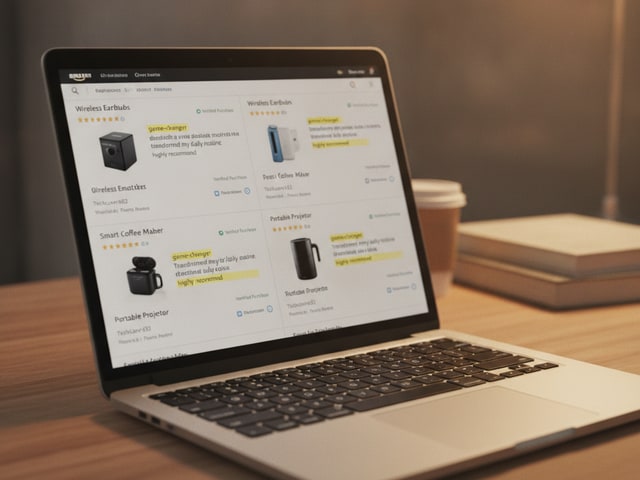
A fake vacuum review reads like a press release disguised as a personal opinion. It's polished, feature-heavy, and suspiciously similar to other reviews on the same listing. VacuumWars investigated Amazon reviews for the Ecovacs Deebot X11 Omni robot vacuum and found specific patterns that separated manufactured praise from genuine feedback. The telltale signs are more obvious than you'd expect once you know what to look for.
Templated language and branded buzzwords
The most reliable giveaway is repeated proprietary feature names across supposedly unrelated reviewers. In the Ecovacs investigation, multiple reviews used identical phrases like "OZMO Roller 2.0" and "PowerBoost charging," not just mentioning the features but describing them in nearly the same words and sentence structures. Ten different people all referencing an obscure branded technology with identical phrasing points to something coordinated. Real buyers talk about what a vacuum does for them ("picks up dog hair without tangling"), not what the marketing team named its components.
Formatting patterns are another dead giveaway. VacuumWars flagged reviews with identical paragraph lengths, repeated punctuation habits, and a rhythm that sounds like ad copy rather than someone typing on their phone after vacuuming their living room. Genuine reviews are messy. They ramble, they misspell things, they jump between topics. Fake ones read like someone ran a checklist.
Suspicious video and photo reviews
You might assume that reviews with videos and photos are more reliable than plain text. The Ecovacs investigation suggests the opposite can be true. VacuumWars concludes it is "not unreasonable" that up to 9 out of 10 early media reviews on some listings may have been incentivized or coached. That means 90% of the visual reviews posted shortly after launch showed signs of coordination.
The working theory is that reviewers received three things: the product itself, a prewritten AI-generated review, and stock media assets. Each reviewer then posted some combination of those materials. The result is a wall of polished-looking video reviews that all feel slightly off. Too clean, too well-lit, too focused on the same talking points in the same order. Compare that to a genuine home video where someone's kid walks through the frame and the lighting is terrible. The messy one is almost always the real one.
Why this matters for your next purchase
VacuumWars used a conservative methodology, only flagging reviews showing multiple suspicious signals at once, not just one red flag. Even with that cautious approach, the numbers were striking for a single popular robot vacuum listing. Scroll past the first page of glowing five-star posts, look for reviews that mention specific rooms, specific messes, and specific frustrations, and treat anything resembling marketing copy with serious skepticism.
5 red flags that signal manipulated Amazon vacuum reviews
Five patterns show up again and again on Amazon vacuum listings with manipulated reviews, and once you know them, you'll spot them in seconds. None of these red flags alone is proof of fraud. But when a couple appear together on the same listing, treat that star rating with serious skepticism.
The rating distribution is a wall of five stars
You can check any Amazon listing's star-rating histogram by scrolling to the review section and looking at the horizontal bar chart. A healthy vacuum listing shows a spread: plenty of five-star ratings, a solid chunk of four-star, some three-star, and a scattering of lower scores. When you see 80-90% or more of ratings concentrated at five stars with almost nothing in the three- or four-star range, that gap is a warning sign. Real products generate mixed opinions. Manipulation campaigns don't bother with realistic middle-ground ratings.
A newer vacuum from an unknown brand with a more lopsided histogram than an established competitor like Shark or Dyson at a similar price point is telling you something. Those established listings almost always show a natural curve because they have years of organic feedback from real buyers.
A burst of positive reviews right after launch
Scroll to the oldest reviews on a listing and check the dates. A vacuum that went from zero to hundreds of glowing reviews within the first few weeks of availability is showing unusual pace for organic purchases. Real review accumulation is gradual: people buy the product, use it for a while, and then some percentage bother to leave feedback. A dense cluster of five-star posts in a tight window often signals an incentivized campaign designed to boost the listing's visibility before genuine buyers even receive their orders.
Multiple reviewers using the same marketing phrases
Open the review section and use your browser's search function (Ctrl+F or Cmd+F) to look for specific product terminology from the listing description. Ten different reviewers all mentioning a niche technology name in nearly identical sentence structures points to a template, not organic feedback. Real buyers describe what a vacuum does for them in their own words. They say "picks up cereal off hardwood without scratching" or "the battery dies after 15 minutes on max." They don't all independently decide to highlight the same promotional term using matching phrasing.
Polished media reviews that look like stock footage
Video reviews shot in well-lit, perfectly staged rooms with smooth camera movements and no background clutter should raise your guard. Genuine home footage looks like genuine home footage: uneven lighting, cluttered countertops, a pet wandering through the frame. When multiple visual reviews on a single listing share a similar production quality and focus on the same talking points in the same sequence, those reviewers may have received pre-shot media assets along with the product. The messy, poorly lit review filmed on someone's phone is almost always more credible than the one that looks like a commercial.
Reviewer profiles that only cover one brand
Click on a reviewer's profile and look at their review history. Every review posted for products from the same brand, or a tight cluster of similar products with nearly identical praise, makes that profile suspect. Real Amazon shoppers buy from dozens of different brands over time. A profile with fifteen five-star reviews, all for vacuums or home appliances from one manufacturer, with similar sentence structures across every post, fits the pattern of a recruited reviewer rather than a genuine customer.
Three or four profile checks take under a minute. If most of them look like single-brand accounts, the listing's overall rating is built on shaky ground, and you're better off cross-referencing with independent performance comparisons before spending your money.
Free tools that analyze Amazon review authenticity
Savinoo, a Chrome browser extension, analyzes whether an Amazon vacuum listing's reviews look legitimate. You install it once, and it runs automatically when you browse Amazon, assigning each product a reliability score from 0 to 100 based on hundreds of data points per listing. That score gives you a quick read on whether the reviews you're seeing are likely organic or potentially manipulated, no manual detective work required.
The score analyzes patterns you'd struggle to catch on your own at scale: verified purchase rates, review timing clusters, rating distribution anomalies, and language patterns that suggest templated or coordinated content. A score around 60 out of 100 or above is a rough guideline that the review set looks reasonable, though you can define your own thresholds based on experimentation. Drop below that range, and the tool is flagging enough problems that you should treat the Amazon star rating with extra caution, especially when sizing up budget vacuums from brands you've never heard of.
You can use the extension passively while shopping. Browse to any Amazon vacuum listing, and the score appears alongside the product page. It takes seconds to glance at, and it's useful when you're weighing a few similar cordless models or robot vacuums under $200 and trying to figure out which one has the most genuine feedback. A 4.7-star vacuum with a Savinoo score of 45 tells a completely different story than a 4.4-star model scoring 82.
No review-checking tool is perfect, and treating any single score as gospel is a mistake. These extensions work from patterns and probabilities, not proof. A low score doesn't mean every review is fake, and a high score doesn't guarantee every reviewer is genuine. The most reliable approach is using a tool like this as one input alongside your own manual checks, scanning for the red flags covered above, and looking at independent test sources like VacuumWars or other hands-on reviewers who actually run vacuums across real floors.
Review checkers are a first filter, not a final answer. They save you time by surfacing listings that deserve closer scrutiny, so you're not manually auditing every single vacuum on your shortlist. But the buying decision still comes down to combining that score with what you find in the actual reviews and what independent testers report about real-world performance.
Why Amazon star ratings don't match independent test results
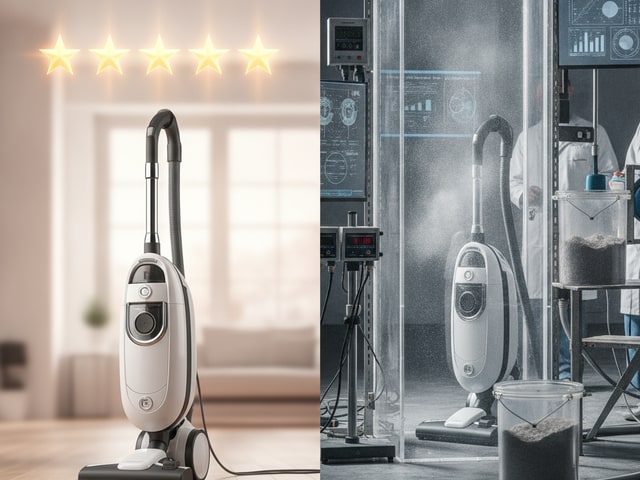
A vacuum sitting at 4.6 or 4.8 stars on Amazon can score as mid-tier or even below average in independent testing, and the disconnect isn't random. Amazon ratings measure a fundamentally different experience than what lab evaluations capture.
What Amazon ratings actually reflect
Amazon star ratings capture the full buying experience, not just cleaning performance. When someone leaves a five-star review, they're often reacting to fast shipping, build quality, and whether the vacuum turned on without issues. First impressions carry enormous weight. A model that feels solid, looks sleek, and picks up visible crumbs on day one earns five stars from most buyers, even if its filtration is mediocre, its edge cleaning is poor, or its battery will degrade noticeably within six months.
Customer service interactions also shape ratings. Brands that respond quickly to complaints tend to accumulate higher scores that reflect responsiveness rather than product reliability. Those reviews tell you nothing about whether the vacuum actually cleans well.
What independent testers actually measure
Independent testing labs evaluate dimensions that most Amazon reviewers never think about: debris pickup across multiple floor types, edge cleaning effectiveness along baseboards, noise output measured in decibels, air filtration quality, and long-term reliability patterns. These are the things that determine whether a vacuum actually does its job month after month, not whether it arrived in nice packaging.
Noise is a perfect example of the gap. You won't find many Amazon reviews that mention a vacuum runs at an uncomfortable volume, because most people don't own a decibel meter and don't think to compare. But an independent tester measures it, and a vacuum that's painfully loud in a small apartment gets dinged accordingly, even if Amazon reviewers gave it five stars because it "has great suction." Understanding vacuum suction power specs is another area where lab measurements and user impressions diverge sharply, since raw suction numbers don't always translate to better cleaning on every surface.
Where the gap hits hardest
Robot vacuums and budget cordless stick models show the biggest rating disconnects. Both categories attract heavy review manipulation (as covered above), but even setting fake reviews aside, the gap persists. A $60 cordless stick vacuum can easily earn 4.5+ stars from buyers who previously swept their floors by hand. The bar for impressing them is low. Put that same unit through a controlled test against a similarly priced Shark or Dyson model, and the differences in carpet pickup, filtration, and runtime become obvious.
Your best move before buying any vacuum above 4.5 Amazon stars is to search for the model name on VacuumWars or RTings, or look for YouTube reviewers who run actual pickup tests on camera. A vacuum carrying thousands of glowing Amazon reviews but zero coverage from independent testers is sending you a signal. Established testing outlets skip products that don't warrant serious evaluation, and the ones they do test often reveal a much different reality than the star rating suggests.
What Amazon is doing to fight fake reviews
Amazon fights fake reviews using a layered system of AI, machine learning, natural language processing, and deep neural network architectures that model relationships among millions of accounts, reviews, and products simultaneously. The detection infrastructure scans enormous volumes of reviews for abuse signals before they ever appear on a listing page, and the company states that most reviews pass its high bar for authenticity and get posted right away. Flagged content gets routed to human investigators for a closer look.
Enforcement goes beyond just deleting suspicious posts. The marketplace blocks fake reviews at the point of submission, revokes review permissions from accounts that show patterns of manipulation, shuts down bad-actor accounts entirely, and in some cases pursues litigation against parties involved in organized review fraud. That escalation path, from automated blocking to legal action, is designed to raise the cost of running manipulation campaigns, not just clean up after them.
Detection models evaluate signals you'd never think to check yourself: whether a seller has recently invested in certain ad patterns, how reviewer accounts are connected to each other through purchasing behavior, whether review language matches templates circulating across multiple listings, and whether posting velocity looks organic or coordinated. Neural network models are useful here because they can map hidden connections, like a cluster of reviewer accounts that all reviewed the same set of products in an identical order within a single week.
None of this means the system catches everything. Independent investigations still find meaningful percentages of suspicious reviews on popular vacuum listings even after Amazon's filters have run. The automated systems work at scale, blocking hundreds of millions of suspected fakes per year, but organized campaigns that use real accounts, real purchases, and AI-generated text designed to mimic natural language can slip through. You should treat Amazon's review moderation as a strong first line of defense, not a guarantee that every review you read is genuine. Your own scrutiny still matters, especially in categories like vacuums where the financial incentive to manipulate ratings is high.
How to find trustworthy vacuum reviews before you buy
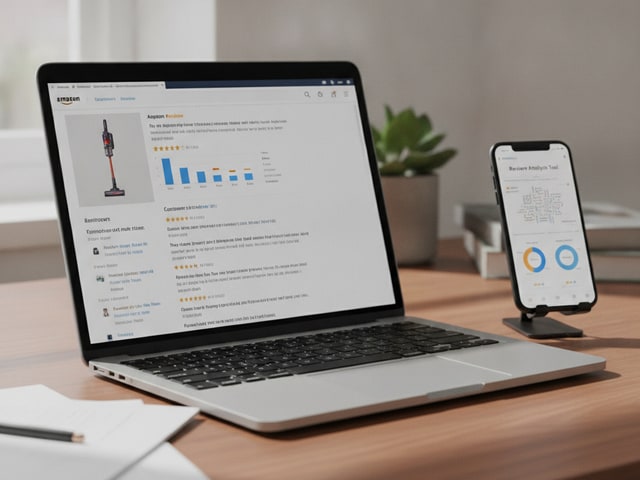
You can cut through manipulated Amazon listings in about five minutes per vacuum by following a specific sequence that builds context from multiple angles rather than relying on any single signal.
Check the rating distribution on the Amazon listing
Scroll to the star-rating histogram and look at the shape, not the number. A natural spread across three, four, and five stars means real people with different expectations all weighed in. A histogram that's almost entirely five stars with a hollow gap in the middle ratings is the first sign you should slow down before adding anything to your cart.
Read the most recent reviews and search for repeated phrases
Sort by "Most recent" and start scrolling. Use your browser's find function to search for proprietary terminology pulled from the product description. A dozen different reviewers all using the same niche marketing term in similar sentence structures means you're reading from a script. Pay attention to rhythm too. Genuine reviews wander, misspell things, and go off-topic. Anything that reads like a polished product brief is suspect.
Run the listing through a review-checker tool
Savinoo assigns each Amazon product a trust rating after scanning for patterns like review timing, rating distribution, and language anomalies. A vacuum scoring well below the midpoint deserves extra scrutiny regardless of how many stars it shows. The extension is especially useful when you're comparing a handful of models side by side and need a quick way to gauge which listing has the most genuine feedback.
Cross-reference against independent testers
VacuumWars and RTings, a product testing lab, both evaluate cleaning performance under controlled conditions that Amazon reviewers never replicate: debris pickup across floor types, filtration quality, noise levels, and long-term reliability. Search for the exact model name on either site or on YouTube channels that run real pickup tests on camera. A vacuum with thousands of Amazon reviews but zero independent coverage is a red flag worth noting.
Give more weight to detailed negative reviews
A one-star review that says "battery died after three months" or "clogs every time I vacuum pet hair" is more useful than fifty five-star posts saying "love it!" Specific complaints about battery degradation, suction loss over time, misleading HEPA filter claims, or parts breaking outside the vacuum warranty coverage period point to real-world issues that generic praise never addresses. Sort by lowest rating and read the most detailed entries. The same problem appearing across multiple negative reviews from different time periods is almost certainly real, even on a listing with an overall rating above 4.5 stars.
Five minutes of checking saves you the hassle of returning a vacuum that didn't live up to its inflated rating. The goal isn't to find a listing with zero red flags, because almost every popular vacuum has some suspicious reviews mixed in. The goal is to build enough context from multiple angles that you're making a decision based on actual performance, not manufactured consensus.
Vacuum categories most affected by review manipulation
Robot vacuums attract more review manipulation scrutiny than any other vacuum category on Amazon. The VacuumWars investigation into Ecovacs, a major robot vacuum manufacturer, revealed organized campaigns involving prewritten text and stock media distributed to reviewers, and that's just one brand where someone bothered to look closely. The combination of high price points, intense brand competition, and a flood of new models every year makes the robot vacuum category a prime target for coordinated rating inflation.
Budget portable stick vacuums from unknown brands are the second most affected category. You'll find dozens of listings from brands with no website, no social media presence, and no retail distribution outside Amazon, yet somehow carrying 4.5+ star ratings with thousands of reviews. Compare that to an established competitor like Shark selling a similarly priced stick vacuum with a lower rating and fewer reviews. The math doesn't add up unless you factor in manipulation. Shopping for a cordless stick vacuum for your apartment means paying extra attention to whether the brand exists anywhere beyond its Amazon storefront.
White-label and Amazon-only vacuum brands raise the biggest authenticity red flags when they outrate Dyson, iRobot (the company behind Roomba), or Roborock, all of which have years of independent testing, retail presence, and documented track records. A no-name robot vacuum outscoring a Roomba on Amazon doesn't mean it cleans better. It often means the listing had a more aggressive review campaign. When you're evaluating robot vacuums for pet hair under $200, check whether the brand has any coverage from independent testers before trusting the star count.
Premium models priced above $700 face a different version of the same problem. Manipulation pays off more on expensive listings: a single fake five-star review on a $900 robot vacuum influences more purchasing dollars than one on a $40 handheld. Higher-priced listings also tend to attract more sophisticated campaigns, where the reviews are harder to distinguish from genuine feedback because more resources went into crafting them. Ecovacs listings in this price range showed exactly that pattern, with polished media reviews that looked professional enough to pass casual inspection.
The safest approach across all these categories is the same: treat Amazon ratings as one input, not the whole picture. The categories where manipulation hits hardest are exactly the ones where checking independent test sources matters most.

What specs to verify instead of trusting star ratings
Manufacturer specs tell you more about a vacuum's real-world performance than any Amazon star rating, and you can verify each one without reading a single review.
Motor power in watts is one of the most objective measures you can pull from the manufacturer's official product page rather than trusting what reviewers claim. Amazon listings sometimes omit wattage or bury it in the spec table, while reviews may exaggerate or confuse it with other measurements. Go directly to the brand's website, find the spec sheet, and note the number. The breakdown of what CFM and air watts actually mean covers how different suction measurements relate to each other in plain language.
Battery runtime in minutes matters more than almost any feature a reviewer will mention. Sort Amazon reviews by lowest rating and search for "battery" or "runtime" to find buyers who measured actual usage. Those specific complaints are far more reliable than the official number or any five-star review that says "battery lasts a long time."
Filter type, specifically whether a vacuum uses True HEPA filtration or the looser "HEPA-type" designation, directly affects the air quality in your home, and reviews almost never get this distinction right. The difference matters if you have allergies or pets, and the only way to confirm which type a vacuum uses is to check the manufacturer's spec page or read the full explanation of True HEPA vs HEPA-type filters.
Weight and dimensions are specs you can verify on the official listing, and they matter more than most shoppers realize until the vacuum is in their hands. Check the manufacturer's listed weight against the Amazon product details. A mismatch between the two means one of them is wrong, and you want to know before the box arrives. The list of lightweight vacuums under 8 pounds is a good starting point if portability is a priority.
Warranty length is a spec that star ratings completely ignore, and it's among the most telling signals a manufacturer sends about their product. Comparing warranty periods across your shortlist is worth the minute it takes. You can find warranty terms on the brand's website or in the Amazon listing's product information section.
Manufacturer specs exist independently of what reviewers say, which is exactly why they're useful. Star ratings reflect opinions shaped by first impressions, shipping speed, and sometimes outright manipulation. Specs are just numbers on a page, and they don't change based on who's reading them.
Frequently asked questions
How can I tell if Amazon vacuum reviews are fake?
Look for multiple reviews using the exact same proprietary feature terminology word-for-word across dozens of supposedly independent reviewers. Identical paragraph lengths, marketing-style phrasing, and a flood of 5-star ratings with almost no 3- or 4-star reviews are the biggest giveaways. Language that reads like it belongs on the product's own sales page is suspect.
Does Amazon remove fake reviews?
Amazon uses AI and human investigators to block suspected fraudulent reviews before they appear, and the company pursues enforcement actions including account bans and litigation. But independent checks, like VacuumWars finding that a quarter of recent Ecovacs reviews showed templating signs, show that plenty still slip through. Your own skepticism still matters.
Are Verified Purchase reviews always trustworthy?
No. A "Verified Purchase" badge only confirms someone bought the product through Amazon, not that the review is honest. Sellers can reimburse buyers after purchase or send heavily discounted units, and the badge still appears. Give more weight to verified reviews that describe specific experiences over time rather than ones that read like a product brochure.
What percentage of Amazon vacuum reviews are fake?
There's no single number across all vacuums, but VacuumWars' manual audit of one Ecovacs listing found roughly a quarter of recent reviews had clear signs of being coordinated. For early media-rich reviews specifically, they estimated up to 9 out of 10 may have been incentivized. The rate varies wildly by brand and listing.
Can tools like Savinoo accurately detect fake Amazon reviews?
Savinoo, a Chrome extension review checker, gives you a quick gut check by scanning for patterns across each product listing. No tool is perfect though. There's no published independent validation of its accuracy against a known ground-truth dataset. Use it as one signal alongside your own reading of the reviews, not as the final word.
Why do cheap no-name vacuums have better Amazon ratings than Dyson or Shark?
Smaller brands with no reputation to protect have a stronger incentive to run aggressive review campaigns right after launch, which inflates their early ratings. Established brands like Dyson and Shark accumulate years of reviews including honest complaints about price, weight, or durability that pull their averages down. A 4.7-star rating on a brand you've never heard of with 500 reviews deserves more scrutiny than a 4.3 on a Shark with 15,000.
Are media-rich reviews on Amazon more trustworthy than text-only reviews?
Not necessarily. The VacuumWars Ecovacs investigation found that reviews containing photos and videos were actually among the most suspicious, with evidence suggesting reviewers received stock imagery and footage along with coordinated text. Multiple reviewers posting similar-looking clips with polished angles and lighting is a red flag, not a trust signal. Genuine user photos tend to look messy, taken in real homes with imperfect lighting.
How do I report a suspicious vacuum review on Amazon?
Amazon provides abuse reporting tools for flagging suspicious reviews on product pages. Reporting a pattern across multiple reviews on a single listing carries more weight than flagging a single one, and Amazon's team may remove flagged content or investigate the associated account.
Should I trust Amazon's Choice labels for vacuum cleaners?
That badge doesn't account for whether the reviews behind a product's rating are legitimate. A vacuum can earn the label while carrying a heavily manipulated review profile. Treat it as a popularity indicator, not a quality endorsement.
Where can I find unbiased vacuum reviews outside of Amazon?
VacuumWars publishes independent testing and has even investigated Amazon review manipulation directly, making it one of the most transparent sources. YouTube reviewers who buy their own units and test on camera are another solid option. Checking at least one source outside Amazon before buying, especially for any vacuum over $100, is the single best habit you can build.