Red Flags When Buying Vacuums: 8 Warning Signs to Avoid
Red flags when buying a vacuum cleaner include vague filtration claims like "HEPA-like" instead of true HEPA, cordless models under $150 marketed as premium replacements for your main vacuum, missing specs like suction power or warranty length, and robot vacuums sold as a standalone cleaning solution.
Amazon vacuum listings in the $40–$200 range are where misleading marketing hits hardest. Buyers in that bracket are price-sensitive enough to overlook missing specs and trust a good-looking product page. Vacuum Wars, an independent vacuum testing channel on YouTube, puts the minimum for a cordless vacuum worth buying at $150 — anything below that involves genuine trade-offs on battery, motor, or filtration. Knowing what to watch for before you click "Add to Cart" is the difference between a vacuum that holds up and one that starts failing fast.
Product listings can have professional photos, a long spec sheet, and hundreds of reviews while still hiding the three or four details that will make you regret the purchase. Learning to spot fake Amazon vacuum reviews is part of that, but the warning signs in the specs themselves are just as important.
First-time apartment buyers, pet owners, and anyone tired of replacing cheap vacuums every year will find the eight warning signs ahead cover the most common and costly mistakes.
1. Suspiciously low prices with premium claims
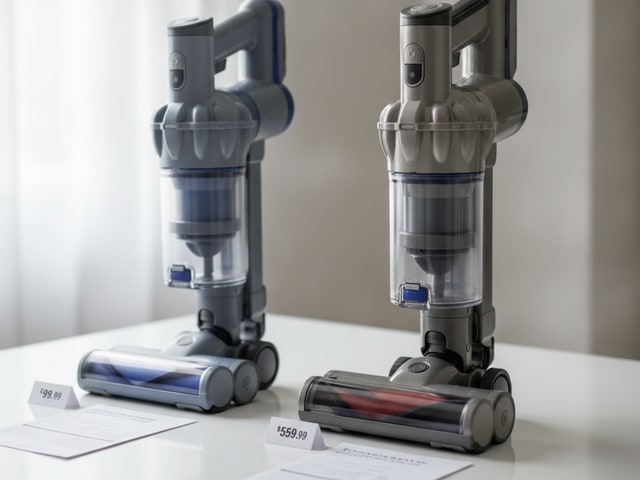
A cordless stick vacuum priced at $50–$80 that promises "powerful suction" or claims to replace your main vacuum is almost certainly cutting corners somewhere, and the listing is designed to make sure you don't notice where.
Vacuum Wars puts the minimum for a cordless worth buying at $150. Below that price, you're making genuine compromises on battery capacity, motor quality, or filtration — not minor ones. The channel sets similar floors for other categories: around $150 for uprights, and roughly $300 for robot vacuums before you start getting reliable performance. These aren't arbitrary numbers. They reflect what it actually costs to build a motor, battery, and filtration system that holds up.
Fake discount pricing is the other trick to watch for. A vacuum listed at $120 with a crossed-out "original price" well above that deserves scrutiny — check whether it's ever actually sold at the higher number. Many budget brands set an inflated MSRP purely to manufacture the appearance of a deal. A product that's permanently 50–60% off isn't on sale; that's just its real price with a fake anchor.
Missing specs are a quieter version of the same problem. Reputable manufacturers publish wattage, battery capacity in watt-hours or milliamp-hours, and airflow measurements. When a budget Amazon listing skips those numbers entirely, it's usually because they'd make the vacuum look bad. You can't find what CFM and air watts actually mean for a specific model when the brand never published them — and that absence is the warning sign, not just a gap in the description.
Marketing language fills the space where real specs should be. "Powerful suction," "deep clean technology," and "premium performance" cost nothing to print on a box. Watt-hours and CFM ratings require an actual product that can back them up.
2. Vague or misleading filtration language
Terms like "HEPA-like," "HEPA-style," "HEPA media," and "advanced filtration" are not HEPA — they're promotional wording with no standardized filtration rating behind them, and they may let fine dust and allergens straight back into your air.
True HEPA is a testable filtration standard. "HEPA-like" has no equivalent definition — a manufacturer can print it on any filter, regardless of how much it actually traps. Any listing using that language should make you assume the filtration is weaker than it sounds.
Vacuum Wars flags sealed canisters as a non-negotiable for allergy households, and for good reason. Even a vacuum with a genuine HEPA filter can fail you when the housing isn't sealed. An unsealed system lets air leak around the filter entirely, bypassing it before it ever reaches the filtration stage. The filter rating becomes meaningless when dust finds another exit route. A description that doesn't explicitly say "sealed system" alongside its filtration claim should be treated as unsealed until proven otherwise.
Filtration quality has outsized impact for pet households. Roughly two-thirds of U.S. households have pets, which means dander and fine hair particles are a daily reality for most shoppers in this price range. A vacuum that blows those particles back into the room isn't just underperforming — it's actively making your air quality worse. You can find affordable HEPA vacuums for pet allergies at reasonable prices, but you have to know what to look for in the specs.
The practical check is simple: search the product description and the downloadable manual for the words "true HEPA" and "sealed system." Neither phrase appearing anywhere means the filtration is almost certainly weaker than advertised. For a deeper breakdown of what separates genuine certification from lookalike language, true HEPA vs HEPA-type filters explained covers exactly where the line is drawn.
3. No warranty info or spare parts availability
Amazon Vacuum Reviews: How to Spot Fake ReviewsA vacuum listing with no stated warranty — or one that buries a 90-day limit in the fine print — is telling you something worth paying attention to: the manufacturer doesn't expect it to last much longer than that.
Motors and batteries are the two most expensive components in any vacuum, and they're also the first things to fail in cheaper builds. A 90-day warranty on a cordless stick vacuum means you're on your own the moment the battery starts losing capacity. A stated warranty of at least one year on the full machine is the baseline — anything shorter is a concrete warning sign. For a full rundown of what vacuum warranties actually cover versus what they exclude, the Vacuum Warranty Guide: What's Covered and What's Not is worth reading before you commit to any purchase.
Queen Vacuum & HomeCare Center, a vacuum-only specialty retailer at 191 Newman Springs Rd. E, Shrewsbury, NJ 07702, calls not buying from a real professional brick-and-mortar store the number one vacuum buying mistake. The reasoning is straightforward: a vacuum is a mechanical appliance that will eventually need a belt replaced, a clog cleared, or a motor serviced. A seller that disappears after the transaction and a brand with no support infrastructure leave you with a broken machine and no recourse.
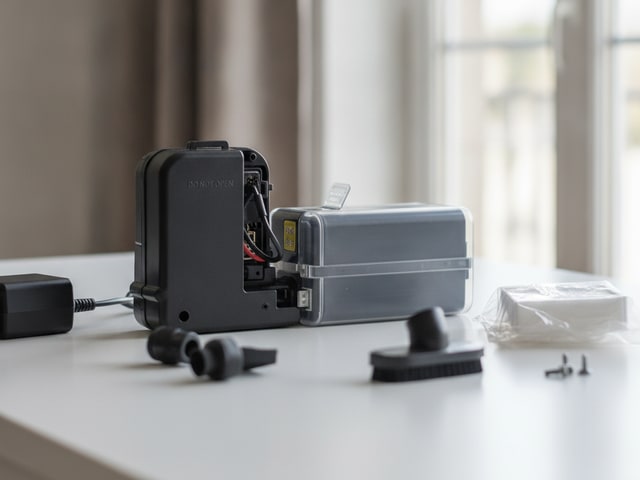
Spare parts availability is the flip side of this problem, and it's one most buyers don't think about until something breaks. Check the manufacturer's website and Amazon for replacement filters, brush rolls, belts, and batteries for the specific model you're considering. No results anywhere means the vacuum is effectively disposable — not because it's cheap, but because there's no way to maintain or repair it when normal wear sets in. Filters need regular replacement on most models, so a vacuum with no available replacement filter isn't a long-term cleaning tool; it's a countdown clock.
Cordless vacuums specifically deserve a battery check before buying. Some budget models seal the battery into the body, which means when it degrades — and it will — the entire vacuum goes in the trash. A replaceable battery pack extends the useful life of the machine by years and is a sign the manufacturer designed it to last. Look up the model number plus "replacement battery" and see what comes up. No results is a warning sign on its own.
4. Wrong vacuum type for your home
Buying the wrong vacuum type for your living situation is one of the fastest ways to end up with a machine that sits in the closet after the first month.
Vacuum Wars is direct about the robot vacuum trap: buying one as your only cleaning tool is a mistake. Robots aren't built to handle large quantities of dirt, and they won't give you a deep clean — they're maintenance tools, not primary cleaners. Your house will stay dirty between sessions with a robot alone. You can check whether budget options can at least handle pet hair as a secondary cleaner — robot vacuums for pet hair under $200 breaks down what they can and can't realistically do.
Carpet-heavy homes with pets are where the convenience pitch of a cordless stick leads a lot of buyers wrong. These models are lighter and easier to grab, but a budget stick under $150 simply doesn't have the sustained suction to pull embedded hair and debris out of carpet fibers. A corded upright in that same price range will outclean it every time on carpet — the motor runs at full power for the entire session, not just until the battery starts fading. The upright vs stick vacuum for pet hair comparison covers the performance gap in detail.
Hard-floor apartments with no carpet need far less machine. An affordable cordless stick paired with a mop handles daily cleaning without any issues. Spending extra on a heavy corded upright for a studio with hardwood floors means you've bought more machine than you need — and a vacuum that's annoying to drag out is one you'll use less often.
Ideal Home, a home and interiors publication, points out that not considering your home's layout is a common purchasing mistake. Stairs, storage space, and the mix of floor types in your home all affect which vacuum type actually works for you day-to-day. A full-size upright is harder to maneuver on stairs and takes up real closet space. A canister handles multi-floor homes better but needs somewhere to park. A cordless stick is easy to store but has a finite runtime that shrinks as the battery ages.
Vacuum type mismatches happen when you choose based on convenience rather than your home's actual layout and floor types.
Quick guide: which vacuum type fits which home
Home Type | Recommended Vacuum | Price Range (Vacuum Wars) | Red-Flag Mismatch to Avoid |
|---|---|---|---|
Small apartment, mostly hard floors | Cordless stick + mop | $150–$800 (cordless) | Buying a heavy upright you'll never pull out |
Multi-story home, mixed carpet | Corded upright or canister | $150–$500 (upright) | Relying on a budget cordless for deep carpet cleaning |
Pet-heavy household, carpet throughout | Corded upright (primary) + robot (secondary) | $150–$500 + $300+ for robot | Using a robot as the only vacuum |
Budget buyer under $150, carpet-heavy home | Corded upright | $150 minimum recommended | Choosing cordless for convenience at the cost of suction |
Studio and small apartment shoppers can narrow things down further — the best cordless stick vacuums for studio apartments covers which models hit the right balance of price and performance for hard-floor living.
5. Too heavy or bulky without ergonomic design
A vacuum you avoid using because it's a pain to haul out is no better than no vacuum at all — and weight is one of the most overlooked specs in any product description.
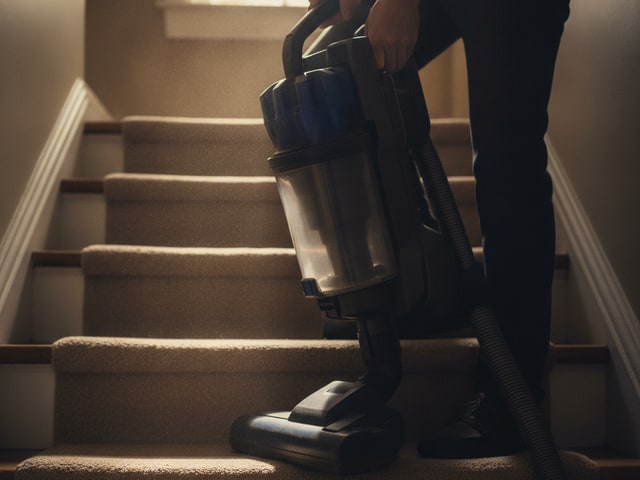
Protech Allergies, an allergy-focused home cleaning resource, puts it plainly: heavy, bulky vacuums make users "lazy to take them out daily or carry them up and down stairs." That's not a minor inconvenience — it's the reason a perfectly functional machine ends up collecting dust in a closet. Something that's annoying to move means you'll clean less often, and the whole purchase becomes a waste.
The weight indicator to watch for is an upright with no listed weight on the product page, or one that clocks in above roughly 18–20 lbs without any carry handle or stair-friendly design. At that point, lugging it between floors becomes a real physical task. Brands with light, ergonomic machines tend to lead with that number because it's a selling point — so when weight isn't listed anywhere in the specs, that omission tells you something.
Storage footprint is the other consideration here. Protech notes that bulky vacuums "need room to store them properly," which is a real constraint for renters and apartment dwellers who don't have a dedicated utility closet. A full-size upright that won't fit behind a door or under a shelf is one you'll leave out in the open or shove somewhere inconvenient — and the less accessible it is, the less you'll use it.
Anyone in a smaller space or a multi-story home should look at lightweight vacuums under 8 pounds — that weight range is where daily use stops feeling like a chore. Storage space as the bigger constraint? Compact vacuums that fit in tiny closets covers models designed with footprint in mind, not just cleaning performance.
6. Overhyped features that don't improve cleaning
A vacuum listing that leads with smart app controls, color options, or accessory count is almost always burying the specs that actually tell you how well it cleans.
Ideal Home warns buyers against being drawn in by "impressive-sounding features" like smart controls and extra cleaning modes — extras that add to the price without adding to the dirt pickup. The more a description leans on feature count, the less confident the manufacturer is about the cleaning performance itself.
Specs that matter are suction power in CFM or air watts, filtration standard, runtime for cordless models, and bin capacity. Those four not being front and center means something is being hidden. For a plain-language explanation of what those suction numbers mean in practice, the Vacuum Suction Power Guide: What Do CFM and Airwatts Actually Mean? is worth a quick read before you compare models.
Motor wattage is the most common distraction in this category. A high wattage number looks impressive, but it measures power draw — not how much suction actually reaches the floor. A vacuum can pull a lot of electricity and still have weak airflow when the internal design is inefficient. Wattage alone tells you nothing about cleaning performance, which is exactly why some brands lead with it.
The quick check: scroll past the feature bullets and find the suction spec. If it's not there, or the page substitutes wattage for an actual airflow measurement, that's a deliberate omission rather than an oversight.

7. High-maintenance design with no guidance
A vacuum that demands frequent filter cleaning, brush roll detangling, or bin emptying — but ships with no maintenance instructions — is setting you up to run it into the ground without realizing it.
Superior Vacuums, a Canadian vacuum repair and retail shop, identifies four warning signs that a vacuum is failing: lost suction, strange noises, a burning smell, and dust being expelled back into the room. All four show up more often in under-engineered machines, and they don't always wait years to appear.
Those same failure signs are exactly what to look for in the review section before you buy. Multiple customers mentioning burning smells, repeated clogs, or dust blowing out the exhaust points to poor airflow design or unsealed filtration. A handful of those complaints in the first 50 reviews is enough to walk away.
Proprietary replacement filters are the other trap. Some budget vacuums use filters that need replacing regularly, which sounds manageable until you realize the replacement costs can add up and rival the original purchase price over a year. Pull up the model number plus "replacement filter" on Amazon before buying — a filter that's hard to find, expensive, or only available from one seller changes what the vacuum actually costs you long-term.
A listing with no maintenance section, no downloadable manual, and no mention of filter replacement intervals deserves skepticism. Brands that build machines meant to last tend to publish that information upfront. For anyone who wants to get the most out of a budget machine, Vacuum Maintenance 101: Make Your Budget Vacuum Last covers the specific tasks and timing that keep suction strong and motors running longer.
8. Misleading wet/dry or multi-surface claims
Sales copy that says a vacuum "cleans any mess" or "handles all surfaces" without spelling out what it cannot do is one of the more dangerous indicators on this list — not just for your vacuum, but for your safety.
Consumer Reports, the independent product testing organization, is direct about this: using a standard dry vacuum on wet messes like soggy cereal can clog the hose and other internal parts. A dry vacuum isn't built to move liquid through its airflow path — clogs and part damage are the likely result. Flammable liquids are a separate and more serious concern: gasoline, cleaning fluid, and similar substances create fire or explosion risks when fumes pass through a motor that wasn't designed to handle them.
Sharp objects are the other category Consumer Reports flags. Vacuuming glass shards, nails, or pins can cut through brush rolls and hoses, and once a hose is compromised, suction drops and debris starts bypassing the filter. Legitimate vacuum manuals list these exclusions clearly — a listing with no safety limitations section at all tells you something the manufacturer would rather you not think about.
Vague, all-encompassing language in Amazon descriptions — "tackles every mess," "works on any floor," "multi-surface performance" — is the signal to dig deeper. Real wet/dry vacuums have a separate wet collection chamber and a sealed motor housing designed to keep moisture away from electrical components. A vacuum claiming wet/dry functionality without mentioning either of those design features in the specs is running on ad copy, not capability.
This is worth checking carefully when you're considering a budget 2-in-1 vacuum and mop combo — those models vary widely in what "wet" actually means. Some actually mop hard floors with a separate water tank; others just have a damp pad attachment that doesn't qualify as wet pickup in any meaningful sense. Check whether the listing distinguishes between mopping and wet vacuuming, because they are not the same thing, and a machine built for one will not safely do the other.

Your pre-purchase red flag checklist
Run through these eight checks on any Amazon vacuum listing before you buy — three or more coming back as warning signs means skip it and keep looking.
Filtration standard stated? The listing should say "true HEPA" or "sealed system" in plain text. "HEPA-like," "HEPA-style," or "advanced filtration" are not filtration standards — they're promotional phrases with no performance requirement behind them. The exact wording not being there means you should assume the filter is weaker than it looks.
Suction spec listed? Look for CFM, air watts, or Pascal ratings — not just motor wattage. Wattage measures power draw, not how much suction reaches the floor. A description that only shows wattage is hiding the number that actually matters.
Warranty length clear? A stated warranty of at least one year covering parts and motor is the minimum worth accepting. A 90-day warranty — or no warranty mentioned at all — means the manufacturer isn't confident the machine lasts much longer than that.
Weight and dimensions shown? An upright that doesn't list its weight is almost certainly heavier than you'd want. Storage dimensions matter too, especially in apartments. Missing size specs on a large machine are almost never a good sign.
Replacement parts available? Check the model number on Amazon and the manufacturer's site for filters, brush rolls, and batteries. Nothing coming up means the vacuum is disposable — you can't maintain it when parts wear out, and you can't replace the battery when it degrades.
Reviews free of early-failure complaints? Sort reviews by most recent and scan for burning smells, repeated clogs, or dust blowing out of the exhaust. A handful of those complaints in the first 50 reviews is a pattern, not a fluke.
Price realistic for the category? Cordless vacuums under $150 involve real trade-offs on motor, battery, or filtration. Robot vacuums under $300 are unlikely to perform as primary cleaners. A price well below those floors paired with claims of premium performance means something is being cut that the sales copy isn't mentioning.
Claims match actual capabilities? Any listing that says "cleans any mess," "replaces your main vacuum," or "handles all surfaces" without specifying limitations is a warning sign. Legitimate products state what they cannot do — wet/dry capability, debris type restrictions, and floor type limits should all be spelled out somewhere in the specs or manual.
Aim to check at least five of these before buying. Missing specs are not neutral — reputable manufacturers publish motor power, battery capacity, filtration type, and warranty on their official product pages because those numbers make their products look good. Brands that skip them usually do so because the numbers don't.
Review sections are your last line of defense, but they're also the easiest to manipulate. Before you trust a rating, it's worth knowing how to spot fake Amazon vacuum reviews — because a 4.5-star average means nothing when the reviews that built it aren't real.
Frequently asked questions
Are cheap cordless vacuums under $100 worth buying?
Light touch-ups on hard floors are about all a sub-$100 cordless can handle — Vacuum Wars puts the threshold for a capable cordless at $150 or above, below which you're making real compromises on battery life, suction, and build quality. Carpet or pets widen the gap between a $90 stick and a $150+ model fast. Save up or buy a budget corded upright instead.
What does 'HEPA-like' mean on a vacuum listing?
"HEPA-like" means the filter has not been certified to the actual HEPA standard — it's ad copy with no regulated meaning. A genuine HEPA filter meets a specific, testable performance threshold; "HEPA-like" or "HEPA-style" filters may capture far less. For allergy or asthma households, this distinction matters more than almost any other spec on the page.
Can a robot vacuum replace a regular vacuum?
No — robot vacuums are maintenance tools, not deep-cleaning replacements. Vacuum Wars explicitly flags buying a robot as your only vacuum as a top purchasing mistake, noting they aren't built to handle large dirt loads or give carpets the deep clean they need. Use one to keep floors tidy between sessions, not as your sole cleaning solution.
How do I know if a vacuum has a sealed filtration system?
The exact phrase "sealed system" should appear on the product page or in the manual — manufacturers who have it will say so clearly. A description that only mentions "HEPA filter" without confirming a sealed system means air can still bypass the filter through gaps in the housing and blow dust back around the room. Search the model name plus "sealed system" and see whether the manufacturer confirms it anywhere.
What vacuum specs should always be listed on a product page?
Filtration type, weight, and warranty length are the minimum specs any honest listing should show — missing any of these is itself a warning sign. Cordless models should also list battery capacity (in mAh or Wh) and run time. A page that only lists motor wattage and nothing else is hiding the numbers that actually matter.
Why does my new vacuum smell like burning?
A burning smell in a new vacuum usually points to belt slippage or a motor running too hot, both of which are more common in under-engineered budget models with undersized motors or weak thermal protection. Stop using it immediately and check for a clog first — a blocked airflow path forces the motor to work harder. If the smell comes back after clearing any blockage, that's a design problem, not a maintenance one.
Is a bagged or bagless vacuum better for allergies?
Bagged vacuums tend to be better for allergy sufferers because the bag itself acts as an extra filtration layer and you avoid direct contact with collected dust when emptying. Vacuum Wars calls out dismissing bagged vacuums as a buying mistake — they can have advantages in hygiene and filtration that are worth reconsidering when dust sensitivity is a concern.
How heavy is too heavy for a vacuum cleaner?
There's no universal cutoff, but Protech Allergies flags heavy, bulky machines as a practical red flag because people simply stop using vacuums that feel like a chore to carry — especially up stairs. A multi-story home and a listing that doesn't include weight are reason enough to pause. A vacuum you avoid using is worse than a lighter one you actually run every week.
What warranty length should I expect on a vacuum?
A minimum of one year covering the full machine is the baseline — anything shorter, like a 90-day warranty, signals the manufacturer doesn't expect it to last. A listing that doesn't mention a warranty at all deserves the same skepticism. Factor in replacement cost before buying.
How can I tell if a vacuum's Amazon discount is real?
A vacuum that's always shown at 50–60% off its "list price" is almost certainly using an inflated reference price to make the deal look bigger than it is. Check whether the "sale" price has been the actual selling price for months — a discount that never ends is cosmetic, not real. Vacuum Wars notes that Shark in particular runs frequent sales, so checking price history before assuming you're getting a deal is worth the extra minute.