Upright vs Stick Vacuum for Pet Hair: Performance Comparison
The Dyson V15 Detect cordless stick vacuum and Dyson Ball Animal 3 upright vacuum are the top pet hair cleaning options, with sticks offering portability and uprights providing unlimited runtime for deep carpet cleaning.
You're tired of choosing between a vacuum that's powerful enough for your shedding pets and one that's actually convenient to use every day. The Dyson V15 Detect stick vacuum produces up to 230 Air Watts and matches premium uprights in independent pet-hair tests, while weighing just 6.8 pounds. For homes with extensive carpeting and multiple pets, the Dyson Ball Animal 3 upright generates 270 Air Watts of continuous suction and a larger bin that holds twice as much fur. Pet owners praise both for their anti-tangle brush designs that prevent the hair wrap nightmares you get with cheaper models.
The real difference comes down to your cleaning style: uprights excel at deep carpet agitation and marathon cleaning sessions, while premium stick vacuums now approach upright-level suction with the huge advantage of converting to handheld mode for stairs and furniture. Your choice depends on whether you prioritize unlimited runtime and maximum bin capacity, or the convenience of grabbing one lightweight tool for everything from baseboards to car interiors.
Golden retriever tumbleweeds or long-haired cat fur that embeds in every carpet fiber — these vacuum types now perform similarly. By the end, you'll know exactly which format fits your home size, pet situation, and daily cleaning routine.
Pet hair pickup performance: upright vs stick vacuum test results
Independent lab tests reveal that premium stick vacuums now match upright performance for pet hair pickup, with the V15 Detect cordless producing virtually identical results to the Riccar R40 upright on simulated pet hair tests. YouTube testing shows "very little performance difference" between these two models on carpet, while bare floor tests found "no difference" in pet hair removal between the stick and upright formats. RTINGS testing confirms this performance convergence, with their Pet Hair Pickup scoring system defining 7.5+ ratings out of 10 as "good or better" for single-pass pet hair clearing. Both high-end cordless sticks and powerful uprights can achieve this threshold. The Dyson V15 Detect earned RTINGS' top pick for best vacuum for pet hair overall, demonstrating that cordless technology has closed the historical performance gap. Upright vacuums maintain their advantage on thick carpet where deep agitation matters most. Models like the Ball Animal 3 with its 270 Air Watts of continuous suction and motorized brush roll excel at lifting embedded fur from high-pile carpet fibers. Consistent power from corded uprights provides stronger carpet penetration for homes with different pet hair types that work deep into carpet backing. Stick vacuums excel at single-pass pet hair removal on hard floors, where controlled tests show no performance difference versus uprights. Lighter weight and maneuverability of models like the Shark Stratos Cordless IZ862H make them superior for cleaning pet hair from stairs, furniture, and car interiors where uprights struggle with accessibility. Performance gaps narrow further when you consider real-world cleaning patterns. Most pet owners need quick daily cleanups rather than marathon deep-cleaning tasks, where the 60-minute runtime of premium sticks proves sufficient for typical pet hair maintenance across mixed flooring surfaces.
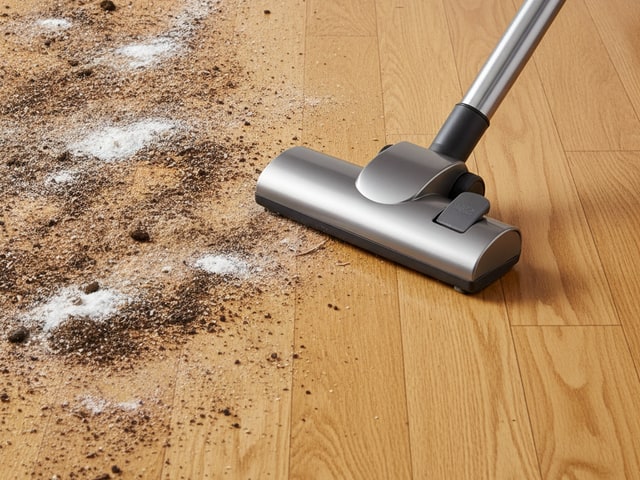
Suction power and motor specifications comparison
Power gaps between uprights and sticks have narrowed dramatically, with premium cordless models now approaching the suction levels that once required a corded connection.
Vacuum Model | Motor Power | Suction (Air Watts) | Power Source | Suction Consistency |
|---|---|---|---|---|
Dyson V15 Detect (Stick) | 125,000 RPM motor | Up to 230 AW (Boost mode) | Battery (60 min runtime) | Decreases as battery depletes |
Dyson Ball Animal 3 (Upright) | 1,000-1,200W motor | Around 270 AW | Corded (unlimited) | Consistent throughout session |
Shark Stratos Upright AZ3002 | Around 1,350W corded motor | Not specified by manufacturer | Corded (unlimited) | Consistent throughout session |
Shark Stratos Cordless IZ862H | Around 280-400W battery motor | Not specified by manufacturer | Battery (60 min runtime) | May decrease in extended use |
Miele Blizzard CX1 Cat & Dog | 1,200W maximum power | Estimated 250+ AW | Corded (unlimited) | Consistent throughout session |
Premium stick vacuums like the V15 Detect produce over 200 Air Watts, matching corded uprights in a lightweight package.
The V15 Detect cordless stick vacuum is the current peak of battery-powered suction technology. Its Hyperdymium motor spins at 125,000 RPM to generate up to 230 Air Watts in Boost mode, putting it within striking distance of many corded uprights. You get this performance in a 6.8-pound package that converts to handheld mode for furniture and car cleaning. Upright models still hold the raw power advantage through their corded connections. The Ball Animal 3 upright vacuum produces around 270 Air Watts of continuous suction at the cleaner head, while the Shark Stratos Upright uses around 1,350 watts of input power that maintains full power throughout extended cleaning periods. This steady energy supply makes uprights better suited for deep carpet cleaning and large homes where you need sustained performance. Battery-powered sticks face the inevitable trade-off between runtime and power output. The Shark Stratos Cordless operates on around 280-400 watts of battery power, notably less than its upright sibling's input power. As lithium-ion batteries discharge during use, suction gradually decreases, though high-end models like the V15 maintain strong performance for most of their 60-minute runtime in standard mode. Corded uprights provide the suction stability advantage that becomes most apparent during marathon cleaning periods. When you're tackling multiple rooms of embedded pet hair or deep-cleaning thick carpets, the unlimited power supply ensures the last room gets the same cleaning intensity as the first. Cordless models excel at quick daily maintenance but may require recharging or power management during whole-house deep cleans.
Bin capacity and runtime for multi-pet households
Upright vacuums hold roughly twice as much pet hair as stick vacuums, with the Dyson Ball Animal 3 offering a larger bin compared to the V15 Detect's smaller capacity. You'll empty the stick vacuum twice as often during heavy shedding seasons, which becomes tedious when dealing with multiple pets that shed continuously. Ball Animal 3 upright vacuum provides unlimited runtime through its corded design, letting you tackle whole-house cleaning without interruption. This matters most during seasonal coat blowouts when golden retrievers and German shepherds shed enough fur to fill multiple vacuum bins. You can clean for hours without worrying about battery depletion or finding charging stations mid-session. V15 Detect and similar cordless stick vacuums run for 40-60 minutes in eco mode, but this drops sharply when you switch to the higher power settings needed for embedded pet hair. The V15 runs for up to 60 minutes on its lowest setting with non-motorized tools, but boost mode for deep carpet cleaning cuts this substantially. The Shark Stratos Cordless IZ862H offers similar runtime patterns, giving you enough power for quick daily maintenance but requiring strategic power management for deeper cleaning tasks. Multi-pet households face the bin capacity challenge most acutely with stick vacuums. Smaller dust cups fill quickly when you're collecting hair from three cats or two large dogs, forcing frequent emptying breaks that interrupt your cleaning flow. Upright models like the Shark Stratos AZ3002 with its larger capacity still require regular emptying, but less frequently than their cordless counterparts. For homes with extensive carpeting and heavy shedding, corded uprights eliminate the runtime anxiety that comes with battery-powered cleaning. You can methodically work through multiple rooms without calculating remaining battery life or rushing to finish before the power cuts out. This unlimited operation becomes essential when you're dealing with automated pet hair cleaning as a supplement rather than replacement for manual vacuuming, requiring thorough weekly deep cleans that exceed typical cordless capabilities.
Best 5 upright and stick vacuums for pet hair
These five models are the current peak of pet hair cleaning technology, with each excelling in different home situations and cleaning priorities.
Dyson V15 Detect cordless stick vacuum
The V15 Detect cordless stick vacuum earned RTINGS' top pick for pet hair with exceptional performance on both bare floors and carpet. You get up to 230 Air Watts of suction in Boost mode, matching many corded uprights while weighing just 6.8 pounds. The whole-machine HEPA filtration captures 99.99% of particles down to 0.3 microns, making it ideal for pet owners with allergies.
This model converts to handheld mode for cleaning stairs, furniture, and car interiors. Anti-tangle hair screw tool prevents the brush wrap nightmares common with cheaper vacuums. You'll get about 60 minutes of runtime in Eco mode, though this drops to 10-12 minutes in the Boost setting needed for embedded fur.
Smaller bins fill quickly in multi-pet homes, requiring frequent emptying during heavy shedding periods. It's expensive but provides upright-level cleaning in a lightweight package that handles every surface in your home.
Dyson Ball Animal 3 upright vacuum
Ball Animal 3 upright vacuum provides 270 Air Watts of continuous suction designed for pet owners. You get a larger bin that holds more than twice as much fur as stick models, reducing emptying frequency during marathon cleaning periods. Whole-machine advanced filtration captures over 99% of particles down to 0.3 microns.
This corded model excels at deep carpet agitation where embedded pet hair requires sustained power. The motorized brush roll and unlimited runtime make it perfect for homes with extensive carpeting and multiple shedding pets. Ball technology provides easier steering around furniture compared to traditional uprights.
It's much heavier than stick alternatives and requires lifting the entire unit for stairs. The 5-year warranty reflects Dyson's confidence in long-term durability. This pet-focused upright provides professional-level performance.
Shark Stratos upright AZ3002
Shark Stratos Upright AZ3002 combines a 1,350-watt motor with Anti-Allergen Complete Seal technology and HEPA filtration. The system traps over 99% of dust and allergens down to 0.3 microns, providing excellent HEPA filtration for pet allergies. HairPro anti-wrap technology actively removes hair from the brushroll during cleaning.
DuoClean PowerFins tackle both carpets and hard floors with dual brushrolls that engage different surfaces simultaneously. The dust cup provides reasonable capacity for most homes. Lift-Away technology lets you detach the canister for portable cleaning of stairs and upholstery.
This model weighs about 16 pounds and includes a 30-foot cord for extended reach. The 5-year warranty covers both parts and labor. It's a value alternative to premium Dyson models while maintaining strong pet hair performance.
Shark Stratos cordless IZ862H
Shark Stratos Cordless IZ862H offers the same DuoClean PowerFins technology in a lightweight 8.9-pound cordless package. You get up to 60 minutes of runtime in Eco mode with the removable battery. The anti-wrap brushroll prevents hair tangles that plague other cordless models.
This stick vacuum converts to handheld mode for above-floor cleaning and includes specialized pet tools. You get a smaller dust cup that requires more frequent emptying than uprights but handles typical daily pet hair maintenance well. Anti-Allergen Complete Seal with HEPA maintains the same filtration quality as the upright version.
The 5-year vacuum warranty with 2-year battery coverage provides peace of mind for long-term use. Runtime decreases substantially in higher power modes needed for thick carpet cleaning. It sits between budget sticks and premium Dyson models.
Miele Blizzard CX1 Cat & Dog canister vacuum
Miele Blizzard CX1 Cat & Dog canister vacuum offers a third option with its 1,200-watt motor and generous 2.0-liter dust container. HEPA AirClean filter provides excellent filtration of fine particles and allergens, exceeding most stick and upright filtration systems. This bagless design eliminates ongoing bag costs while maintaining Miele's reputation for durability.
Canister design provides excellent maneuverability around furniture while providing strong suction through the lightweight wand. Large capacity suits homes with multiple pets and heavy shedding. Specialized pet tools include a mini turbo brush for upholstery and stairs.
Main units stay stationary while you maneuver the lightweight wand and head. The separate canister requires more storage space than uprights or sticks. This reflects Miele's premium positioning and German engineering quality.
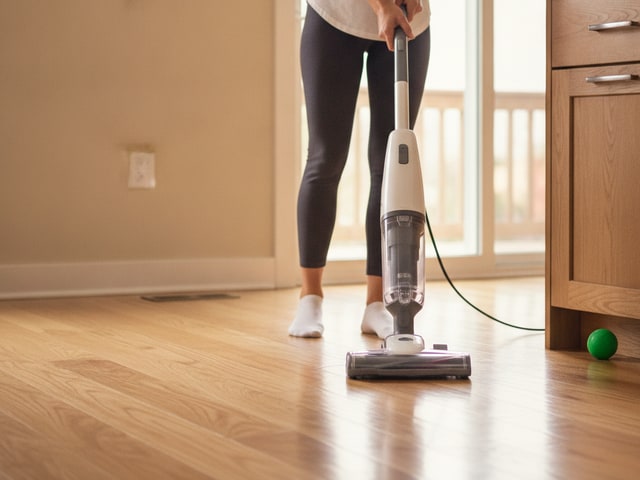
Weight and maneuverability for stairs and furniture
Stick vacuums weigh 6-9 pounds compared to 16-17 pound uprights, making them dramatically easier to carry up stairs and maneuver around furniture where pet hair accumulates. You can grab a V15 Detect cordless stick vacuum at 6.8 pounds and clean an entire staircase without the back strain that comes with lugging a 17.3-pound Ball Animal 3 upright up each step. Convertible design of stick vacuums transforms them into handheld units for cleaning upholstery, car interiors, and pet beds without needing separate tools. You simply detach the wand from models like the Stratos Cordless IZ862H and instantly have a powerful handheld vacuum for tackling pet hair on couches, stairs, and tight spaces. This eliminates the need for dedicated handheld options in many homes. Upright vacuums force you to lift the entire 16-17 pound unit when cleaning stairs or rely on their detachable hose with limited reach. The Stratos Upright AZ3002 includes Lift-Away technology that lets you detach the canister, but you're still carrying a heavier unit than any stick vacuum. Most uprights require you to drag them from room to room and struggle with their bulk around furniture legs and tight corners. Stick models excel at cleaning under furniture where pet hair collects in hard-to-reach areas. Their low-profile design and swivel steering let you glide under beds, sofas, and coffee tables without moving heavy furniture. Lightweight wands make it effortless to reach behind radiators and into corners where traditional uprights simply cannot fit. Maneuverability advantages become most apparent during daily pet hair maintenance when you need to quickly tackle hair tumbleweeds under dining room chairs or clean pet beds on elevated surfaces. You can carry a stick vacuum up to a second-floor bedroom, clean pet hair from the bed and surrounding carpet, then easily transport it back downstairs for the next cleaning task.
Filtration systems and allergen control
Both upright and stick vacuums now offer sealed HEPA filtration systems that capture over 99% of pet dander and allergens, eliminating the historical advantage uprights once held for allergy control. You get the same allergen protection whether you choose a lightweight stick or powerful upright, as long as you select models with whole-machine sealed systems. V15 Detect cordless stick vacuum captures 99.97% of particles down to 0.1 microns through its whole-machine HEPA filtration system. This microscopic filtration level traps pet dander, pollen, and dust mites that trigger allergic reactions. Sealed design prevents allergens from escaping through motor exhaust, ensuring the air coming out is cleaner than what goes in. Shark's Anti-Allergen Complete Seal technology appears in both their upright and cordless stick models, trapping 99.9% of dust and allergens down to 0.3 microns. Stratos Upright AZ3002 and Stratos Cordless IZ862H use identical HEPA filtration systems, proving that form factor no longer determines allergen control quality. You get the same HEPA filtration for pet allergies protection in either format. Miele takes filtration even further with their HEPA AirClean filters in canister models like the CX1 Cat & Dog, retaining microscopic particles and allergens. This is the current peak of vacuum filtration technology, though the practical difference between high-end filtration systems is minimal for most pet owners dealing with typical household allergens. Whole-machine filtration prevents pet dander from escaping through motor exhaust regardless of vacuum type. Cheaper models without sealed systems can actually worsen indoor air quality by blowing fine particles through gaps around the motor housing. Premium uprights and sticks both feature gaskets and seals that force all air through the filtration system before exhaust. Key differences lie in filter maintenance rather than filtration quality. Stick vacuums typically use washable filters that you rinse monthly, while some uprights require replacement HEPA filters every 6-12 months. Both approaches maintain allergen control when properly maintained, though washable filters reduce ongoing costs for households with multiple pets that generate heavy dander loads.
Which vacuum type should you choose for your pet situation?
Choose upright vacuums for homes with extensive carpeting, multiple heavy-shedding pets, and need for extended cleaning periods, while stick vacuums work best for mixed flooring, frequent quick cleanups, stairs, and homes under 1,500 square feet. Your home size determines which format makes practical sense. Homes over 1,500 square feet with mostly carpet benefit from the unlimited runtime and larger bins of upright models like the Ball Animal 3. You can clean multiple rooms without stopping to recharge or empty bins, making uprights ideal for weekend deep-cleaning marathons when golden retrievers blow their coats. Stick vacuums excel in smaller homes where you need daily maintenance rather than marathon periods. V15 Detect cordless stick vacuum handles typical pet hair cleanup in apartments and condos where 60 minutes of runtime covers your entire living space. You get the convenience of grabbing one lightweight tool for everything from baseboards to car seats. Pet shedding level matters more than home size in some cases. Multiple heavy-shedding breeds like German shepherds or Maine coon cats generate enough fur to overwhelm the smaller bins in stick models. You'll spend more time emptying than cleaning, making the larger capacity of uprights worth their extra weight and bulk. Corded stick vacuums like the Shark APEX DuoClean ZS362 offer a middle ground with unlimited runtime in a lighter package than traditional uprights. You get steady suction without battery anxiety while maintaining easier maneuverability around furniture and stairs. These models work well for medium-sized homes where cordless runtime feels limiting but upright weight seems excessive. Consider total ownership costs when making your decision. Cordless models require battery replacement every 2-3 years at $50-100 per battery, while uprights need periodic belt and filter maintenance but motors typically last 5-10 years. For budget-friendly pet vacuum options, factor in these long-term expenses alongside initial purchase price to understand true cost per year of ownership. Mixed flooring homes with both carpet and hard surfaces favor stick vacuums that transition seamlessly between surface types. Uprights excel on thick carpet but can scatter debris on hard floors, while premium sticks like the Stratos Cordless handle both surfaces equally well in their dual-brush designs.
Maintenance and long-term costs for pet owners
Cordless stick vacuums require battery replacement every 2-3 years, while upright vacuums need periodic belt and brush roll maintenance but their motors typically last 5-10 years with proper care. Battery replacement costs are the biggest long-term expense for stick vacuum owners. V15 Detect uses a lithium-ion battery that gradually loses capacity after 500-800 charge cycles, translating to roughly 2-3 years of regular use in pet households. Replacement batteries are available from Dyson and third-party manufacturers, though original batteries typically offer better runtime and reliability. Upright vacuum maintenance focuses on mechanical components rather than batteries. You'll need to replace belts and brush rolls periodically depending on the model. Ball Animal 3 and Stratos Upright AZ3002 use belt-driven brush systems that wear gradually but remain serviceable for years with basic maintenance. HEPA filter replacement is needed regularly regardless of vacuum type in heavy pet households. Stratos models use washable pre-filters that extend HEPA life, while Dyson models typically require filter replacement annually. Pet dander and fur accelerate filter clogging, making regular replacement essential for maintaining suction and allergen control. Hair wrap removal and brush maintenance frequency remains similar between modern anti-tangle designs in both categories. V15 Detect and Stratos Cordless both feature anti-wrap technology that reduces hair tangling, though you'll still need to remove accumulated fur every few weeks in multi-pet homes. Upright models with similar anti-tangle features require comparable maintenance despite their different form factors. Motor longevity favors uprights due to their corded design and larger cooling systems. Corded motors in quality uprights often last 5-10 years with regular filter changes, while cordless stick motors face more stress from battery power fluctuations and compact cooling. Factor these replacement cycles into your total cost calculation when choosing between formats for long-term pet hair management.
Frequently asked questions
Do stick vacuums pick up pet hair as well as uprights?
High-end stick vacuums like the Dyson V15 Detect can match upright performance on single-pass pet hair pickup tests. The V15 produces up to 230 Air Watts, which approaches what many corded uprights offer. However, you'll get shorter runtime and need to empty the smaller bin more often with heavy shedding.
Which vacuum is better for carpets with pet hair?
Uprights like the Dyson Ball Animal 3 have the edge for deep carpet cleaning because they maintain steady power and use larger, more aggressive brush rolls. The unlimited runtime means you can make multiple passes without worrying about battery life, which matters when hair is embedded deep in carpet fibers.
How long do stick vacuum batteries last with pet hair cleaning?
Most premium sticks run 15-25 minutes on high power settings needed for effective pet hair pickup. The V15 gives up to 60 minutes in Eco mode, but you'll likely need higher power for carpets. Plan on 20-30 minutes of actual cleaning time for thorough pet hair removal.
Are upright vacuums too heavy for daily pet hair cleanup?
At 16-17 pounds, uprights like the Ball Animal 3 can feel cumbersome for quick daily touch-ups. If you're dealing with daily hair tumbleweeds on hard floors, a 7-pound stick vacuum makes more sense. Save the upright for weekly deep cleaning sessions on carpets and rugs.
Which vacuum type is better for pet allergies?
Both formats now offer sealed HEPA systems that capture over 99% of allergens. The V15 and Ball Animal 3 both feature whole-machine filtration. Uprights might have a slight edge because their larger motors can maintain stronger airflow through the filters, but either option works well for allergy control.
Do cordless vacuums lose suction with pet hair?
Quality cordless models maintain steady suction until the battery dies, unlike older models that gradually weakened. The V15 uses cyclone technology that prevents clogging. However, you'll notice performance drops if the bin gets too full of hair, which happens faster than with uprights.
What's the best vacuum for stairs with pet hair?
Stick vacuums win here because of their lightweight design and handheld conversion. Carrying a 7-pound Stratos Cordless up stairs beats wrestling with a 17-pound upright. The motorized pet tools work well on carpeted steps, and you can easily switch to handheld mode for corners.
How often do you empty the bin with each vacuum type?
Uprights typically hold 2-3 times more debris than sticks. Ball Animal 3's larger bin might last a week in a multi-pet home, while the V15's smaller bin needs emptying every 2-3 cleaning sessions. Heavy shedders will fill stick vacuum bins noticeably faster.
Which vacuum is easier to maintain for pet owners?
Modern stick vacuums edge out uprights for routine maintenance simplicity. Both the V15 and Stratos Cordless feature anti-tangle brush rolls that resist hair wrap. Stick models also have fewer parts to clean and no bags to replace, though you'll need to wash filters more frequently due to smaller capacity.
Are stick vacuums worth it for large homes with pets?
In homes over 2,000 square feet with multiple pets, stick vacuums work best as secondary cleaners. You'll spend too much time emptying bins and recharging batteries for whole-house deep cleaning. Consider a stick for daily maintenance and an upright for weekly thorough cleaning, or invest in a premium stick with swappable batteries.