HEPA Filter Explained: Do You Really Need True HEPA in a Vacuum?
True HEPA vacuum filters capture 99.97% of particles at 0.3 microns, making them essential for allergy sufferers but potentially overkill for general cleaning without health concerns.
You're staring at vacuum boxes covered in "HEPA" stickers, wondering if you actually need to spend extra for the real thing. The honest answer depends on whether anyone in your home has allergies, asthma, or you're dealing with pet dander. For serious allergen control, the Miele Boost CX1 Cat & Dog PowerLine provides hospital-grade filtration in a sealed system that won't leak dust back into your air. Budget-conscious shoppers with mild sensitivities can get solid results from the Dyson Gen5detect Cordless, which traps 99.99% of particles down to 0.1 microns. If you're just cleaning visible dirt on hardwood floors with no health issues, a good HEPA-type filter might save you money without sacrificing much performance.
The key difference isn't just the filter but whether your vacuum forces all exhaust air through that filter without leaking. It's like a face mask: the fabric quality matters, but gaps around the edges make it useless. Many vacuums slap a HEPA filter inside a leaky body that still spreads fine dust around your room.
You'll discover which "HEPA" labels are marketing tricks and which vacuums actually trap the microscopic particles that trigger your sneezing fits. Whether you're a pet owner dealing with dander or someone who just wants cleaner air, you'll know exactly which filtration level makes sense for your home and budget.
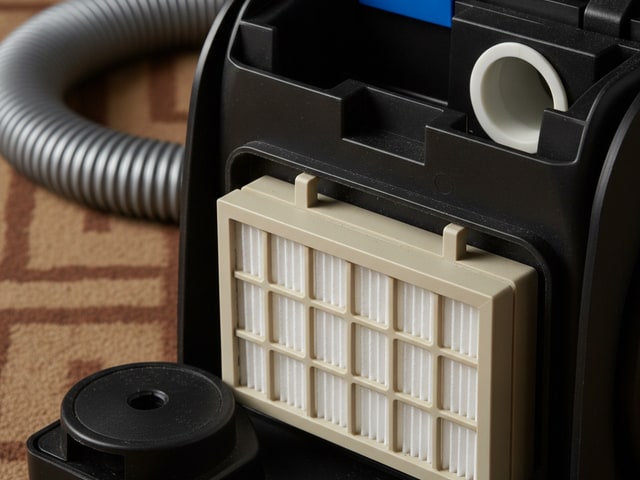
What is a HEPA filter and how does it work?
HEPA stands for High-Efficiency Particulate Air, a filtration standard originally developed for nuclear facilities in the 1940s to capture radioactive particles. These filters use dense mats of ultrafine fibers to trap tiny allergens that would sail right through regular vacuum filters. HEPA filter media consists of randomly arranged fiberglass or non-woven polypropylene fibers that create a maze-like path for air to navigate. As particles flow through this labyrinth, three physical mechanisms work together to capture them: interception (particles follow airflow paths and get too close to fibers), impaction (larger particles can't change direction fast enough and crash into fibers), and diffusion (tiny particles bounce around randomly and eventually hit a fiber). The most challenging aspect of HEPA filtration: 0.3 microns is the Most Penetrating Particle Size (MPPS), the hardest size for any filter to catch. Particles at this size are too small for impaction but too large for strong diffusion effects. This critical size is why HEPA standards require 99.97% capture efficiency at this specific measurement. True HEPA filters actually perform better on particles both smaller and larger than 0.3 microns. Particles smaller than 0.3 microns bounce around more erratically due to Brownian motion, making them more likely to hit fibers. Larger particles have more momentum and can't follow airflow paths around obstacles as easily. Dense fiber construction means air has to work harder to pass through a true HEPA filter compared to standard vacuum filters. This is why vacuums with genuine HEPA filtration need more powerful motors to maintain adequate suction, the trade-off for removing particles 300 times smaller than the width of a human hair.
True HEPA vs HEPA-type vs regular filters: what's the difference?
The difference comes down to testing standards and actual particle capture rates, with True HEPA requiring 99.97% efficiency at 0.3 microns while HEPA-Type filters often only hit that percentage at much larger particles.
Filter Type | Efficiency Standard | Particle Size Tested | Certification Required | Typical Cost | Best For |
|---|---|---|---|---|---|
True HEPA | 99.97% capture rate | 0.3 microns | DOE/ASME standards | $30-60 replacement | Allergies, asthma, pet dander |
HEPA-Type | 99.97% capture rate | 2.0 microns (10x larger) | No independent testing | $15-30 replacement | General cleaning, budget-conscious |
H13/H14 Classification | 99.95-99.995% capture | 0.1-0.3 microns MPPS | EN1822 European standard | $40-80 replacement | Medical-grade applications |
Regular Filter | 85-95% capture rate | 5+ microns | No standard | $5-15 replacement | Visible dirt, basic dust control |
U.S. Department of Energy (DOE) sets the True HEPA standard, but there's no government regulation preventing companies from using "HEPA" on consumer products that don't meet this benchmark.
Manufacturers can legally slap "HEPA-Type" or "HEPA-Style" on filters that look similar to real HEPA but remove particles at different efficiency levels. These imposters may test their 99.97% claim at larger particle sizes instead of the critical 0.3-micron threshold, that's like testing a basketball hoop with beach balls instead of basketballs. The particle size difference is more significant than you'd think. Dust mite allergens measure around 0.5-50 microns, pet dander ranges from 0.5-100 microns, and pollen spans 10-100 microns. A filter that only works at 2 microns will miss the smallest, most problematic allergens that trigger your symptoms. Authentic HEPA filters must pass rigorous testing under controlled laboratory conditions. The filter gets bombarded with particles of exactly 0.3 microns in diameter, and it must filter at least 99.97% of them. This isn't a one-time test, certified filters undergo batch testing to ensure consistency. European H13 and H14 classifications take this even further. These standards, defined by EN1822, test filters at their Most Penetrating Particle Size (MPPS) and require 99.95% efficiency for H13 and 99.995% for H14. You'll find these ratings on premium vacuum filters from brands like Miele and some Dyson models. The lack of regulation creates a wild west situation where "HEPA" becomes meaningless marketing speak. Industrial Vacuum notes that some competitors advertise 99.97% efficiency but bury the "at 2 microns" detail in fine print. Without independent verification, you're trusting the manufacturer's word. Regular vacuum filters handle visible dirt and larger dust particles just fine, but fine allergens sail right through. For homes without allergy concerns, these basic filters often work adequately at a fraction of the cost. The price gap reflects the manufacturing complexity. Genuine HEPA filters require precise fiber density and quality control to maintain their removal efficiency. HEPA-Type filters use similar-looking media but with looser tolerances that reduce both performance and cost.
Why sealed systems matter more than filter rating
A vacuum with a genuine HEPA filter can still spread allergens around your room if the machine's body leaks air around the filter housing. The filter rating tells you what happens to particles that actually pass through the media, but it says nothing about whether all the air goes through that filter initially. Leak-proof HEPA systems force every bit of exhaust air through the filter by using gaskets, tight-fitting housings, and careful engineering to eliminate bypass paths. It's like a high-quality face mask versus one with gaps around the edges, the filter material might be identical, but the seal determines real-world performance. Non-sealed vacuums create what engineers call "bypass leakage." Dirty air gets sucked into the machine, but some of it escapes through gaps in the housing, around loose-fitting filter frames, or through poorly sealed joints. You end up with a vacuum that has a HEPA filter but still blows fine dust into your living space. The problem becomes obvious when you watch dust particles in a sunbeam while vacuuming. A leaky vacuum will show visible particles swirling in the exhaust air, even with a brand-new HEPA filter installed. The filter itself works perfectly, it's just not filtering all the air. Look for "sealed system," "allergen sealed," or "whole-machine HEPA" labeling when shopping. These terms indicate the manufacturer designed the entire airflow path to prevent leaks, not just dropped a HEPA filter into a standard vacuum body. Some brands like Miele test their contained airflow to ensure no air bypasses the filtration. Potential leakage issues show up when you check where the filter sits in the housing. Quality sealed systems use rubber gaskets or foam seals around the filter perimeter, spring-loaded clamps to maintain pressure, and twist-lock mechanisms that compress the seal when properly installed. Cheap implementations just slide the filter into a plastic slot with no sealing mechanism. The sealed system requirement explains why some expensive vacuums with basic filters outperform cheap machines with "HEPA" stickers. A well-sealed vacuum with a good standard filter removes more allergens than a leaky machine with genuine HEPA media, because containment is more critical than the filter's theoretical efficiency rating.
When you actually need true HEPA in your vacuum
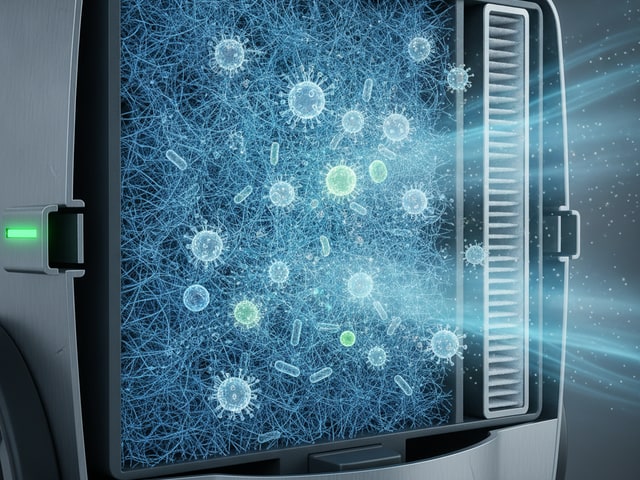
True HEPA becomes necessary when someone in your household has allergies, asthma, or respiratory sensitivities that react to fine particles floating in your air. The 99.97% removal rate targets the allergens that trigger sneezing, wheezing, and watery eyes. People with allergies and asthma need this level of filtration because their immune systems overreact to particles that healthy people barely notice. Dust mite allergens measure 0.5-50 microns, pet dander ranges from 0.5-100 microns, and pollen spans 10-100 microns. Regular vacuum filters miss the smallest particles in these ranges, exactly the ones that cause the most problems. Pet owners dealing with dander face a challenging situation. Cat allergens are problematic because they're sticky proteins that cling to surfaces and become airborne with the slightest disturbance. Dogs produce different allergens, but both types require True HEPA to filter well. [HEPA filters for pet allergies](/hepa-filters-pet-allergies-affordable-vacuums) can reduce airborne allergens by up to 99.97% when properly sealed. Renovation cleanup, mold remediation, or any work with hazardous materials demands certified HEPA filtration for safety reasons. Construction dust contains silica particles that can damage lungs permanently. Lead dust from old paint creates particles smaller than 10 microns that regular filters can't catch. Mold spores measure 1-30 microns, with the most dangerous ones falling right in the range where True HEPA excels. Homes with babies, elderly residents, or immunocompromised family members benefit greatly from True HEPA because these groups are more vulnerable to airborne contaminants. Infants' developing respiratory systems react more severely to fine particles. Elderly people often have compromised lung function that makes them sensitive to dust and allergens. Anyone undergoing chemotherapy or taking immunosuppressive medications needs cleaner air to avoid respiratory complications. You can skip True HEPA if you live in a hardwood-only home without health concerns or pets. Regular filtration handles visible dirt and larger dust particles perfectly well for general cleaning. The extra cost and maintenance of True HEPA filters doesn't provide meaningful benefits when you're just picking up crumbs and surface debris. Contained airflow becomes critical in all these scenarios. Even genuine True HEPA filters won't protect your family if the vacuum leaks contaminated air around the filter housing. Look for "sealed system" or "allergen sealed" labeling to ensure all exhaust air passes through the filtration media. Consider your specific triggers when deciding. If you only react to large particles like visible dust or pet hair, HEPA-Type filters might suffice. But if tiny allergens send you reaching for tissues or inhalers, the investment in True HEPA pays for itself in reduced symptoms and better quality of life.
5 best true HEPA vacuums for different budgets and needs
These five vacuums have genuine True HEPA filtration in leak-proof construction that actually traps allergens instead of spreading them around your room.
Miele Boost CX1 Cat & Dog PowerLine - premium canister for serious allergies
The Miele Boost CX1 Cat & Dog PowerLine bagless canister vacuum combines a powerful motor with HEPA AirClean filtration that removes 99.97% of particles at 0.3 microns. You get hospital-grade air cleaning in a contained system that covers large areas with its extended cleaning radius. This canister excels at deep carpet cleaning while maintaining the leak-proof airflow path that makes HEPA filtration actually work. The HEPA AirClean filter meets EN1822 H13 standards, putting it in the same category as medical-grade filtration systems. Pet owners dealing with stubborn dander will appreciate the specialized tools and the fact that all exhaust air passes through the HEPA media without bypass leaks. The dust container means less frequent emptying compared to smaller cordless units. Miele's build quality shows in details like the rubber gaskets that maintain the seal around the filter housing and the spring-loaded clamps that prevent air from sneaking around the edges. Filter replacement runs every 6-12 months depending on use, but the filtration quality makes the cost worthwhile for households with severe allergies or multiple pets.
Dyson Gen5detect Cordless - whole-machine HEPA in a stick
Dyson Gen5detect Cordless has whole-machine HEPA filtration that removes 99.99% of particles down to 0.1 microns in a lightweight cordless package. The Hyperdymium motor spins at high speeds to maintain strong suction through the dense HEPA media, running up to 70 minutes in Eco mode. You get the convenience of cordless cleaning without sacrificing filtration quality. The contained design forces all air through the HEPA filter, so you're not just moving allergens from the floor to the air. The bin capacity works well for most homes, though you'll empty it more often than a full-size canister. The laser dust detection feature helps you spot tiny particles on hard floors that regular vacuums miss entirely. This is important because the particles you can't see are often the ones triggering your allergies. Battery performance holds up well over time, but replacement batteries will eventually need replacing after several years of regular use.
ECOVACS DEEBOT X2 OMNI - robot vacuum with HEPA-level filtration
ECOVACS DEEBOT X2 OMNI robot vacuum uses an E11/HEPA-level filter system with strong suction to automatically maintain cleaner air in your home. The dustbin empties itself into the base station, so you're not exposed to allergens during maintenance. [Robot vacuums for pet hair](/robot-vacuums-pet-hair-under-200) struggle with fine filtration, but this model's washable high-efficiency filter removes 95-99% of 0.3-micron particles. While not quite True HEPA performance, it's a step up from basic robot vacuum filters that barely catch visible debris. The battery allows extended cleaning time, letting it cover large homes in a single session. The self-emptying base reduces your exposure to dust clouds that defeat the purpose of HEPA filtration initially. You'll need to wash the filter monthly and replace it every 6-8 months to maintain performance. The convenience of automated cleaning makes this worthwhile for busy households that want better air quality without daily vacuuming.
Shark Navigator Lift-Away Professional - budget sealed HEPA
Shark Navigator Lift-Away Professional upright vacuum has DOE-standard HEPA filtration in a leak-proof construction at a budget-friendly price. The Anti-Allergen Complete Seal Technology forces all air through the HEPA filter, preventing the bypass leakage that ruins cheaper "HEPA" vacuums. This upright handles both carpets and hard floors well while maintaining the contained airflow path that makes HEPA worthwhile. The lift-away canister lets you clean stairs and furniture without dragging the full vacuum around. It's light enough for most people to carry upstairs comfortably. The washable foam and felt filters reduce ongoing costs, though you'll still need to replace the HEPA filter annually. Shark's widespread availability means replacement filters are reasonably priced compared to premium brands. The main limitation: it's louder than premium canisters and the plastic construction feels less durable than Miele or Dyson alternatives.
Hoover WindTunnel MAX Bagged - mid-range allergy relief
Hoover WindTunnel MAX bagged upright vacuum combines True HEPA filtration with the allergen containment advantages of a bag system. The WindTunnel technology creates three channels of suction that lift embedded dirt while the bag acts as an additional pre-filter before air reaches the HEPA media. Bagged systems excel for sensitive individuals because you dispose of collected allergens without creating dust clouds. The bag itself traps larger particles, extending HEPA filter life and maintaining consistent airflow as the bag fills. This design prevents the suction loss that bagless models experience as their filters load with fine dust. The long cord covers large rooms without unplugging, and the motor gives consistent power for deep carpet cleaning. Replacement bags are reasonably priced, and HEPA filters need changing every 12-18 months with normal use. The trade-off: ongoing bag costs add to your annual expenses, but many people with allergies find the superior containment worth the expense compared to emptying bagless canisters.
What HEPA filters can't do: understanding the limitations
HEPA filters excel at trapping particles but cannot remove gaseous pollutants, volatile organic compounds (VOCs), or odors that float through your home as invisible molecules rather than solid particles. You'll still smell cooking odors, pet smells, and chemical fumes even with the best True HEPA vacuum because these contaminants exist as gases that pass right through the filter media. The dense fiber mats that trap 0.3-micron particles have gaps large enough for individual gas molecules to slip through unimpeded. Some viruses and bacteria smaller than 0.3 microns may escape removal, though most disease-causing microorganisms fall within HEPA's range. Viruses measure 0.02-0.3 microns, putting the smallest ones right at the edge of what HEPA can handle reliably. Bacteria generally range from 0.2-2.0 microns, so most get trapped well. Filter performance can change substantially as the media loads with trapped particles over its 6-12 month lifespan. A fresh HEPA filter might remove 99.97% of test particles, but that efficiency can decline as dust accumulates and blocks airflow paths. You won't notice this gradual decline until your allergies start acting up again. The pressure drop across a loaded filter forces your vacuum's motor to work harder, reducing suction power and potentially shortening the motor's life. Some vacuums compensate with bypass valves that route air around clogged filters, defeating the HEPA protection you paid for. Proper maintenance becomes critical because a neglected HEPA filter can actually make indoor air quality worse than no filter at all. Moisture trapped in dirty filters creates breeding grounds for mold and bacteria that get blown into your living space. The filter that once protected your family becomes a contamination source. You need to replace HEPA filters on schedule regardless of how they look, because particle buildup isn't visible to the naked eye. Many people wait until the filter appears dirty, but by then the efficiency has already dropped well below HEPA standards for months. Temperature and humidity changes can also affect filter performance in ways that aren't immediately obvious. High humidity can cause filter media to swell and create bypass gaps, while very dry conditions might make fibers brittle and less effective at particle removal.
HEPA filter maintenance: replacement vs washable options
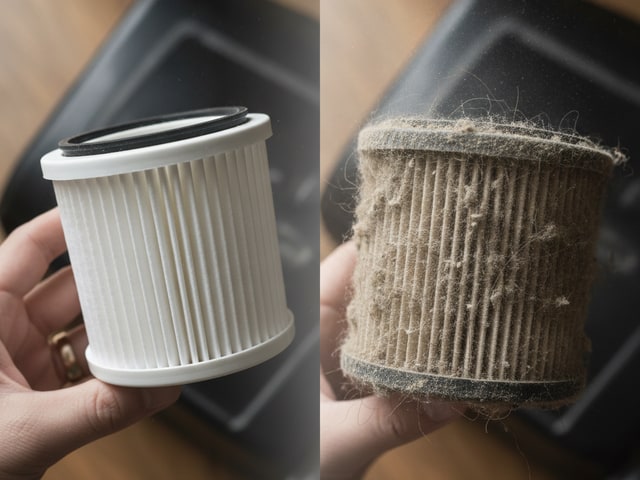
Disposable HEPA filters need replacement every 6-12 months for typical home use, while washable versions may lose their 99.97% efficiency after multiple cleaning cycles. You'll spend $20-60 per replacement depending on your vacuum brand, but the maintenance schedule is more important than the upfront filter cost. Most vacuum manufacturers design their HEPA filtration systems around disposable filters because the dense fiber mats that trap 0.3-micron particles can't withstand repeated washing without structural damage. The tiny gaps between fibers that make HEPA work also make the media fragile when exposed to water pressure and detergents. Washable HEPA filters sound appealing because they eliminate ongoing replacement costs, but they come with performance trade-offs you need to understand. Each wash cycle can loosen the fiber structure slightly, creating larger gaps that allow more particles to pass through. After 5-10 wash cycles, a washable filter might only remove 95% of particles instead of the original 99.97%. You can spot when any HEPA filter needs attention through several warning signs. Reduced suction power often appears first because clogged filter media restricts airflow through your vacuum's motor. Visible dirt accumulation on the filter surface indicates it's reached capacity, even if suction still feels normal. The most reliable indicator: your allergy symptoms returning despite regular vacuuming. When a HEPA filter loses efficiency, the finest allergens start escaping into your living space. If you notice increased sneezing or respiratory irritation after cleaning, check your filter replacement date. Replacement costs differ by brand and model. Premium manufacturers like Miele charge $40-60 for genuine HEPA filters, while budget brands often price replacements at $20-30. Generic aftermarket filters cost less but may not maintain the same efficiency standards as original equipment. You can extend filter life slightly by pre-filtering larger debris with your vacuum's primary filter, but don't delay replacement beyond the manufacturer's schedule. A degraded HEPA filter that only removes 90% of particles has little benefit over standard filtration, especially for households dealing with allergies or pet dander. For washable options, follow the cleaning instructions precisely and allow complete drying before reinstallation. Moisture trapped in the filter media creates breeding grounds for mold and bacteria that get blown back into your air. Replace washable filters entirely after 12-18 months regardless of their apparent condition, since the cumulative effect of multiple wash cycles gradually reduces their particle removal ability.
Bagged vs bagless HEPA vacuums: which is better for allergies?
Bagged HEPA vacuums contain allergens better during disposal, making them the safer choice for people with severe allergies or asthma. The vacuum bag acts as an additional pre-filtration stage that traps larger particles before air reaches the HEPA filter, extending filter life and maintaining consistent suction. You avoid the dust cloud exposure that happens when emptying bagless canisters. Even with careful technique, opening a bagless vacuum releases some fine particles into your living space, exactly what you're trying to eliminate with HEPA filtration to begin with. Bagged systems excel at containment because you seal the collected allergens inside the bag before removal. When you change a full bag, the dust stays trapped inside rather than escaping during the disposal process. This is most important for households dealing with pet dander, dust mite allergens, or anyone whose respiratory system reacts to tiny particles. The bag itself gives meaningful pre-filtration that reduces the load on your HEPA filter. Larger debris gets caught in the bag material, allowing the HEPA media to focus on the finest particles that trigger allergic reactions. This two-stage approach often produces better real-world performance than bagless designs that rely entirely on the HEPA filter. Bagless models risk allergen exposure every time you empty the canister, despite manufacturer claims about "easy disposal." The act of removing and emptying the container inevitably releases some fine dust, particularly the lightweight allergens that float easily. You can minimize this by emptying outdoors or using a mask, but bagged systems eliminate the exposure entirely. Both designs can achieve genuine True HEPA performance when properly sealed and maintained. The key difference lies in ongoing allergen management rather than initial filtration capability. A leak-proof bagless vacuum with True HEPA filters particles just as well as a bagged equivalent during operation. Maintenance costs favor bagless systems since you only replace the HEPA filter every 6-12 months rather than buying both bags and filters. However, sensitive individuals often find the superior containment of bagged systems worth the extra $20-30 annually in bag costs. The reduced allergen exposure during routine maintenance can prevent the respiratory flare-ups that make cleaning miserable for people with allergies.
Frequently asked questions
What does 99.97% at 0.3 microns actually mean?
This means the filter removes 99.97% of particles that are 0.3 micrometers in size, about 300 times smaller than the width of a human hair. That 0.3 micron size is the hardest for filters to catch, so anything larger or smaller gets trapped even more effectively.
Can I convert my regular vacuum to HEPA by changing the filter?
No, swapping the filter alone won't work. Your vacuum needs a leak-proof construction where all air passes through the HEPA filter without leaking around the edges. Most regular vacuums have gaps in the housing that let unfiltered air escape.
Are HEPA-type filters as good as True HEPA?
HEPA-type filters are less effective than certified True HEPA. They often only filter particles at 2 microns instead of 0.3 microns, missing many allergens and fine dust particles.
How often should I replace my vacuum's HEPA filter?
Replace HEPA filters every 6-12 months depending on how often you vacuum and how dusty your home is. Daily vacuuming or homes with pets may need replacement closer to 6 months.
Do HEPA vacuums lose suction power over time?
Yes, suction drops as the dense HEPA filter fills with dust. This is normal and expected, the filter is doing its job by trapping particles. Quality HEPA vacuums compensate with more powerful motors.
Is HEPA overkill for hardwood floors?
HEPA isn't necessary for basic dirt removal on hard floors, but it helps if you have allergies or pets. Even hardwood floors kick up fine dust particles when you vacuum, and HEPA prevents those from recirculating through your air.
Can HEPA filters remove pet dander and mold spores?
True HEPA filters excel at removing both pet dander and mold spores since these particles fall within the 0.3-10 micron range where HEPA performs best. Pet dander measures 0.5-50 microns, while mold spores range from 1-30 microns.
What's the difference between sealed and non-sealed HEPA vacuums?
Leak-proof HEPA vacuums force all air through the HEPA filter with gaskets and tight construction preventing leaks. Non-sealed vacuums may have a HEPA filter but allow unfiltered air to escape through gaps in the housing.