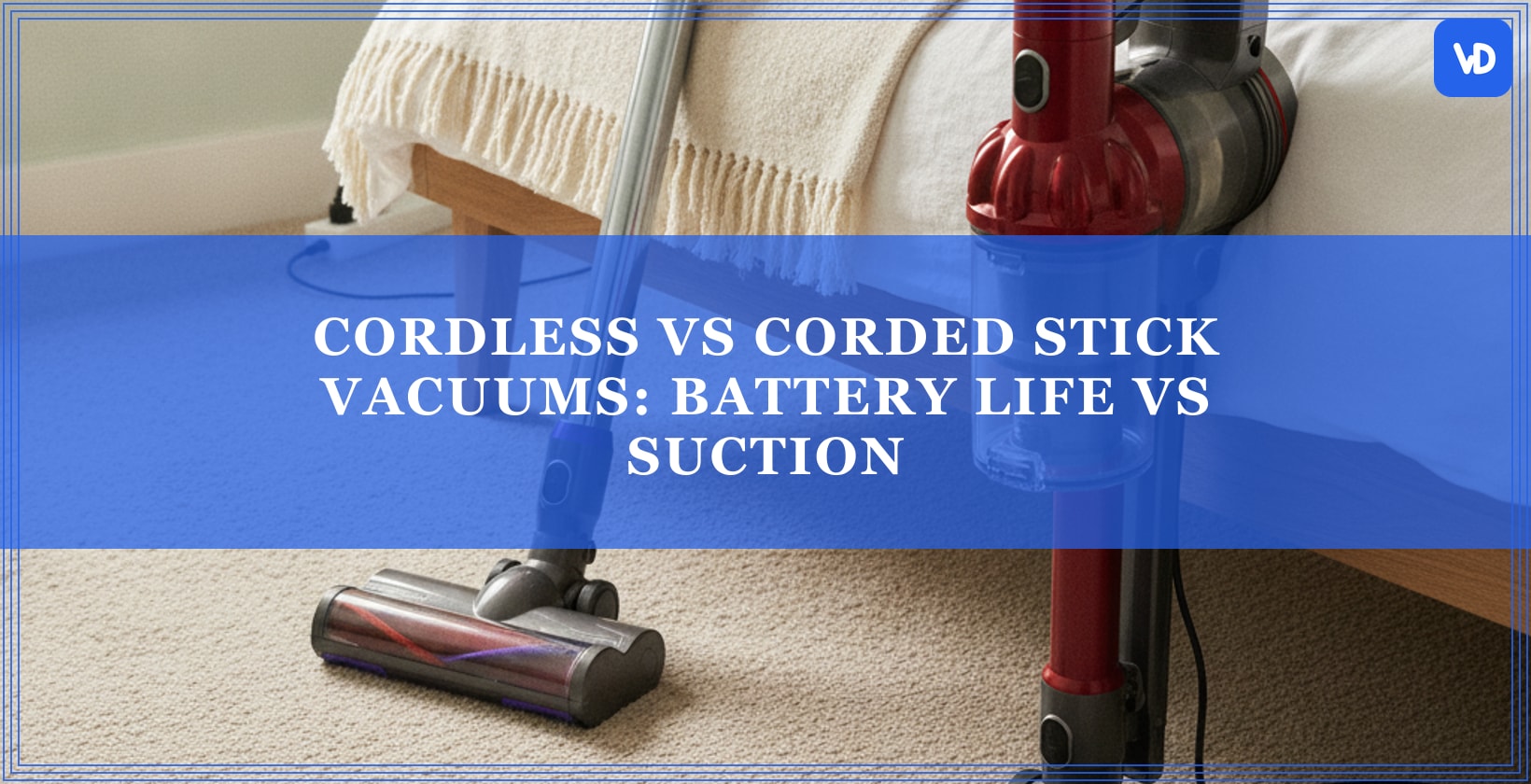
Cordless vs Corded Stick Vacuums: Battery Life vs Suction
Cordless stick vacuums run on battery power and reach up to 310 AW at peak, but sustain that output for only 5–10 minutes. Corded vacuums hold 200–350+ AW indefinitely. Cordless models trade sustained power for portability.
The Dyson V15 Detect cordless stick vacuum tops out at around 230 AW in boost mode — impressive on paper, but that mode burns through a charge in under ten minutes. The Dreame Z30 cordless stick vacuum pushes even higher at 310 AW, yet the same constraint applies: max power and long runtime don't coexist. Corded vacuums like the SEBO X4, used as a benchmark in third-party testing, sidestep that problem entirely; that testing found it held 94% of rated suction for over 22 minutes straight, no battery math required.
A corded vacuum works like a garden hose: pressure stays constant as long as it's connected. A cord-free stick is more like a water balloon, strong at first, softer as it empties, and eventually you need to refill it before finishing the job.
Your cordless stick does feel weaker when you reach the bedroom, and spending $500 on a premium battery-powered model doesn't close the difference with a $200 corded unit the way most comparison guides suggest. This breakdown is for anyone cleaning a real home with stairs, mixed floors, and limited patience for mid-session recharging. By the end you'll know which type fits your space and how to read the specs that actually matter.
What separates cordless and corded stick vacuums?
The core difference is the power source: a corded stick vacuum pulls electricity directly from the wall, while a cordless stick vacuum runs on a lithium-ion battery pack, typically rated at 20V to 25.2V, that gives you somewhere between 15 and 60 minutes before it needs a recharge.
Both formats share the same slim, upright form factor. You get a lightweight wand, a floor head, and enough reach to clean under furniture and along baseboards without hauling a heavy canister behind you. That shared design is where the similarities end, because the power source shapes everything else: how long you can clean, how consistent the suction stays, and how much the vacuum costs over time.
Corded stick vacuums draw steady voltage from the mains, so suction stays constant from the first room to the last. There's no battery to deplete, no mid-session slowdown, and no recharge wait. The downside is obvious: you're tethered to an outlet, which means unplugging and re-plugging as you move between rooms or floors.
Battery-powered stick vacuums cut that cord entirely. The lithium-ion cell lets you move through a whole apartment or up a flight of stairs without hunting for a socket. The limitation is that runtime is finite, and the suction you get on max mode is not the suction you'll have twenty minutes later as the battery voltage drops. The Vacuum Suction Power Guide: What Do CFM and Airwatts Actually Mean? breaks down the numbers behind the marketing claims, which helps when you want to understand how manufacturers measure and report suction output.
Corded stick vacuums are increasingly rare on store shelves. Most of what you'll find today is cordless, because battery technology has improved enough that manufacturers and most buyers have moved that direction. Corded options still exist, and they're a legitimate choice for anyone who cleans large spaces regularly and doesn't want to think about charge cycles, but you'll have fewer models to choose from.
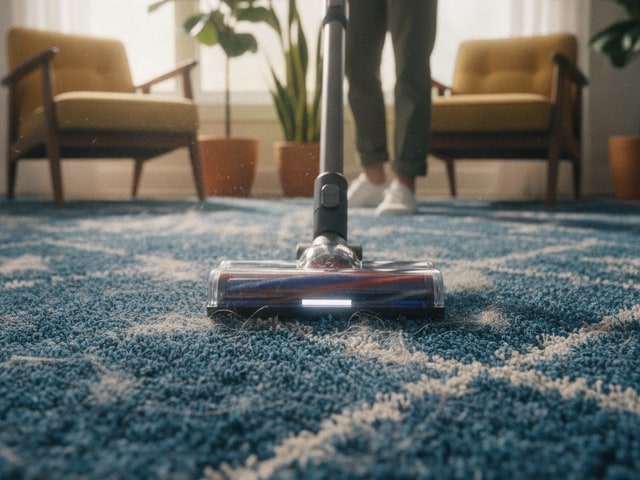
Suction power compared: how close is cordless to corded?
Premium cordless sticks have closed the gap, but corded vacuums still win on sustained output, and that distinction matters more than the peak numbers suggest.
Corded models hold 200–350+ airwatts continuously, for as long as you're plugged in. Premium cordless sticks now reach 160–310 AW at their highest setting, which sounds competitive until you factor in that those peak figures last only a few minutes before the battery starts pulling back. Under real-world conditions, top-tier cord-free models typically run 10–25% below their lab-optimized specs, and even the best ones sit 15–20% behind a comparable corded unit when both are measured fairly.
The SEBO X4, a corded vacuum used as a benchmark in third-party testing, shows what mains power looks like in practice: that testing found it held at least 94% of its rated suction for over 22 minutes straight. No mode-switching, no voltage drop. That kind of consistency is hard for any battery-powered machine to replicate across a full cleaning session.
Why battery voltage changes the equation over time
Cordless suction doesn't drop off a cliff; it fades. As a lithium-ion battery discharges, the voltage it supplies to the motor decreases, and motor speed follows. Models without constant-power electronics (which add cost and complexity) let that voltage drop translate directly into weaker airflow. You might not notice it room by room, but when you're finishing the last bedroom, you're often running at meaningfully less suction than when you started.
Corded vacuums don't have that problem. The wall outlet supplies steady voltage regardless of how long you've been cleaning, which is why the SEBO X4's 22-minute consistency figure matters: a cord-free stick at max mode would be nearly out of charge at that point. For a broader look at how stick and upright vacuums compare on real cleaning tasks, the Upright vs Stick Vacuum for Pet Hair: Performance Comparison covers the performance differences in more detail.
Battery life reality: runtime by power mode
A cordless stick vacuum rated at 60 minutes on eco typically gives you around 30 minutes on medium and just 10 minutes on max, and the eco-mode figure is almost always the one on the box. A YouTube channel that aggregated test data from over 100 cordless vacuums found the average runtime across all models sits at about 44 minutes, not the 60-plus minutes many manufacturers advertise.
That same testing produced a useful rule of thumb: take whatever a model claims on low power, cut it roughly in half for medium, and expect about 17% of that figure on max. A vacuum rated at 40 minutes gives you around 20 minutes on medium and 7 minutes on max. You're tackling pet hair on carpet, where you'd naturally reach for a higher setting, that 60-minute claim becomes 12–15 minutes of actual useful cleaning.
What boost mode is actually good for
Premium boost modes on most cordless sticks last 5–7 minutes before the charge runs low. That's not enough to clean a room; it's enough to attack a specific patch of embedded grit or a concentrated clump of pet hair before switching back down. Treating boost as a spot-cleaning tool rather than a whole-session setting is the realistic way to use it.
Lithium-ion battery packs don't throttle instantly when they hit max draw. Voltage drops as the charge depletes, and on models without constant-power electronics, motor speed follows that drop directly. You might not notice the difference between minute one and minute eight, but once the indicator light changes, you're running noticeably weaker airflow than when you started.
How battery capacity shrinks runtime over time
Capacity loss is the part of the ownership story that rarely appears on the box. Lithium-ion cells lose capacity over charge cycles; after roughly 500 cycles, or about 2–4 years of regular use, most packs hold only 70–80% of their original charge. A vacuum that gave you 30 minutes on medium when new might give you 21–24 minutes after three years of daily use.
That capacity loss compounds the mode problem. A battery already running at 75% capacity hits the voltage floor faster on high settings, which means boost mode gets even shorter and medium mode starts feeling like what eco used to feel like. Check whether replacement battery packs are available for that model and what they cost before buying; some brands use proprietary packs that become hard to find as models age, which can effectively end the vacuum's useful life before the motor has any reason to fail.
Cordless vs corded stick vacuum spec comparison
Side by side, the two formats look closer than they perform: cordless sticks match corded models on weight and convenience, but fall behind on sustained suction and long-term running costs. The table below covers the specs that actually affect your cleaning experience, not just the headline numbers manufacturers put on the box.
Spec | Corded Stick Vacuum | Cordless Stick Vacuum |
|---|---|---|
Suction output (airwatts) | 200–350+ AW sustained | 100–310 AW peak (drops as battery drains) |
Runtime | Unlimited (mains powered) | 15–60 min depending on power mode |
Motor power source | AC motor (mains powered) | 20V–25.2V lithium-ion battery pack |
Typical weight | Varies; generally heavier | Under 7 lb for most models |
Dustbin capacity | 0.5–1 L or larger | 0.3–0.6 L typical |
Battery lifespan | Not applicable | 2–4 years before capacity drops to 70–80% of original |
Noise level | Around 73–74 dB average | Around 73–74 dB average |
Typical price range | $100–$300 | $250–$800+ for premium models |
A few rows deserve more context than a table cell allows. The airwatts margin looks manageable on paper: 310 AW peak for a premium cord-free stick like the Dreame Z30 versus 200–350 AW sustained for a corded model. But "peak" and "sustained" are doing a lot of work in that comparison. Peak output on a battery-powered unit lasts minutes, not the length of a cleaning session. The Vacuum Suction Power Guide: What Do CFM and Airwatts Actually Mean? breaks down what those numbers mean in practice.
Dustbin capacity is easy to overlook until you're cleaning a larger room. A 0.3 L bin on a cordless stick fills up faster than you'd expect on carpet, which means stopping mid-clean to empty it, and with a battery-powered machine, every pause costs you runtime you can't get back. Corded models with bins at 0.5 L or above let you push through a full room without interruption.
Noise is the one area where the two formats are functionally equal. Both types average around 73–74 dB, so buying cordless expecting a quieter machine won't hold up. For anyone in an apartment where noise matters, the Quietest Vacuum Cleaners Under $100 guide covers models selected for lower decibel output.
Price is where the comparison flips against cordless. A solid corded stick runs $100–$300 with no cell to replace. A premium cord-free model starts around $250 and can push past $800, then adds a pack replacement cost somewhere around year three. The upfront price difference is real, and the long-term cost gap widens from there.
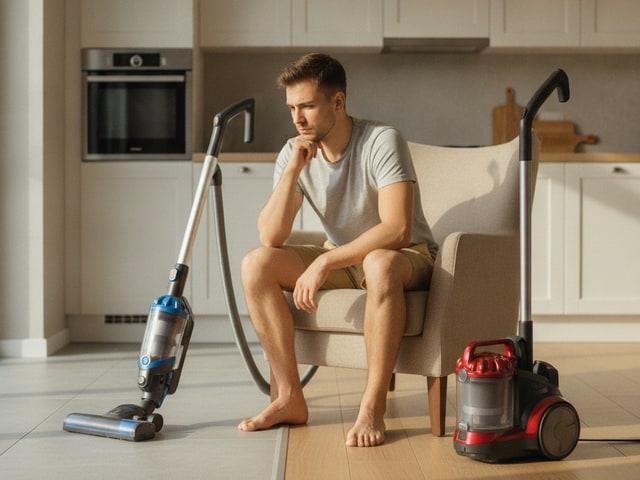
Which floors and home sizes suit each type?
Cordless stick vacuums are the right fit for hard floors, low-to-mid-pile carpet, and homes where a single cleaning session runs 30–40 minutes or less: think apartments, one-bedroom houses, or compact two-bedroom layouts. Corded models earn their place in larger homes, on deep-pile carpet, and anywhere you need sustained max suction without watching a charge indicator.
Hard floors are where cord-free sticks do best. On tile, laminate, or hardwood, medium mode handles daily dust and debris without burning through the battery, and the lightweight build makes it easy to move from room to room without unplugging anything. The Best Hardwood Floor Vacuums Under $120: No-Scratch Picks covers floor-head designs worth checking before you buy, especially when protecting your floors matters as much as cleaning them.
Thick carpet changes the math. Deep-pile rugs demand higher suction to pull embedded dirt and pet hair from the base of the fibers, which means running at max or near-max power. And as covered earlier, that mode lasts only a few minutes on most cordless sticks before output drops. A corded vacuum running at full power for 20 straight minutes on a large carpeted living room is doing work a battery-powered stick can't replicate in one charge.
Stairs and multi-level homes
Stairs are where a lightweight cordless stick under 6 lb has a clear practical advantage. Carrying a corded model up a flight of stairs means managing the cord, finding an outlet on the right floor, and often unplugging mid-staircase to reach the top. A cord-free stick, detached from its wand if needed, goes wherever you go without any of that.
Multi-level homes with mixed flooring often benefit from both types working together. A battery-powered stick on medium mode handles the daily pass: hard floors on the main level, low-pile rugs upstairs, quick stair treads. A corded unit reserved for weekly deep cleans on carpeted bedrooms covers the sustained-suction work the cordless can't maintain. That split isn't a compromise; it's how most experienced cleaners actually use these tools.
Matching home size to runtime
A studio or one-bedroom apartment is typically small enough that most cordless sticks cover it on a single charge at medium power, well within the 30-minute range you'd expect from a model rated at 60 minutes on eco. A two-bedroom house pushes closer to the edge; you'll likely finish, but there's little margin if you stop to empty the bin or switch attachments.
Larger homes with three or more bedrooms are where runtime becomes a real constraint. At that size, you're either cleaning in two sessions, swapping in a spare battery pack, or accepting that a corded vacuum is the more practical primary tool. For anyone in a smaller space looking at cordless options, the Best Cordless Stick Vacuums for Studio Apartments narrows down models sized for compact living.
Total cost of ownership: cordless vs corded over 5 years
A $300 corded stick vacuum almost always costs less to own over five years than a $500 cordless model, even before you factor in the pack swap that most cordless owners face around year three.
Cordless stick vacuums typically last 3–4 years before battery capacity drops enough to make the machine frustrating to use. Corded models, with no battery to degrade, can run longer with basic maintenance like filter cleaning and roller care. That lifespan difference alone shifts the math, but the replacement cost makes it more concrete; check the manufacturer's site for current pack pricing before you commit to any model.
Proprietary battery packs from some brands become difficult to find as a model ages. The brand discontinues your specific pack, which happens more often than the marketing suggests, and you're effectively buying a new vacuum rather than swapping a battery. Before committing to any cordless model, verify whether the battery uses a shared platform that third-party suppliers also make, or a proprietary connector locked to one manufacturer. That one detail can be the difference between a four-year machine and a seven-year one. For a full breakdown of what vacuum warranties actually cover (and what they quietly exclude), the Vacuum Warranty Guide: What's Covered and What's Not is worth reading before you buy.
Cordless convenience has real value, though, and it's fair to count it. Not managing a cord across multiple rooms, grabbing the vacuum for a 90-second cleanup without untangling anything, storing a slim stick on a wall dock instead of finding closet space for a corded unit: those things save time and reduce friction in ways that matter to a lot of households. Whether that convenience justifies the premium over five years is a personal call, but it's worth making deliberately rather than assuming the cordless option is automatically the better deal.
What to check before you buy a stick vacuum
Five specs separate a stick vacuum that fits your home from one that frustrates you within a month, and most of them aren't the ones manufacturers put on the front of the box.
Match runtime to your floor space, not the eco-mode claim. Aim for at least 40 minutes on medium mode if you're cleaning more than a couple of rooms in a single session. A model rated at 60 minutes on eco typically delivers roughly 30 minutes on medium; that's the number that matters for a two-bedroom house. The spec sheet only shows one runtime figure? Assume it's the lowest power setting and mentally cut it in half before comparing models.
Compare airwatts at the mode you'll actually use, not the peak figure. Manufacturers lead with boost-mode airwatts because those numbers look impressive, but boost lasts only a few minutes before output drops. The suction you'll use for 80% of your cleaning is medium mode, and that figure is rarely on the front of the box. Look for it in third-party reviews, or treat peak airwatts as a ceiling rather than a promise. For a plain-language breakdown of what airwatt numbers actually mean for pickup performance, the Vacuum Suction Power Guide: What Do CFM and Airwatts Actually Mean? is worth a read before you compare spec sheets.
Check dustbin capacity; 0.6 L is the floor for most households. Smaller bins, common on budget cordless sticks at 0.3–0.4 L, fill up mid-room on carpet and force you to stop, empty, and restart. With a battery-powered machine, every interruption costs runtime you can't recover. Anyone in the house with allergies should also verify whether the filtration system is fully enclosed and HEPA-rated; an open filtration design can exhaust fine particles back into the air even with a HEPA filter installed. The HEPA Filter Explained: Do You Really Need True HEPA in a Vacuum? guide covers the difference between true HEPA and HEPA-type filtration, which matters more than most listings make clear.
Pick up the vacuum before you buy it, or check the listed weight carefully. Under 6 lb is the right range for stairs and overhead cleaning; anything heavier becomes awkward to carry between floors or hold at ceiling height for more than a minute. Weight also affects how long you can clean comfortably in one session, which compounds the runtime problem in larger homes. Buying online? Look for the weight in the full spec sheet rather than the product title, where it's often omitted.
Verify battery replaceability before committing to a model. A swappable battery pack solves the runtime problem for larger homes; a spare doubles your cleaning time without a recharge wait and reduces how hard you push each individual cell. The downside is that proprietary packs can become tough to track down as models age, which can end a vacuum's useful life before the motor has any reason to fail. Confirm whether the battery uses a shared platform that third-party suppliers also make, or whether it's locked to one manufacturer. Also look at what attachments come in the box versus what costs extra; the Vacuum Attachments Explained: Which Tools Do You Need? guide helps you figure out which tools are worth paying for and which ones you'll never use.
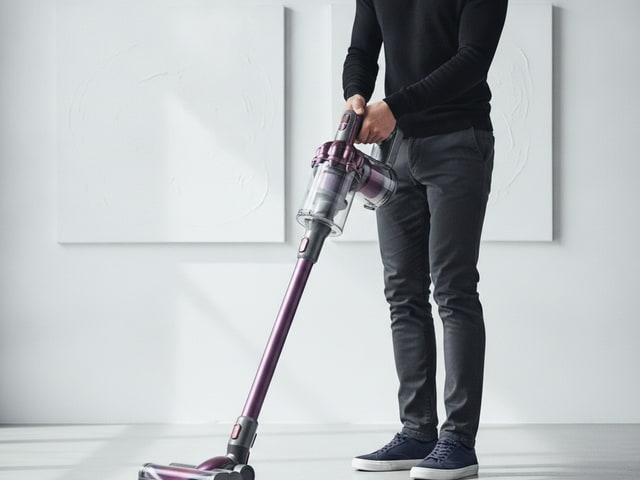
How to maximize battery life on a cordless stick vacuum
Lithium-ion battery packs in cordless sticks last longer per charge, and over their total lifespan, with four specific habits.
Use eco or medium mode for routine cleaning, and save boost for specific problem spots. Max mode burns through a charge fast, which isn't enough to finish most rooms. For a standard maintenance pass, hard floors, low-pile rugs, quick stair treads, medium mode gives you enough runtime and handles the job without the battery penalty. Boost is worth switching on for a patch of embedded pet hair or a gritty doormat, then switch back down. Treating it as a spot tool rather than a default setting is the single biggest runtime gain most people can make.
Keep the filter and dustbin clean; a clogged filter costs you runtime you can't see. When airflow is restricted, the motor works harder to pull the same suction, which draws more current from the battery and shortens each charge. Most cordless stick vacuums need the filter rinsed every 1–3 months depending on use, and the dustbin emptied before it hits capacity rather than after. A bin that's 80% full starts restricting airflow before it looks full. The Vacuum Maintenance 101: Make Your Budget Vacuum Last guide covers the full routine if you want a step-by-step reference.
Store the vacuum on its charging dock, but don't leave a full battery sitting idle for weeks. Lithium-ion cells stay healthiest when they're used regularly. Parking a fully charged cordless stick in a closet for a month and then running it hard is harder on the battery than regular use and recharging. Going on vacation or won't use the vacuum for an extended stretch? Run it down to around 50% charge before storing it; most battery manufacturers recommend this for long-term cell health.
Add a spare battery pack if your home has heavy carpet coverage or more rooms than a single charge can handle. A second pack doubles your cleaning time without a recharge wait and reduces how hard you push each individual cell. Homes with thick carpet demand higher power settings, which drain batteries faster; having a swap-ready pack means you can finish the job on medium mode rather than rushing through on boost to beat the low-battery warning. Before buying a spare, confirm the model uses a replaceable pack and that the specific battery is still available from the manufacturer.
Cordless or corded: quick decision guide
Your floor type, home size, and cleaning habits point clearly toward one format.
Choose a cordless stick vacuum if you live in a small-to-medium home, mostly clean hard floors or low-pile carpet, and tend to vacuum in short, frequent sessions rather than one long weekly pass. The grab-and-go convenience is real: no outlet hunting, no cord draped across doorways, and a slim machine that stores on a wall dock. Stairs are part of your routine? A lightweight cordless stick under 6 lb is far easier to carry between floors than any corded model with cable to manage.
Choose a corded stick vacuum if you have a large home with thick carpets, need sustained suction for more than 20–30 minutes at a time, or don't want to think about recharging between rooms. Corded models hold 200–350+ airwatts indefinitely; no voltage drop, no charge indicator creeping toward empty mid-room. They also cost less upfront ($100–$300 typical) and skip the pack replacement cost that hits most cordless owners around year three.
Consider running both if you have a multi-level home with different flooring on each floor. A cord-free stick handles daily quick cleans upstairs, light carpet, hard hallways, stair treads, while a plug-in unit takes on the weekly deep clean on main-floor carpet where sustained power matters. That split isn't an expensive compromise; a solid corded model in the $150–$250 range paired with a mid-tier cordless stick covers most households better than one premium machine trying to do everything.
Choose a corded or high-runtime cordless stick when you have pets with heavy shedding. Embedded pet hair on carpet demands sustained suction at medium mode, not a brief burst at max. Aim for at least 30 minutes of runtime on medium before the charge runs low, and confirm that the brushroll design handles hair without wrapping. For a breakdown of which vacuum features actually separate cat hair from dog hair cleanup, the Cat vs Dog Hair: Which Vacuum Features Matter Most? guide covers the specifics worth checking before you buy.
Frequently asked questions
Do cordless stick vacuums lose suction as the battery drains?
Most cordless stick vacuums throttle motor speed as voltage drops, so suction weakens in the final minutes of a charge cycle. This matters most on carpet, where you need consistent airflow to pull dirt from fibers. Look for models with constant-power electronics that hold output steady until the battery cuts off entirely rather than tapering gradually.
How long does a cordless stick vacuum last on max power?
On max or boost mode, most cordless sticks run 5 to 10 minutes before the battery gives out, even models rated at 60 minutes in eco mode. A vacuum rated for 60 minutes on low typically drops to around 30 minutes on medium and roughly 10 minutes on max, based on aggregated runtime data from large-scale cordless vacuum testing. Save boost mode for stubborn patches, not whole-room runs.
Can a cordless stick vacuum clean a whole house on one charge?
A cordless stick vacuum running 40 or more minutes on medium power can cover a small-to-medium home with mostly hard floors, but a larger home with thick carpet will likely need a mid-session recharge or a model with a swappable battery pack. A dustbin of at least 0.6 liters also helps; smaller bins fill fast and force you to stop and empty mid-clean.
Are corded vacuums always more powerful than cordless?
Corded vacuums aren't always ahead in pickup tests. In one direct head-to-head comparison, a cordless Shark Stratos picked up 97% of test sand versus 90% for its corded counterpart. Where corded models still have a real edge is sustained suction over long sessions; they draw from the wall continuously, so performance never drops the way it does when a battery depletes.
How many years does a cordless vacuum battery last before replacement?
Most lithium-ion battery packs in cordless stick vacuums hold up for 2 to 4 years of regular use, after which capacity typically falls to around 70–80% of the original runtime. Lithium-ion cells are generally rated for about 500 charge cycles. Before buying, check whether the manufacturer sells replacement packs separately; some brands make this easy, others make it expensive or difficult.
Is a cordless stick vacuum good enough for thick carpet?
A cordless stick can handle low-to-medium pile carpet well, but deep-pile or high-pile carpet is where battery-powered motors struggle most; dense fibers create more resistance, which drains the battery faster and cuts runtime. Most of your home is thick carpet? A corded stick or a full-size corded upright will give you more consistent results across a full cleaning session.
Do swappable batteries actually solve the runtime problem?
Swappable battery packs help, but they add cost and weight. A second pack means you can double your effective runtime without waiting 3 to 4 hours for a recharge; useful if your home needs more than one charge to clean. The catch is that spare packs for premium brands can add meaningful cost, which shifts the value calculation compared to just buying a corded model. Check the manufacturer's site for current pricing before deciding.
Is a corded vacuum cheaper to own long-term than a cordless?
Corded stick vacuums generally cost less upfront, often $100 to $300 versus $250 to $800-plus for premium cordless models, and they don't need battery replacements every few years. Cordless ownership adds the eventual cost of a new battery pack, and if the battery is non-replaceable, you may end up replacing the whole unit. For budget-conscious buyers who clean large spaces regularly, corded tends to win on total cost over five years.
How many airwatts should a good cordless stick vacuum have?
Airwatt needs depend on your floors and cleaning demands. Premium cordless models now reach 230 to 310 AW at peak; the Dreame Z30, for example, is rated at 310 AW, though those peak figures apply only in max mode, which runs for a few minutes at a time. Medium-mode airwatts, which you'll use for most of your cleaning, are the number worth comparing across models.