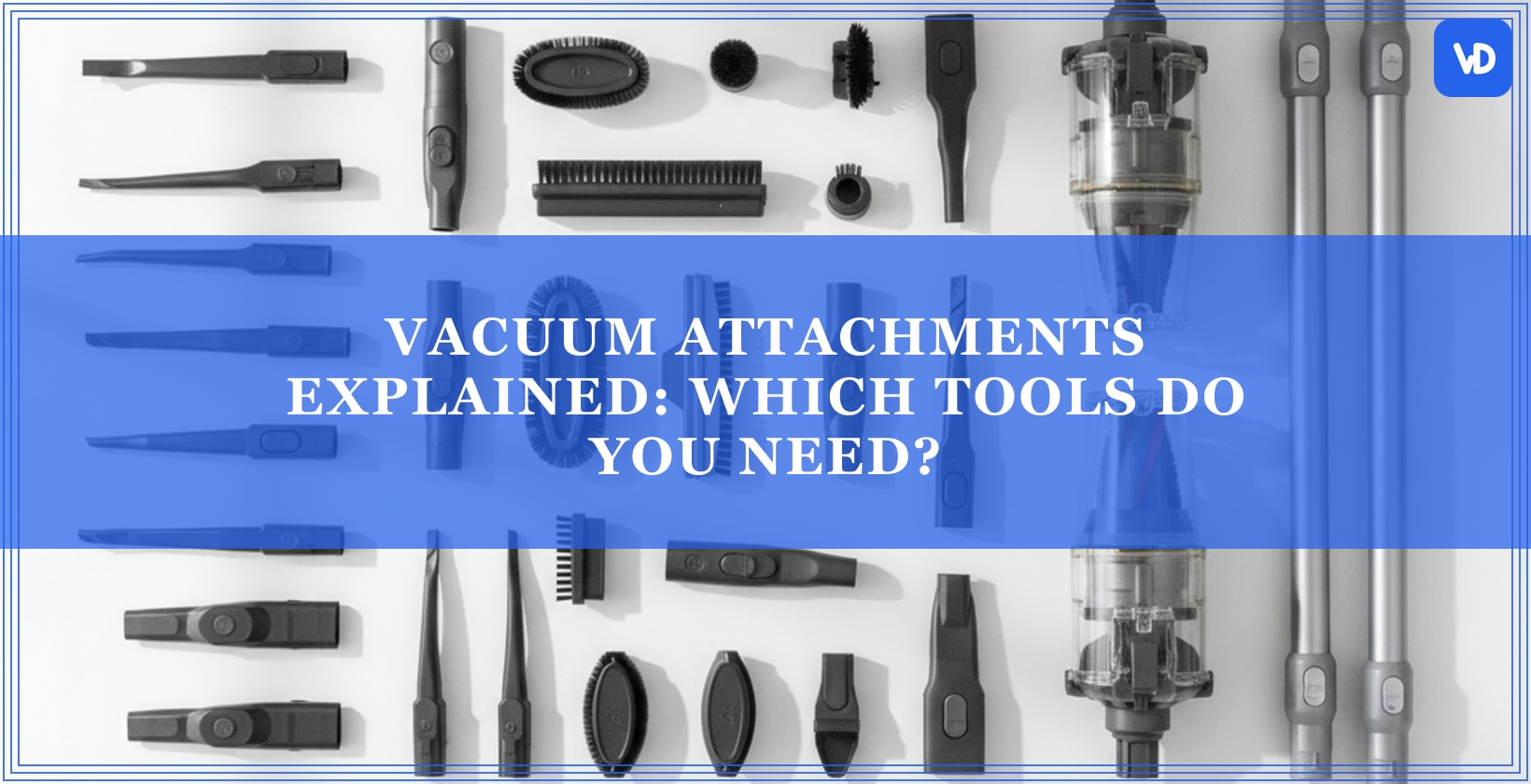
Vacuum Attachments Explained: Which Tools Do You Need?
Vacuum attachments — the tools connecting to your hose or wand — come down to three essentials for most homes: a crevice tool, a dusting brush, and an upholstery tool. Pet owners should add a motorized mini brush. Homes with bare floors need a dedicated hard-floor head.
Full-size vacuums ship with a bag of plastic tools that end up forgotten in a closet because nobody explains when each one actually beats the main floor head. The tools exist for specific surfaces and hard-to-reach spots, meaning your main head is leaving a surprising amount of your home uncleaned every single week.
The single most useful thing to understand before buying any vacuum is that the right attachment matters more than raw suction power. A gentle dusting brush on blinds outperforms a powerful floor head every time, and the wrong brush on hardwood can scatter debris instead of picking it up. That gap between "included tools" and "tools you'll actually use" is where most households waste money, either overpaying for accessories they'll never touch or buying a vacuum that's missing the one tool their home actually needs.
This guide maps exactly which tools match your situation, whether you're a renter with mostly hard floors, a pet owner drowning in fur, or someone who just opened a box of mystery plastic attachments, and which ones you can leave in the bag.
What are vacuum attachments and why do they matter?
Vacuum attachments are the specialized tools that connect to your vacuum's hose or wand to clean surfaces the main floor head simply can't handle well: sofa cushions, window blinds, tight baseboards, mattresses, and ceiling fan blades.
Consumer Reports test engineer Frank Rizzi frames it plainly: these tools exist for "different surfaces and difficult-to-reach spaces." That's not marketing language. It means your main floor head, no matter how powerful, is leaving a meaningful portion of your home uncleaned every time you vacuum. Furniture, crevices, and shelves don't get touched unless you reach for the right tool.
Almost every upright vacuum cleaner and canister vacuum cleaner ships with multiple attachments included. Consumer Reports notes that "almost all" uprights and canisters in its ratings come with a variety of tools. Yet most owners never use half of them, because the manual shows a diagram but never explains when a dusting brush outperforms the main head, or why running a carpet nozzle across hardwood just pushes debris around rather than picking it up.
That knowledge gap costs real money. Knowing which tools your home actually needs before you buy means you can choose a vacuum that includes the right ones in the box instead of paying extra for accessories later. And when you're comparing two models where one has more attachments, you'll know whether those extras are worth the price difference or just plastic you'll never touch. For a deeper look at how suction specs factor into that decision, the Vacuum Suction Power Guide: What Do CFM and Airwatts Actually Mean? covers what those numbers actually mean in practice.
Every common vacuum attachment explained
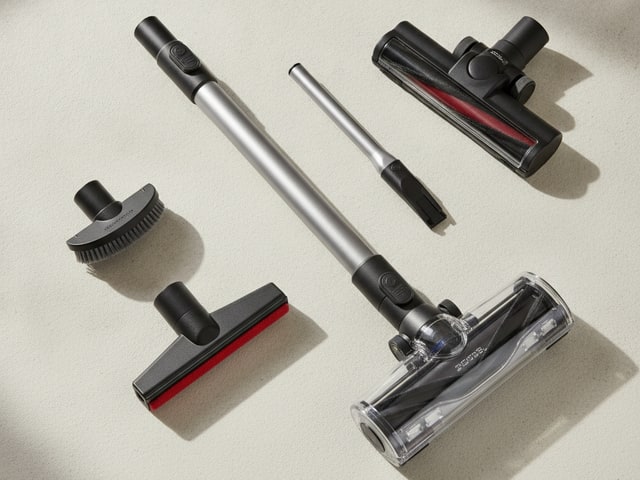
There are ten vacuum attachments you'll encounter across most full-size vacuums, and each one exists because the main floor head fails at a specific job. Here's a quick-reference table covering all of them, then a breakdown of what actually matters for each one.
Attachment | Best For | Main Limitation |
|---|---|---|
Crevice Tool | Baseboards, furniture gaps, stair edges, sliding door tracks | Too narrow for large-area cleaning |
Dusting Brush | Blinds, lampshades, shelves, delicate objects | Won't dislodge embedded debris |
Upholstery Tool | Sofas, chairs, cushions, fabric surfaces | Struggles with deep carpet pile and heavy pet hair |
Turbo Brush / Mini Motorized Tool | Pet hair on furniture, stairs, car interiors | Heavier and more expensive than basic tools |
Extension Wand | Ceiling fans, cobwebs, high shelves, behind appliances | Less useful in apartments with standard ceiling height |
Hard-Floor Tool | Hardwood, tile, laminate — fine dust in one pass | Not designed for carpet or rugs |
Combination Tool | Quick switches between crevice and brush tasks | A compromise — not best-in-class for either job |
Mattress Tool | Vacuuming mattresses without pulling at seams | Overlaps heavily with the upholstery tool for most users |
Under-Appliance Wand | Under fridges, ovens, and low furniture | Niche use — not something you'll reach for often |
Radiator / Vent Tool | Baseboard heaters, HVAC vents, floor registers | Specialty tool with a narrow use case |
Attachment-by-attachment breakdown: purpose, best use, and limitations
The crevice tool, that long skinny nozzle, is the most-used attachment in most homes. It reaches the gaps between sofa cushions, the edges along baseboards, sliding door tracks, and the tight corners at the bottom of stairs where the main head can't angle in. The tradeoff is obvious: it's too narrow to cover ground quickly, so you'd never use it on open floor space.
Dusting brushes have a round or oval head with gentle bristles designed to clean without scratching. Blinds, lampshades, bookshelves, and decorative objects are where this tool earns its place. The bristles agitate dust loose so suction can grab it, but if debris is packed in or stuck, the fine bristles won't do much.
The upholstery tool is a wide, flat head, often with fabric or brush strips along the edge, built for sofas, chairs, and cushions. It captures surface lint and hair from fabric without the bulk of the main floor head. On heavily upholstered furniture with deep pile or serious pet hair buildup, though, it starts to fall short.
A turbo brush is air-driven and uses the vacuum's airflow to spin its brush roll, while a mini motorized tool is electrically powered. Both have a rotating brush roll that physically agitates fabric to pull embedded hair out, making either one clearly more effective than a standard upholstery tool on stairs and furniture. The motorized version tends to perform more reliably, but both add weight and cost more than basic tools.
Extension wands are rigid tubes that add reach. Pair one with a dusting brush and you can clean ceiling fan blades or knock down cobwebs without a ladder. In a house with high ceilings or a ceiling fan in every room, this tool justifies its place. In a studio apartment with standard ceiling height, it mostly collects dust in the closet.
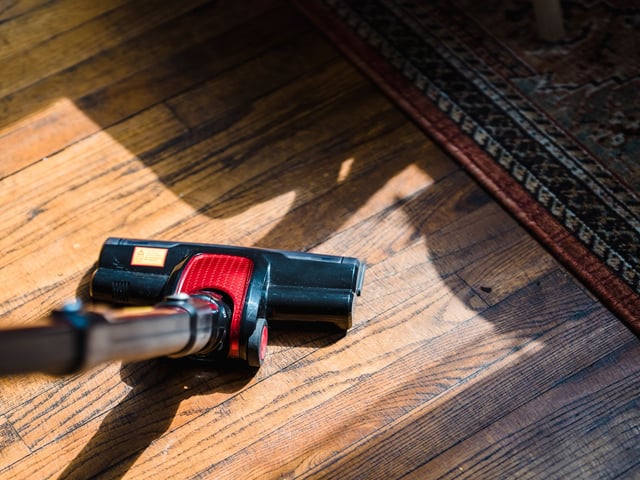
Hard-floor tools have non-abrasive bristles or rubber edges specifically designed for hardwood, tile, and laminate. The key difference from a carpet head: they pick up fine dust in a single pass rather than scattering it. Running a standard carpet nozzle across hardwood pushes debris around more than it picks it up.
Combination tools flip between a brush and a crevice opening without swapping attachments, which is convenient, but neither mode performs as well as a dedicated tool. The mattress tool is a wider, smooth-bottomed nozzle that won't snag bedding; it overlaps enough with the upholstery tool that most households don't need both. The under-appliance wand is a slim, flat attachment for reaching under refrigerators and ovens, actually useful in kitchens but not something you'll grab weekly. The radiator tool, a long flat nozzle for baseboard heaters and heating vents, serves a narrow use case that depends entirely on your home's heating setup.
Must-have vs. nice-to-have: a tiered attachment ranking
Not all ten attachments deserve equal space in your cleaning routine. Two of them cover the majority of non-floor tasks in almost any home, and the rest depend heavily on your specific situation.
Tier 1 — Essential for every home: Crevice tool and dusting brush.
The crevice tool handles more distinct cleaning jobs than any other attachment: baseboards, furniture gaps, stair edges, and tight corners the main head can't reach. A dedicated dusting brush covers everything delicate: blinds, lampshades, shelves, and any surface where a harder tool would scratch. Multiple cleaning guides identify these two as the highest-use attachments across the widest range of homes. Your vacuum came with nothing else? These are the two you'd miss most.
Tier 2 — Essential for most homes: Upholstery tool and hard-floor head.
The upholstery tool, a wide flat head with fabric strips, belongs in almost every home with a sofa, armchair, or mattress. It's the right tool for fabric surfaces where the main floor head is too bulky and the crevice tool is too narrow. Hard-floor surfaces are where the second tool proves its worth. Hardwood, tile, or laminate all benefit from a dedicated soft-bristle or rubber-edged head that captures debris in one pass without scattering it or scratching the surface.
Tier 3 — Situationally valuable: Turbo brush, extension wand, and combination tool.
A turbo brush, a compact rotating-bristle head that's either air-driven or motorized, moves from optional to essential the moment you have a pet. On furniture and stairs, it pulls embedded hair out of fabric in a way the standard upholstery tool simply can't match. Without pets, it's a nice upgrade but not a gap you'll feel daily. Extension wands earn their place in homes with high ceilings or ceiling fans; in a small apartment with standard ceiling height, one mostly sits unused. The combination tool, which flips between a brush opening and a crevice opening, is convenient if you're constantly switching tasks, but it doesn't add much when you already have a dedicated crevice tool and dusting brush. It's a convenience item, not a capability upgrade. A vacuum sold with a combination tool instead of both dedicated tools is worth flagging. Check the Red Flags When Buying Vacuums guide for what else to watch for in the box.
Tier 4 — Niche or skip for most: Mattress tool, under-appliance wand, and radiator tool.
A dedicated mattress attachment is a wider, smooth-bottomed nozzle designed to vacuum bedding without snagging fabric. For the majority of owners, the upholstery tool handles this job adequately. It's a meaningful upgrade mainly for allergy sufferers who vacuum their mattress regularly and want a tool purpose-built for it. Under-appliance wands, the slim flat attachments for reaching under refrigerators and ovens, are useful in kitchens but not something you'll pull out regularly. The radiator tool, a long flat nozzle for baseboard heaters and heating vents, is a specialty item that depends on your home's heating setup.
Which attachments do you need? A guide by household type
Your attachment list should match your home, not a generic checklist. A studio apartment with tile floors needs three tools, while a house with pets and carpet needs six.
Small apartment, mostly hard floors, no pets
Three tools cover this profile completely: a crevice tool for baseboards and furniture gaps, a dusting brush for shelves and blinds, and a hard-floor head for bare surfaces. That's it.
Skip the extension wand. Standard ceiling height doesn't justify it. Skip the turbo brush too. No carpet or pet hair means no use case. A cordless stick vacuum for studio apartments that includes these three tools in the box is all you need.
Family home with pets and mixed flooring
This profile needs the full working set: crevice tool, dusting brush, upholstery tool, a motorized mini brush for fur on furniture and stairs, a hard-floor head, and a carpet power nozzle with a brush roll.
Prioritize anti-tangle or self-cleaning brush designs. Dreame, the vacuum brand, recommends checking for anti-tangle and self-cleaning features before purchasing a brush accessory. An extension wand is also worth having here for ceiling fans and high shelves in larger rooms.
For more on which features actually separate good pet vacuums from frustrating ones, the cat vs. dog hair vacuum features guide breaks down what matters by shedding type.
Allergy sufferers and dust-sensitive homes
Focus on the tools that reach where dust accumulates and hides: a crevice tool for baseboards and floor registers, a dusting brush for blinds and shelves, and an upholstery tool or dedicated mattress tool for regular mattress vacuuming.
A turbo brush helps deep-clean upholstered furniture where dust mites settle into fabric. Pair all of these with a vacuum that has true HEPA filtration. The right attachment pulls allergens loose, but the filter determines whether they stay captured or get blown back into the air. The HEPA filter guide explains exactly what to look for.
Motorized vs. air-driven brush heads: what's the difference?
The difference comes down to what spins the brush roll: airflow or electricity. An air-driven turbine brush head, the type most budget vacuums include, uses the vacuum's own suction to rotate the bristles. An electrically motorized brush head has its own dedicated motor and spins independently of suction.
Brush motor type matters more than it sounds, especially on cordless vacuums. When you drop a cordless stick vacuum into eco or low-power mode to extend battery life, suction drops, and an air-driven turbo brush slows down with it. The bristles spin slower, agitate less, and pull up less embedded hair and debris. You're cleaning with a weaker tool without realizing it.
Electrically motorized heads don't have that problem. The brush roll maintains speed regardless of what the suction is doing, which is why they outperform air-driven tools on medium-to-thick carpet and anywhere pet hair is ground into fabric. Dyson's Mini Motorized Tool, a compact electric-motor-driven attachment designed for upholstery, stairs, and car interiors, is probably the most well-known example of this type. It's powered through the vacuum's connection rather than by airflow, so it keeps spinning at full speed even when suction varies.
The tradeoff is real: motorized heads cost more and add noticeable weight to the attachment. For pet owners or anyone with carpet throughout the house, that's a worthwhile exchange. For a hard-floor-only home where you're occasionally brushing off a sofa cushion, an air-driven turbo brush handles the job fine and costs less.
Vacuums under $100 nearly always include air-driven turbo brushes rather than motorized ones. It's one of the clearest places where a budget vacuum differs from a mid-range one. The upright vs. stick vacuum comparison for pet hair covers how this plays out across vacuum formats when you're deciding which type to buy.
Are vacuum attachments universal? Compatibility and sizing
Most vacuum attachments are not universal, and the gap between "close enough" and "actually fits" is smaller than you'd think.
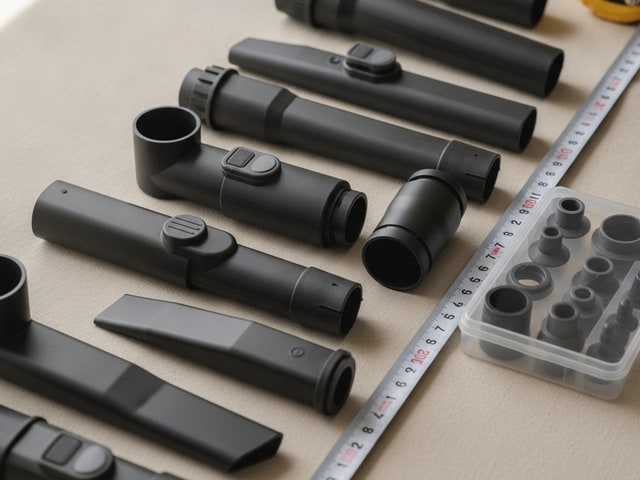
Many traditional hose-based vacuums use a 1¼-inch (31.75 mm) inner diameter as an informal industry standard. A YouTube sizing guide from accessory seller MP Maresh Products demonstrates this directly: a brush with a 1¼-inch opening fits a 1¼-inch hose end, but anything about ¼ inch off in either direction won't seat properly. That's a tight tolerance. An attachment that looks like it fits can still leak air around the connection, which kills suction at the tip.
Premium brands sidestep the standard entirely with proprietary systems. Dyson uses a click-fit mechanism that locks attachments in place; Miele uses a proprietary connection system; Shark relies on model-specific connectors. Generic aftermarket tools won't lock securely into any of these. They may slide on, but they'll wobble, leak, or pop off mid-use. The safest path with these brands is buying attachments directly from the manufacturer, even though brand-specific accessories cost more than generic equivalents.
Universal vacuum adapter kits, the multi-piece plastic sets you'll find on Amazon, exist specifically to bridge this gap. Forum users report mixed results: some find them adequate for occasional use, but tools popping off during cleaning and inconsistent sealing are recurring complaints. They're a reasonable stopgap for a one-time job, but not something to rely on long-term.
Check your vacuum's hose or wand opening before buying anything separately. Cross-reference the manufacturer's compatibility list for your exact model number, not just the brand or product line, since connector sizes sometimes vary between models in the same series. A tool that came in the box and breaks may be covered under warranty. Check what your vacuum warranty actually covers before spending money on a replacement.
Which attachments can damage your floors? Surface safety tips
The wrong attachment on the wrong floor can scratch, scuff, or dull a finish, and some surfaces are far more vulnerable than you'd expect.
Dreame, the vacuum brand, explicitly warns against using stiff bristle brushes or motorized power nozzles on softwood, unsealed tile, and vinyl. The brush roll inside a motorized power nozzle spins fast enough to agitate carpet fibers. That same spinning action drags grit across a soft or unsealed surface and leaves marks. Vinyl plank flooring is especially susceptible because the wear layer is thin, and scratches are permanent.
For sensitive hard floors, Dreame recommends soft-bristle brushes with rubber edges. The soft bristles sweep fine dust without contacting the floor with anything abrasive, while the rubber edges help guide debris toward the suction path. A carpet power nozzle does the opposite: it scatters fine dust rather than collecting it and risks scratching the surface with every pass. The Best Hardwood Floor Vacuums Under $120: No-Scratch Picks covers which models include this type of head in the box.
Renters should pay attention here. Floor damage is the kind of thing that gets flagged during a move-out inspection. Test any attachment you're unsure about on a small hidden patch first, like inside a closet or behind a door.
How to clean and maintain your vacuum attachments
Each attachment type collects a different kind of mess, so each one benefits from regular attention. Specific cleaning methods vary by manufacturer. Check your owner's manual for model-specific instructions. But here are the general principles for the four tools you'll use most.
Turbo brushes and motorized mini heads trap hair around the brush roll faster than any other attachment. Removing wrapped hair regularly keeps the bristles spinning freely and maintains the tool's cleaning performance. Your owner's manual will specify whether the brush roll detaches for easier cleaning.
Crevice tools, those long narrow nozzles, pack debris into the tip over time until airflow through the tool drops noticeably. Clearing compacted dust from both ends restores airflow. Whatever method you use, make sure the tool is completely dry before reattaching it to the vacuum. Moisture inside the hose or wand connection is something you want to avoid.
Dusting brushes, the round or oval heads with delicate bristles, stop working well once the bristles are coated in the dust they're supposed to remove. A dirty brush redistributes dust across surfaces instead of lifting it into the vacuum. Cleaning the bristles periodically makes a real difference in how the tool performs on blinds and shelves.
Upholstery tools with fabric strips collect pet hair and lint directly in those strips, and once the strips are matted with hair, the attachment glides over debris instead of grabbing it. Removing trapped hair after each use keeps the tool effective between deeper cleanings. For everything else that goes into keeping your vacuum running well over time, the Vacuum Maintenance 101 guide covers filters, brush rolls, and the other parts that quietly degrade if you ignore them.
Should you buy extra attachments or a better vacuum?
A universal attachment kit can fill gaps for budget vacuum owners, but only if the tools actually fit your vacuum's hose diameter. Tools that don't seat properly leak air at the connection, and suction at the tip drops to the point where the tool becomes useless.
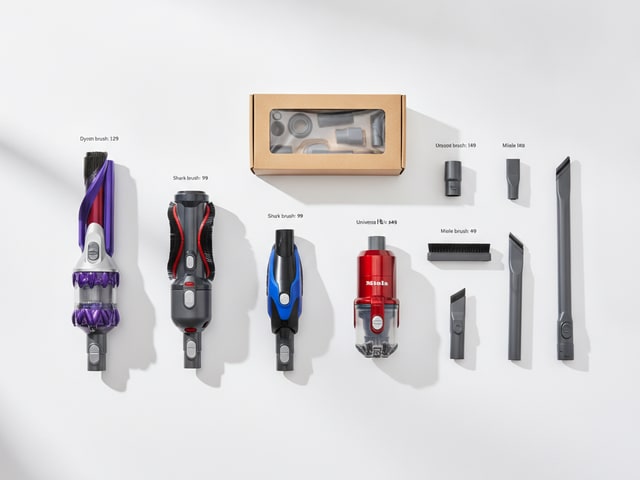
Brand-specific motorized tools change the math entirely. A single Dyson, Shark, or Miele attachment can cost nearly as much as a budget vacuum itself. At that price, it's worth checking whether a different vacuum in the same budget range simply includes that tool in the box. Dreame recommends buying accessories directly from the manufacturer for high-powered vacuums. The fit is guaranteed and the quality matches the machine. For budget vacuums, that advice is less critical because most use standard diameters rather than proprietary connectors, so generic tools are more likely to work.
Most buyers get better results by using whatever came in the box during normal cleaning first. After a few weeks, you'll know exactly which task you can't handle, whether that's pet hair on the stairs, fine dust on hardwood, or something else. Then buy the one specific attachment that fills that gap, rather than a kit of eight tools you'll sort through every time you vacuum.
A vacuum with three well-matched attachments beats one with eight tools you'll never touch. Eight tools sounds like more value, but six of them sitting unused are just clutter. The household profile section earlier in this guide is the fastest way to figure out your actual short list before you spend anything.
Product reviews deserve careful reading before buying attachments separately. An accessory that looks well-rated may have serious fit problems that only show up in honest feedback. The Amazon Vacuum Reviews: How to Spot Fake Reviews guide covers the signals to look for. And if weight is a factor, adding a motorized attachment to an already-heavy vacuum can make it awkward to carry between floors, so the Best Lightweight Vacuums Under 8 Pounds list is worth a look if you're considering a full upgrade instead.
Frequently asked questions
What are the different vacuum attachments for?
Each attachment is designed for a specific surface or situation your main floor head can't handle well: crevice tools for tight gaps, dusting brushes for delicate surfaces, upholstery tools for fabric furniture, and motorized brush heads for deep carpet cleaning. Consumer Reports identifies seven common types, and the core idea is simple: the right tool moves more dirt with less effort than forcing the main head to do everything.
Which vacuum attachments do I actually need?
For most homes, three tools handle the bulk of non-floor cleaning: a crevice tool, a dusting brush, and an upholstery tool. Add a motorized brush head if you have carpet, and a pet-specific turbo brush if you have shedding animals. Everything else is situational.
What is the long skinny vacuum attachment called and what is it for?
That's the crevice tool, and it's probably the most-used attachment in most homes. The narrow nozzle reaches into gaps between sofa cushions, along baseboards, and anywhere the main head physically can't fit.
Do I need a separate pet hair attachment if I already have a standard brush head?
A dedicated pet turbo brush makes a real difference on upholstery and stairs when you have a dog or cat that sheds heavily. Standard brush heads aren't designed to grab hair from fabric fibers, so you end up going over the same spot multiple times. Look for one with rubber strips or anti-tangle bristles specifically.
Are vacuum attachments universal or do I need brand-specific tools?
Many basic attachments follow a 1¼-inch industry-standard diameter that fits a wide range of vacuums, but brands like Dyson use proprietary click-fit connections that don't accept standard tools without an adapter. Measure your hose opening before buying any third-party attachment. Even a quarter-inch difference means it won't fit or seal properly.
What's the difference between a turbo brush and a motorized brush head?
A turbo brush (also called an air-driven brush) spins using the vacuum's own suction, so its speed drops when suction weakens, which is common on cordless vacuums running on lower power modes. A motorized brush head has its own electric motor, so it maintains consistent agitation regardless of suction level, which matters most for embedded pet hair and thick carpet pile.
Which vacuum attachment should I use on hardwood floors vs. rugs?
On hardwood, use a soft-bristle or rubber-edged hard floor tool. Stiff power brushes can scratch softwood, unsealed tile, and vinyl. On rugs and carpet, switch to a motorized brush head so the rotating bristles can agitate fibers and pull out embedded dirt rather than just skimming the surface.
How do I clean and maintain my vacuum attachments?
Specific cleaning methods vary by manufacturer, so check your owner's manual first. General best practices include removing wrapped hair from turbo brush rolls regularly so they spin freely, clearing compacted debris from crevice tool tips, and making sure any attachment is fully dry before reattaching it to the vacuum.
Is a mattress tool worth buying or can I just use the upholstery attachment?
The upholstery tool works fine for a quick surface clean, but a dedicated mattress tool has a smooth underside that won't pull at seams, which matters if you're vacuuming regularly for dust mites or allergens. Allergy concerns in your home make it a worthwhile add-on. Otherwise the upholstery tool is a reasonable substitute.
What vacuum attachments do I need for a small apartment?
You can skip the extension wand and under-appliance tools in a small apartment and focus on just three: a crevice tool for edges and corners, a dusting brush for shelves and blinds, and an upholstery tool for your sofa. Mostly hard-surface floors make a soft-bristle floor head more important than any specialty brush.