Vacuum Suction Power Guide: What Do CFM and Airwatts Actually Mean?
CFM measures airflow volume (cubic feet per minute) while air watts combine both airflow and suction pressure into one cleaning power metric. Air watts are calculated by multiplying CFM by water lift and a conversion constant (0.117).
You're staring at vacuum specs that look like alphabet soup — 150 CFM, 230 AW, 7,000 Pa — and wondering which numbers actually matter for getting dirt out of your carpet. The Dyson V15 Detect produces up to 230 air watts in Boost mode, making it the strongest cordless option for homes with pets and thick rugs. For budget-conscious shoppers, uprights like the Shark Navigator hit around 180-200 air watts while costing half the price. Robot vacuums use Pascal ratings instead, with models above 7,000 Pa handling deep carpet cleaning well.
CFM is the highway and air watts are the traffic flow — you need both volume and pressure to move debris through the system. Most vacuum marketing focuses on motor watts, but that's just power consumption, not cleaning strength.
You might be comparing a 5,000 Pa robot to a 200 AW stick vacuum or trying to figure out why your high-wattage upright struggles with pet hair. Understanding these metrics helps you spot the real performers. By the end, you'll know exactly which suction specs matter for your floors and budget.
What are CFM, air watts, and suction power in vacuum cleaners?
CFM (cubic feet per minute) measures how much air your vacuum moves through its system, while air watts blend airflow and suction pressure to give you the most accurate picture of cleaning power. CFM is the volume of air flowing through a pipe, and suction power is the force pulling that air — you need both working together to lift dirt from your carpet and transport it to the dust bin.
Air watts use a specific formula that multiplies CFM by water lift and a conversion constant (0.117). This calculation gives you a single number that accounts for both the vacuum's ability to create suction and move air efficiently. A vacuum with 120 CFM and 90 inches of water lift would generate about 126 air watts using this formula.
Water lift measures suction power in inches of H₂O — basically how high your vacuum can lift a column of water in a sealed tube. Household vacuums vary widely in their water lift capabilities. Modern cordless and robot vacuums often use Pascals (Pa) instead, with 3,000-5,000 Pa considered decent performance and 7,000+ Pa excellent for deep carpet cleaning.
Motor watts create the biggest confusion because they measure electrical power consumption, not cleaning strength. A 1,600-watt upright can be outperformed by an efficient 1,200-watt canister if the airflow design is better. The Dyson V15 Detect produces up to 230 air watts from just a 360-watt Hyperdymium motor — the engineering efficiency matters more than raw electrical draw.
The central vacuum industry and ASTM standards recognize air watts as the most reliable measure of actual cleaning performance because it accounts for what happens at the tool end, not just motor specifications. When you see a vacuum advertised with high wattage but no CFM or air watts listed, that's often a red flag that the actual suction performance might disappoint.
Understanding these metrics helps you compare across different vacuum types and brands. Robot vacuums using Pa ratings, cordless sticks advertising air watts, and traditional uprights listing CFM all measure different aspects of the same cleaning physics — the ability to create airflow and pressure that actually removes dirt from your floors.
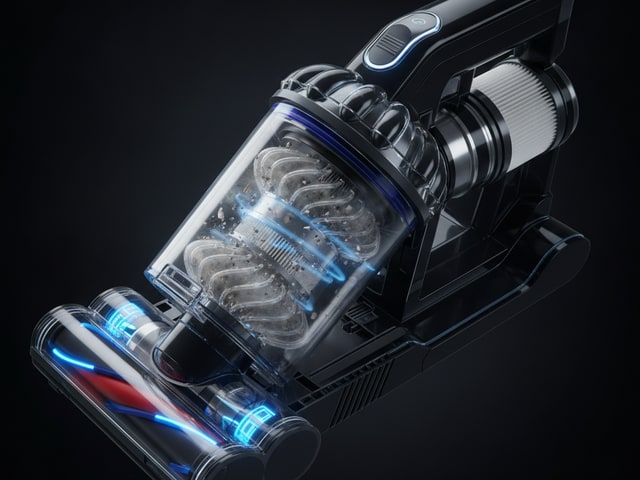
CFM vs air watts vs pascals: which metric matters most?
Air watts give you the most complete picture of cleaning performance because they combine both airflow and suction pressure into one standardized measurement. CFM tells you how much air moves through the system, while Pascals measure pressure alone — but air watts account for both factors working together at the tool end where cleaning actually happens.
Metric | What It Measures | Good Range | Best For | Limitations |
|---|---|---|---|---|
CFM (Cubic Feet per Minute) | Volume of air moved through system | 100-150 CFM for uprights | Debris transport through hoses and attachments | Doesn't account for suction force |
Air Watts (AW) | Combined airflow and pressure at nozzle | 160-210 AW cordless, 180-300 AW upright | Overall cleaning power comparison | Not all manufacturers provide ratings |
Pascals (Pa) | Suction pressure/vacuum strength | 3,000-5,000 Pa decent, 7,000+ Pa excellent | Robot and cordless vacuum marketing | Ignores airflow volume completely |
Water Lift (inches H₂O) | Sealed suction in laboratory conditions | 60-120 inches for household use | Lifting embedded debris from carpet | Zero airflow measurement |
Motor Watts | Electrical power consumption | 1,200-1,800W for full-size vacuums | Energy usage estimation | No correlation with cleaning performance |
VacuumWars testing shows airflow (CFM) correlates more closely with cleaning performance than sealed suction alone, particularly on carpet with an upright vacuum. You need adequate CFM to carry dirt particles from the carpet through the hose and into the dust bin, which explains why some high-suction vacuums with poor airflow design struggle with actual pickup.
The ASTM (American Society for Testing and Materials) recognizes air watts as the most reliable single measure of vacuum cleaning power because the calculation accounts for both airflow and pressure measured at the operating end of the hose. This standardized approach lets you compare a 200 AW cordless stick with a 250 AW upright on equal footing, something impossible when one lists only CFM and another only motor watts.
Pascals dominate cordless and robot vacuum marketing because these compact motors can't match the raw CFM numbers of full-size vacuums. A robot advertising 7,000 Pa sounds impressive, but without knowing the airflow volume, you can't predict how well it'll transport debris through its tiny internal pathways. Higher Pa ratings generally indicate better robot performance, but air watts remain more reliable when available.
Water lift measurements shine in specific scenarios like crevice cleaning and upholstery work, where you need strong suction to pull debris from tight spaces with minimal airflow. Central vacuum systems often emphasize water lift because their powerful motors can maintain high suction even through long hose runs, but the measurement becomes less meaningful without corresponding CFM data.
For practical shopping decisions, prioritize air watts when comparing across vacuum types, then use CFM for debris transport needs and Pa ratings when choosing between cordless models that don't publish air watt specifications.
Good suction power ranges by vacuum type
Cordless vacuums need 160-210 air watts for strong cleaning performance, with 200+ AW essential if you have pets or thick carpets. These battery-powered models sacrifice some raw power for portability, but the best cordless stick vacuums for small spaces prove that efficient design produces impressive results within these ranges.
Upright and canister vacuums operate in the 180-300 AW range, giving you more cleaning power than their cordless cousins. The industry considers 120 AW the baseline for effective household cleaning, meaning anything below this threshold will struggle with embedded dirt and debris transport. Most budget uprights perform well in the lower end of this range, while premium models can reach 250-300 AW.
Robot vacuums rely on Pascal ratings instead of air watts, with 3,000-5,000 Pa handling decent performance on hard floors and low-pile rugs. You'll want 7,000+ Pa for thorough carpet cleaning, though even high-Pa robots can't match the debris transport capabilities of full-size vacuums due to their compact internal pathways.
Central vacuum systems often exceed 600 AW because their powerful stationary motors don't need to worry about weight or battery constraints. These whole-house systems maintain strong suction even through long hose runs, making them the most powerful option for large homes with extensive carpeting.
For most household cleaning tasks, aim for at least 100 AW or 3,000 Pa as your minimum threshold. Anything below these numbers will leave you frustrated with poor pickup performance, especially on carpets or when dealing with pet hair. Remember that these ratings assume clean filters and optimal conditions — real-world performance drops noticeably as filters clog and seals wear over time.
The ideal range for different floor types varies quite a bit. Hard floors and area rugs work fine with 150 AW or 4,000-5,000 Pa, while wall-to-wall carpeting and homes with pets demand the higher end of each range. Match your suction requirements to your specific cleaning challenges rather than simply buying the highest numbers available.
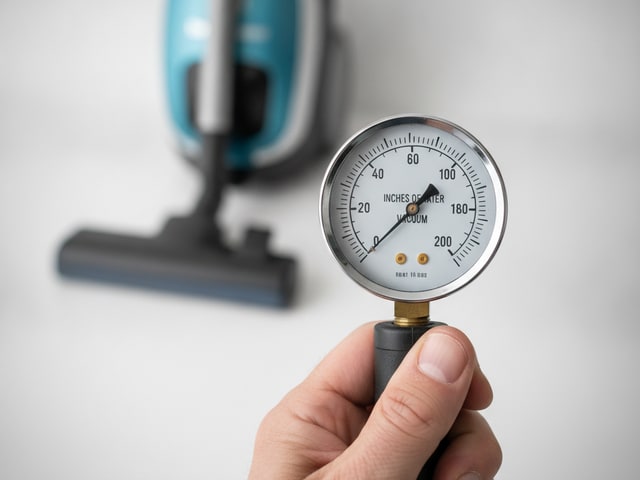
How vacuum suction power is actually measured
Vacuum suction power gets measured through standardized laboratory tests that use specific equipment and controlled conditions to ensure consistent results across different brands and models. The most common measurements — CFM, water lift, and air watts — each require different test setups that reveal distinct aspects of your vacuum's cleaning ability.
CFM testing uses a standardized 2-inch round opening where maximum airflow occurs, with technicians measuring how much air passes through this orifice per minute. When the opening is fully closed, CFM drops to zero because no air can flow through the system. This test reveals how well your vacuum can transport debris through hoses and attachments once it's been lifted from the carpet.
Water lift measurements show how high a vacuum can lift water in a sealed tube, typically expressed in inches of H₂O. Technicians connect a clear tube filled with water to the vacuum's hose end and measure the maximum height the water column rises when the motor runs at full power. Household vacuums vary widely in their water lift capabilities under these sealed conditions.
Air watts calculation requires both CFM and water lift measurements taken at the tool end, not just motor specifications. The formula multiplies CFM by water lift in inches, then by a conversion constant of 0.117 to account for the physics of airflow and pressure. A vacuum producing 120 CFM and 90 inches of water lift would generate approximately 126 air watts using this standardized calculation.
Test conditions matter because clean filters, specific hose lengths, and standardized orifice sizes affect all measurements. Labs use brand-new filters, predetermined hose lengths (usually 8 feet for portable vacuums), and calibrated measuring equipment to ensure repeatability. Real-world performance typically drops 20-40% from these laboratory numbers as filters accumulate dust and seals wear over time.
The measurement location makes an important difference in published specifications. Some manufacturers measure CFM and water lift at the motor housing, while others test at the hose end or cleaning tool where you actually use the vacuum. Always look for ratings taken "at the tool" or "at the nozzle" for the most accurate picture of cleaning performance you'll experience on your floors.
Real-world examples: Dyson, Shark, and Miele specifications
Looking at actual vacuum specifications from major brands reveals why comparing suction power across manufacturers requires understanding their different measurement approaches and marketing strategies.
The Dyson V15 Detect cordless stick vacuum delivers up to 230 air watts in Boost mode, powered by an efficient 360-watt Hyperdymium motor. This combination shows exceptional engineering efficiency — you get more cleaning power per watt of electricity consumed than most competitors. The V15 achieves this through advanced cyclone technology and optimized airflow paths that minimize energy losses between the motor and cleaning head.
Shark takes a completely different approach with their Stratos Cordless models, advertising "hypervelocity-accelerated suction" without publishing specific air watt ratings on consumer-facing product pages. Instead, Shark focuses on marketing terms like "anti-wrap technology" and "self-cleaning brushroll" while keeping the actual suction measurements buried in technical documentation. This makes direct comparison with Dyson's published 230 AW rating nearly impossible for shoppers.
Many Miele Classic C1 canister vacuums use a traditional 1,200-watt motor that can reach around 140-160 CFM airflow in independent testing, though the company doesn't prominently advertise air watt calculations. The German manufacturer emphasizes build quality and filtration over raw suction numbers, reflecting their engineering philosophy that consistent performance matters more than peak specifications. These canisters maintain steady airflow even as dust bags fill, something many bagless competitors struggle with.
Eufy RoboVac X8 robot vacuums advertise up to 2× 2000 Pa for a dual-turbine model (total 4000 Pa effective suction), but this Pascal rating tells you nothing about airflow volume through the compact internal pathways. The dual motors work together to create strong pressure, but the tiny dust bin and narrow air channels limit debris transport compared to full-size vacuums. You can't directly compare this 4,000 Pa rating to Dyson's 230 AW or Miele's CFM numbers without understanding the fundamental differences in how these systems move air.
These examples show why you need to understand each brand's preferred metrics when shopping. Dyson leads with air watts because their engineering produces impressive efficiency. Shark avoids specific numbers because their marketing focuses on convenience features. Miele emphasizes airflow consistency over peak performance. Robot manufacturers rely on Pascal ratings because their compact motors can't compete with corded models on raw CFM output.
The lesson for shoppers is clear: don't rely on a single metric when comparing across brands. Look for air watts when available, but also consider real-world factors like filter maintenance, bag versus bagless design, and how well the vacuum maintains performance as it fills with debris.
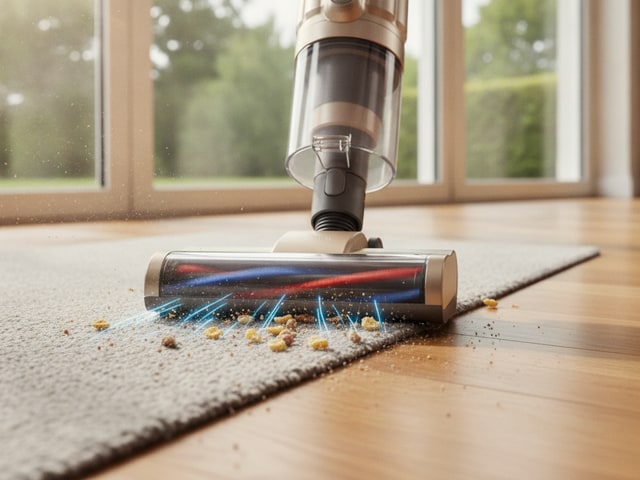
Why motor watts don't equal suction power
Motor wattage measures electrical power consumption, not cleaning performance — a 1,600-watt vacuum can be outperformed by an efficient 1,200-watt model with better airflow design. You'll see this confusion everywhere in vacuum marketing because watts sound impressive and are easy to understand, but they tell you nothing about how well dirt actually gets lifted from your carpet.
Typical wattage ranges vary dramatically by vacuum type without predicting suction strength. Handheld vacuums operate between 200-600 watts, stick vacuums use 350-800 watts, and upright or canister models consume 1,200-2,000 watts. Yet a 400-watt cordless stick can outclean a 1,800-watt upright if the engineering is superior.
System efficiency matters far more than raw electrical draw. Airflow design, cyclone technology, and seal quality determine how much of that motor power actually reaches your floors. The Dyson V15 Detect proves this principle by producing 230 air watts from just a 360-watt motor — that's exceptional efficiency compared to traditional designs that waste energy through poor airflow paths and leaky seals.
Marketing teams emphasize motor watts because consumers instinctively associate higher numbers with better performance, just like horsepower in cars. This creates a false equivalency where shoppers assume a 2,000-watt vacuum must clean better than a 1,200-watt model. In reality, you're comparing apples to oranges — one measures electricity usage while the other might have completely different suction capabilities.
Air watts and Pascal ratings provide much more meaningful performance indicators because they account for what happens at the cleaning head. When you see a vacuum advertised primarily by its wattage without mentioning CFM, air watts, or Pa ratings, that's often a red flag that the actual cleaning performance might disappoint despite the impressive electrical specifications.
Choosing the right suction specs for your home
Your floor types and cleaning challenges determine which suction specifications matter most, with pet hair and thick carpets requiring 200+ AW or 7,000+ Pa while hard floors work fine with 150 AW or 4,000-5,000 Pa. The key is matching your vacuum's capabilities to your actual cleaning needs rather than simply buying the highest numbers available.
Pet owners dealing with embedded fur need strong airflow for debris transport, not just raw suction pressure. Look for cordless models hitting at least 200 AW or robot vacuums exceeding 7,000 Pa to pull stubborn hair from carpet fibers and move it through the system. The best handheld vacuums for pet hair prove that even compact models can handle fur when they combine adequate suction with efficient airflow design.
Hard floor cleaning requires much less aggressive specifications since you're mainly picking up surface debris rather than extracting embedded dirt. Most vacuums designed for hardwood floors work perfectly with 150 AW or 4,000-5,000 Pa, saving battery life on cordless models while providing spotless results on tile, laminate, and wood surfaces.
Vacuum type directly impacts the suction ranges you should target. Cordless stick models prioritize efficiency over raw power, typically operating in the 160-210 AW range to balance cleaning performance with battery runtime. Upright and canister vacuums can achieve higher ranges of 180-300 AW because they draw power directly from wall outlets without worrying about battery constraints.
Balance suction specifications with other practical factors that affect daily use. Cordless models with adjustable power settings let you optimize battery life for different tasks — use lower settings for quick touch-ups and maximum power for thorough cleaning. Consider noise levels if you live in an apartment, weight for carrying upstairs, and filtration quality if anyone in your household has allergies.
Adjustable suction settings prove especially valuable because they extend battery life while matching power to the task at hand. You don't need 230 AW to clean hardwood floors, but that extra power becomes essential when tackling thick area rugs or pet hair embedded in carpet pile. Look for models with at least three power modes to give yourself flexibility across different cleaning scenarios.
Common suction power myths and marketing tricks
Higher motor wattage doesn't guarantee better cleaning performance — efficiency and airflow design matter far more than raw electrical consumption. You'll find 1,600-watt uprights that struggle with embedded dirt while efficient 1,200-watt models excel at the same tasks, proving that marketing teams love impressive wattage numbers because they're easy to understand but meaningless for actual cleaning power.
Robot vacuum manufacturers inflate Pascal ratings to astronomical levels, with some models advertising 10,000+ Pa suction that sounds impressive but doesn't translate to better real-world performance than well-designed 5,000 Pa models. These inflated numbers exploit consumer psychology — bigger numbers feel better — but ignore the fact that tiny robot motors and compact internal pathways can't use extreme pressure without adequate airflow volume.
Measurement location creates another layer of confusion because some brands measure CFM and water lift at the motor housing while others test at the nozzle where you actually clean. Motor-based measurements always look more impressive since they don't account for losses through hoses, filters, and cleaning attachments. When comparing specifications across brands, look for ratings taken "at the tool" or "at the nozzle" for the most accurate picture of cleaning performance you'll experience.
Filter condition dramatically affects published specifications since manufacturers test with brand-new, perfectly clean filters under ideal laboratory conditions. Real-world performance typically drops 20-40% as filters accumulate dust and lose airflow efficiency over weeks of use. This explains why a vacuum with impressive specs might disappoint after a month of regular cleaning — the published numbers assume maintenance conditions that don't exist in actual homes.
Marketing teams exploit these measurement inconsistencies by cherry-picking the most favorable numbers for their advertising. A brand might advertise peak motor wattage while burying actual air watts in technical documentation, or emphasize sealed suction measurements that ignore airflow losses through their specific hose and tool design. Smart shoppers focus on air watts when available and look for independent testing that measures performance under realistic conditions rather than laboratory ideals.
Frequently asked questions
What is a good suction power for a vacuum cleaner?
For most homes, look for at least 120 air watts or 3,000 Pa to handle everyday messes reliably. Cordless vacuums in the 160-210 air watt range work well for mixed surfaces, while uprights and canisters perform best with 180-300 air watts. If you have pets or thick carpets, aim for 200+ air watts or 7,000+ Pa for deeper cleaning power.
What is the difference between CFM and air watts?
CFM measures how much air moves through the vacuum per minute, while air watts blend airflow and suction pressure into one number. CFM is the volume of air that carries dirt through the system, and air watts show the total cleaning power at your vacuum's nozzle. Air watts give you a more complete picture since both airflow and suction matter for pickup performance.
Do more watts mean more suction in a vacuum cleaner?
No, motor watts only show power consumption, not cleaning ability. A 1,600-watt vacuum can actually clean worse than a well-designed 1,200-watt model if the airflow system is inefficient. Look for air watts or Pa ratings instead of motor wattage when comparing suction power between different brands.
How are vacuum cleaner air watts calculated?
Air watts blend CFM (airflow) with water lift (suction pressure) using a standard formula that accounts for both measurements. The calculation happens at the vacuum's nozzle or hose end, not just at the motor, which gives you a more realistic measure of cleaning power. Most manufacturers test this using standardized conditions with specific hose lengths and openings.
Is airflow or suction more important for vacuum cleaning?
Both matter, but airflow often correlates more closely with actual pickup performance on carpets. Suction creates the force to lift dirt, while airflow carries debris through the system to the dust bin. For carpet cleaning, strong airflow helps transport embedded dirt once suction loosens it, which is why air watts (combining both) give you the best single performance indicator.
What does Pa mean on cordless vacuum?
Pa stands for Pascals, which measure the pressure difference your vacuum creates to pull air and debris. Most cordless vacuums feature Pa instead of air watts in their marketing. Look for at least 10,000 Pa for reliable daily cleaning, with 7,000+ Pa considered excellent for deep carpet work on battery-powered models.
How many air watts is good for a vacuum cleaner?
100 air watts is the industry baseline for strong household cleaning. Cordless models work well in the 160-210 air watt range, while full-size uprights and canisters typically need 180-300 air watts for optimal performance. The Dyson V15 Detect hits around 230 air watts in boost mode, which represents high-end cordless performance.
Why do some vacuums have high wattage but weak pickup?
High motor wattage can be wasted on poor airflow design rather than actual suction. Factors like restrictive hoses, inefficient cyclone systems, or air leaks reduce the cleaning power that reaches your floor. A vacuum's internal design matters more than raw motor power, which is why air watts or Pa ratings give you better performance predictions than electrical wattage alone.