HEPA Filters for Pet Allergies: 5 Affordable Vacuums That Help
HEPA filter vacuums help pet allergies by trapping 99.97% of particles at 0.3 microns, including pet dander. Sealed HEPA systems prevent allergens from escaping back into air during cleaning.
You love your cat or dog, but the sneezing, watery eyes, and constant congestion are making life miserable. You don't need to spend $500 on a premium vacuum to get real allergy relief. Hoover continues to make WindTunnel models that include HEPA filters at budget-friendly prices that trap pet dander instead of blowing it back into your living room air. For cordless convenience, some Shark models feature Anti-Allergen Complete Seal technology that can give you sealed system protection while tackling pet hair on furniture and stairs. Many pet owners report improved allergy symptoms after switching to sealed HEPA systems.
Most people don't realize: a vacuum labeled "HEPA filter" isn't automatically allergy-friendly. Sealed systems work when all exhaust air gets forced through that HEPA filter, not around it through loose gaskets or cheap housing. A quality face mask that seals around your face captures more particles than one with gaps around the edges. The filter material might be identical, but only the sealed version actually protects you.
The right affordable HEPA vacuum can cut your daily allergy symptoms if you're dealing with cat dander that sticks to everything or dog hair that tumbles across hardwood floors. You'll know exactly which sealed system fits your budget and your pet's shedding habits.
How HEPA filters work for pet allergies
HEPA filters capture pet dander by trapping 99.97% of particles at 0.3 microns, which is the hardest particles for any filter to catch. Pet dander particles are generally in the sub-10 micron range, making them targets for true HEPA filtration that meets the U.S. Department of Energy standard.
That 0.3-micron measurement matters because this size is the trickiest particle size for filters to trap. If a filter can trap 99.97% of these difficult 0.3-micron particles, it easily captures larger pet dander pieces that float around your living room.
Regular vacuums blow fine allergens right back into your breathing space through their exhaust. Your standard vacuum might pick up visible pet hair, but it's actually making your allergies worse by launching microscopic dander particles into the air where they stay suspended for hours.
Sealed HEPA systems solve this problem by forcing every bit of exhaust air through the HEPA filter before it leaves the vacuum. A quality face mask that seals around your face captures more particles than one with gaps around the edges. The filter material might be identical, but only the sealed version actually protects you.
Most vacuums labeled "HEPA filter" don't have sealed systems. Air leaks through loose gaskets, cheap housing joints, and unsealed motor compartments. You're paying for HEPA filtration but getting regular vacuum performance because half the air bypasses the filter entirely.
Check for terms like "sealed HEPA system," "complete seal technology," or "anti-allergen complete seal" in product specifications. These indicate that manufacturers designed the entire airflow path to prevent bypass leakage, not just stuck a HEPA filter somewhere in the machine.
Pet allergens behave differently than regular dust. Cat allergens like Fel d 1 are particularly sticky and small, clinging to fabric surfaces and staying airborne longer than dog dander. This is why cat vs dog hair vacuum features matter. You need consistent suction power to pull embedded allergens from carpet fibers and upholstery where they hide.
The HEPA standard isn't marketing fluff. It's a tested standard that means out of every 10,000 particles that hit the filter, only 3 make it through. For someone dealing with pet allergies, this level of filtration can cut your daily symptom triggers dramatically when combined with regular vacuuming.
Top affordable HEPA vacuums for pet allergies
Budget-conscious pet owners can get real allergy relief without spending $400 on premium models. The Hoover WindTunnel upright includes HEPA filtration and provides sealed system protection for under $150, while Shark's Anti-Allergen Complete Seal models tackle pet hair and dander at similar price points.
Hoover WindTunnel MAX Bagged Upright UH30600
You get true HEPA filtration in a proven upright design that costs roughly half what premium allergy vacuums charge. The Center for Environmental Health specifically highlights this Hoover WindTunnel model as an "extremely affordable upright vacuum with a HEPA filter" suitable for allergy and asthma concerns.
This upright uses WindTunnel technology to create three channels of suction that lift embedded pet dander from carpet fibers. The bagged design means you dispose of allergens without the dust clouds that bagless models create when you empty them.
This upright weighs more than stick models. You'll feel it when carrying this machine upstairs. But for main-floor cleaning where most pet dander accumulates, the combination of strong suction and sealed HEPA filtration makes this the budget pick that actually works.
Pricing varies by retailer and current promotions. Replacement HEPA filters are available and should be changed regularly for optimal performance.
Shark Navigator Lift-Away Professional NV356E
Anti-Allergen Complete Seal technology combines with a detachable canister to give you sealed HEPA performance at the most budget-friendly price point. Shark designed this model specifically for pet owners who need both upright power and portable convenience.
The Lift-Away feature lets you detach the canister for cleaning stairs, furniture, and tight spaces where pet hair accumulates. This matters because cat vs dog hair vacuum features show that versatility often trumps raw power for thorough allergen removal.
Brushroll shutoff for hard floors prevents the scatter effect that launches pet hair into the air instead of capturing it. The washable foam and felt filters reduce ongoing costs compared to models requiring frequent filter replacements.
This model is the most accessible true sealed HEPA option at competitive pricing. The main compromise is build quality. Expect a shorter lifespan compared to premium models with more durable construction.
True HEPA vs HEPA-type: what pet owners need to know
True HEPA filters meet the U.S. Department of Energy standard of trapping 99.97% of 0.3-micron particles, while HEPA-type filters may only capture 85-95% of particles and lack official certification. This difference matters for allergy control because that missing 5-15% includes the smallest pet allergens that trigger your worst allergy symptoms.
HEPA-type filters sound impressive in marketing copy, but they're just high-efficiency filters that didn't pass the rigorous testing required for true HEPA certification. Manufacturers use terms like "HEPA-style," "HEPA-like," or "99% HEPA efficiency" to suggest similar performance without the actual standard compliance.
The 0.3-micron measurement is the hardest particles for any filter to catch. Cat dander particles often fall in the 1-5 micron range, while dog allergens can be slightly larger. True HEPA certification guarantees that even the trickiest particles get trapped, not just the easy-to-catch larger pieces.
Search for terms like "complete seal technology" or "bypass-free design" in product specifications. These phrases indicate the manufacturer designed the entire airflow path to prevent bypass leakage. A vacuum can have a genuine HEPA filter but still leak allergens if air escapes through unsealed gaskets or motor compartments.
The Asthma and Allergy Foundation of America created the Certified asthma & allergy friendly mark specifically because filter specifications alone don't tell the whole story. This certification tests the entire vacuum system, not just the filter, measuring actual allergen removal in real-world conditions rather than laboratory filter efficiency.
You'll find this AAFA certification on select models from brands that invest in whole-system testing. The certification process includes measuring particle emissions from the vacuum exhaust, testing seal integrity under operating conditions, and verifying that the complete machine reduces allergen levels rather than redistributing them.
Budget vacuums often advertise HEPA filtration without sealed systems, creating a false sense of allergy protection. Air that bypasses the filter carries the same allergen load as a regular vacuum, making the HEPA filter purely decorative. This explains why some people report no allergy improvement despite buying a "HEPA vacuum."
Bagged vs bagless HEPA vacuums for allergy sufferers
Bagged HEPA vacuums are better for allergy sufferers because self-sealing bags trap pet allergens permanently without exposing you to allergen clouds during disposal. Bagless models force you to empty dust canisters that release the exact particles you just worked to capture.
Opening that dust cup releases a visible cloud of fine particles back into your breathing space, including the microscopic pet dander that triggered your cleaning session in the first place. Even emptying outdoors doesn't eliminate exposure. You still breathe those particles while handling the canister.
Bagged systems solve this problem with self-sealing disposal bags that close automatically when you remove them. Pet hair plus dander stay trapped inside the bag material, which acts as an additional filter layer. You dispose of allergens without any direct contact or airborne release.
The sealed bag design means allergens can't escape back into your home environment. Once pet dander gets sucked into a quality vacuum bag, it stays there permanently. This matters especially for cat owners dealing with sticky Fel d 1 allergens that cling to surfaces and stay airborne longer than dog dander.
Bagless HEPA models require outdoor emptying and frequent filter cleaning to maintain allergy control. You'll need to take the entire canister outside, empty it while holding your breath, then wash or replace the foam pre-filters that catch larger debris before it reaches the HEPA filter. This maintenance burden often leads to delayed cleaning, which reduces overall allergy management.
The trade-off with bagged models is ongoing bag costs and the inconvenience of running out at the worst moment. Quality allergen-rated bags cost $15-25 for a pack that lasts 2-3 months with regular pet hair cleanup. But this expense pays for itself in reduced allergy symptoms and the convenience of truly clean disposal.
For quick pet hair touch-ups between deep cleaning rounds, portable pet hair solutions offer bagless convenience without the full-house allergen exposure risk. Save the bagless approach for spot cleaning and rely on bagged HEPA systems for your primary allergy control strategy.
Cost of ownership: HEPA filter replacement and maintenance
HEPA filter replacement costs vary dramatically between brands, with some premium models charging much more per filter than budget options. Pet owners face higher maintenance costs because animal hair clogs filters faster and forces more frequent changes than the standard schedule.
Pet hair accelerates filter degradation in ways that standard dust doesn't. Long strands wrap around filter pleats, reducing airflow and forcing the motor to work harder. Cat and dog dander also contains oils that can clog filter media faster than dry household dust, especially in homes with multiple animals.
You'll recognize when filters need early replacement by declining suction power and increased motor noise. Don't wait for the full replacement interval if your vacuum starts struggling with normal debris pickup. A clogged HEPA filter forces unfiltered air through bypass routes, defeating the allergy protection you paid for.
Budget for filter costs depending on your vacuum brand and pet load. Households with multiple long-haired pets should expect higher costs, while single short-haired animals typically cost less. Factor these ongoing expenses into your initial vacuum purchase decision rather than getting surprised by premium filter pricing later.
Pre-filters and foam washable components help extend HEPA filter life by catching larger debris before it reaches the expensive filter. Clean these monthly in pet homes, and replace them when washing no longer restores their original texture. This maintenance step can help extend your HEPA filter lifespan.
What to look for when shopping: specs and features
Verify sealed system design first. This prevents allergen bypass around the filter that makes HEPA filtration worthless. Search for terms like "complete seal technology," "bypass-free design," or "anti-allergen complete seal" in product specifications rather than just "HEPA filter included."
Sealed filtration forces 100% of exhaust air through the HEPA filter instead of letting some escape through loose gaskets or cheap housing joints. A vacuum can have a genuine HEPA filter but still leak allergens if air finds alternate escape routes. This explains why some people report no allergy improvement despite buying a "HEPA vacuum."
Check for Asthma and Allergy Foundation of America certification or equivalent third-party allergy testing. The Certified asthma & allergy friendly mark tests the entire vacuum system under real-world conditions, not just filter efficiency in laboratory settings. This certification measures actual allergen removal rather than theoretical filter performance.
AAFA testing includes particle emissions from vacuum exhaust, seal integrity under operating pressure, and whole-machine allergen reduction. You get verification that the complete system reduces pet dander levels rather than just moving them around your living space.
Consider suction power measured in Air Watts and airflow rated in CFM for deep carpet cleaning where pet allergens embed in fibers. Air Watts indicate the vacuum's ability to lift debris from surfaces, while CFM measures the volume of air moving through the system per minute.
Pet homes need higher Air Watts ratings (typically 100+ for effective carpet cleaning) because embedded dander requires more lifting force than surface debris. CFM ratings above 50 help maintain consistent suction as filters load with pet hair and fine particles.
Evaluate noise levels under 70 dB for apartment-friendly operation where neighbors matter. Many powerful HEPA vacuums run louder than standard models because sealed systems create more motor strain. Neighbor-friendly options balance suction power with reasonable sound levels for shared living spaces.
Noise becomes critical if you vacuum frequently for allergy control but live in close quarters. Some models offer variable speed controls that let you reduce noise during early morning or late evening cleaning times.
Factor in pet-specific tools like turbo brushes and upholstery attachments that tackle allergen sources beyond floor surfaces. Pet allergens concentrate on furniture, stairs, and fabric surfaces where your animals spend time. Standard floor tools miss these allergen reservoirs.
Turbo brushes use airflow to spin bristles that agitate embedded pet hair from upholstery and carpet. Crevice tools reach tight spaces around pet beds and furniture legs where dander accumulates. Extension wands let you clean ceiling fans and high shelves where lightweight allergens settle.
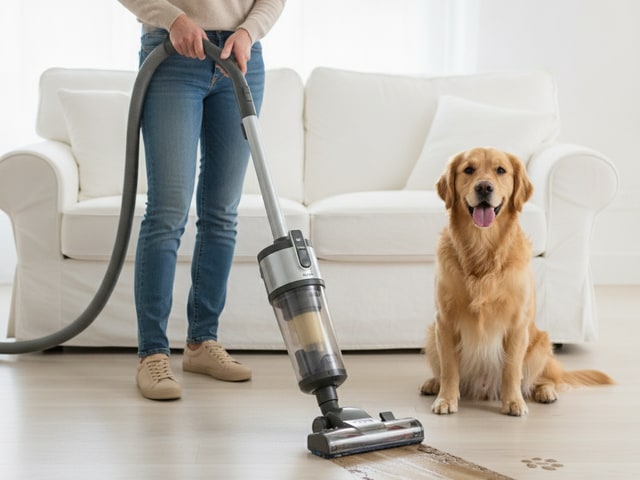
Proper vacuuming technique for maximum allergen removal
You should vacuum at least twice per week in high-traffic areas and bedrooms to maintain effective allergen control, according to the American Academy of Allergy, Asthma & Immunology. The frequency matters more than the vacuum's power because pet allergens settle continuously, and waiting longer than three days allows allergen levels to rebuild faster than you can remove them.
Slow passes at about 1 foot per second with overlapping strokes capture embedded allergens that quick cleaning misses. Most people vacuum too fast, which only picks up surface debris while leaving microscopic dander particles deep in carpet fibers. The overlapping pattern ensures every square inch gets multiple passes rather than hoping one quick sweep catches everything.
Clean in multiple directions (north-south, then east-west) to reach embedded allergens from all angles. Pet allergens settle into carpet pile in different orientations, and single-direction cleaning only agitates particles facing one way. Cross-pattern vacuuming lifts allergens that the first pass missed, especially important for thick carpets where dander penetrates deep into fibers.
Include soft furnishings like sofas, mattresses, and curtains in your routine cleaning schedule. Pet allergens concentrate on fabric surfaces where your animals spend time, not just floor areas. Use your vacuum's upholstery attachment to clean couch cushions, chair arms, and curtain panels where lightweight dander particles cling to textile fibers.
Mattresses require monthly attention because you spend 6-8 hours breathing near this surface every night. Pet allergens transfer from your clothes and pets' access to bedrooms, creating concentrated exposure zones. Vacuum the entire mattress surface, including sides and the box spring underneath where particles settle.
Run an air purifier or ventilate the room after vacuuming to clear stirred particles that become temporarily airborne during cleaning. Even sealed HEPA systems create minor air disturbance that lifts settled allergens before the vacuum captures them. Opening windows or running a room air purifier for 30 minutes after cleaning removes these suspended particles before they resettle.
Empty bagless canisters outdoors immediately after cleaning to prevent allergen clouds from re-entering your living space. Hold your breath while opening the dust cup, and consider wearing a mask if you're particularly sensitive. For bagged models, dispose of full bags promptly rather than letting them sit in the vacuum where allergens can leak through worn bag material.
Clean your vacuum's brushroll weekly in pet homes to prevent hair wrap that reduces suction power. Wrapped hair creates drag that forces the motor to work harder while providing less cleaning performance. Use scissors to cut away tangled hair, and check for string or fabric threads that can bind the roller mechanism.
Frequently asked questions
Do HEPA filter vacuums really help with pet allergies?
Yes, true HEPA filters capture 99.97% of particles at 0.3 microns, which includes pet dander that triggers allergic reactions. The key is getting a vacuum with a sealed system so allergens can't leak back out through gaps in the housing. You'll still need regular vacuuming at least twice weekly and may need other allergy management steps, but HEPA vacuums do measurably reduce airborne pet allergens.
What's the difference between true HEPA and HEPA-type filters?
True HEPA filters meet the U.S. Department of Energy standard of capturing 99.97% of 0.3-micron particles, while "HEPA-type" or "HEPA-like" filters are marketing terms with no standardized performance requirement. Many budget vacuums use HEPA-type filters that might only capture 85-95% of fine particles. Look for "True HEPA," "H13 HEPA," or specific efficiency ratings to avoid weaker filters.
Are bagged or bagless HEPA vacuums better for allergy sufferers?
Bagged vacuums are better for pet allergies because you don't release a cloud of allergens when emptying them. Self-sealing bags trap pet dander permanently, while bagless canisters require you to dump debris that can become airborne again. The trade-off is ongoing bag costs, but most allergy experts recommend bagged models for sensitive users.
How often should I replace HEPA filters with pets?
Replace HEPA filters every 6-12 months with regular pet vacuuming, but households with multiple shedding pets may need replacement closer to every 6 months. Pet hair plus dander clog filters faster than regular household dust. Change vacuum bags when they're about two-thirds full to maintain proper airflow and suction power.
Can a HEPA vacuum replace an air purifier for pet allergies?
No, they work differently and complement each other best. HEPA vacuums remove settled allergens from carpets and furniture, while air purifiers continuously filter airborne particles. Vacuuming actually stirs up allergens temporarily, so running a room air purifier after vacuuming helps capture what gets kicked into the air.
What's the best budget HEPA vacuum under $200 for pet allergies?
The Hoover WindTunnel series that includes HEPA filters is highlighted by the Center for Environmental Health as an extremely affordable option that meets true HEPA standards. Find models specifically labeled with sealed systems rather than just "includes HEPA filter." Avoid discontinued models and verify current availability before purchasing.
Do I need a sealed HEPA system or is any HEPA filter enough?
You need a sealed HEPA system for effective allergy control. Many vacuums advertise HEPA filters but allow air to bypass the filter through unsealed gaps in the housing. Find terms like "complete seal technology," "bypass-free design," or "anti-allergen complete seal" to ensure all exhaust air passes through the HEPA filter.
Are cordless HEPA vacuums effective for pet hair and allergies?
Cordless models can work for light to moderate pet hair and daily maintenance, but most lack the sustained suction power needed for deep carpet cleaning in heavy-shedding households. Battery life also limits how thoroughly you can clean larger areas. Consider them as supplements to a main corded vacuum rather than complete replacements for serious allergy management.