Cat vs Dog Hair: Which Vacuum Features Matter Most?
Cat hair requires HEPA H13+ filtration and tangle-resistant brushes for fine, floating hair. Dog hair needs higher suction (≥20,000 Pa) and larger dust bins for thick, hair pressed deep into carpet.
You're tired of watching your vacuum choke on pet hair while thin feline fur floats back onto your couch. The Dyson V15 Detect cuts through both problems with powerful suction in Boost mode and a laser that reveals every strand on hard floors. For high-volume shedders, the Shark Stratos Cordless prevents hair wrap with dual wrap-prevention rollers that actually work. Budget-conscious cat owners swear by the Bissell Pet Hair Eraser Turbo Plus, which tackles upholstery without breaking the bank.
Cat hair behaves like static-charged silk threads that stick to fabric and float in air currents, while dog hair acts like thick carpet fibers that embed deep and clump together. This means your vacuum needs completely different strengths depending on which furry roommate you're dealing with: fine filtration and gentle brushes for cats, brute-force suction and large bins for dogs.
The right features make the difference between a clean home and an endless hair chase. You'll know exactly which vacuum specs matter for your specific pet situation.
How cat and dog hair differ in vacuum requirements
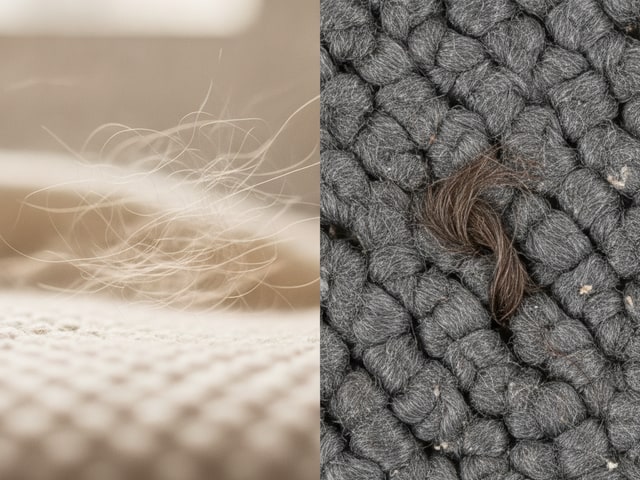
Cat hair floats through your home like microscopic silk threads, while dog hair embeds in carpet fibers like tiny anchors. These fundamental differences mean your vacuum needs completely different strengths depending on which pet you're dealing with. Cat hair is typically finer and lighter than dog hair, measuring around 30-50 microns in diameter compared to dog hair's 50-100 microns. This fine texture allows it to float in air currents and stick to upholstery through static electricity. You'll find it clinging to curtains, lampshades, and clothing where dog hair rarely ventures. Dog hair behaves more like thick carpet fibers. It anchors deeper into rugs and upholstery, requiring aggressive extraction to remove completely. Breeds that shed heavily like Golden Retrievers and German Shepherds produce hair that clumps together and covers larger floor areas than the scattered strands typical of cats. Pet dander production varies dramatically between species. Cat households generate more fine dander particles and litter dust, which demands superior filtration systems. A HEPA filter becomes necessary for capturing these microscopic allergens that trigger reactions in sensitive family members. Dog dander tends to be larger and less airborne, though still problematic for allergy sufferers. Volume differences create distinct capacity challenges. Dogs with high-volume shedding produce larger volumes of hair that fill dust bins faster than cat hair. You'll empty your vacuum more frequently in dog households, especially during seasonal shedding periods when some breeds lose their winter coats. The static properties of delicate cat fur make it particularly challenging for standard vacuums. Fine cat fur generates static electricity that causes it to repel from vacuum airflow and stick to plastic surfaces inside the machine. Tangle-resistant brush rolls become necessary for preventing these lightweight strands from wrapping around rotating components. Dog hair's thickness and tendency to mat together creates different mechanical challenges. It requires higher suction power to extract from deep carpet pile and can quickly overwhelm brush systems not designed for heavy debris loads. The hair pressed deep into carpet means you need more aggressive agitation to lift it from surfaces before suction can remove it.
Essential vacuum features by pet type
Cat owners need HEPA H13+ filtration and wrap-prevention brushes to capture fine, floating hair and dander. Dog owners require higher suction power (≥20,000 Pa for cordless models) and larger dust bins to handle thick, hair anchored in fibers that fills containers quickly.
Suction power requirements by pet type
Suction power thresholds vary dramatically between cat and dog households. For cordless vacuums, you need at least 20,000 Pa to extract dog hair pressed deep in carpet fibers and sofa crevices. Robot vacuums need strong suction to lift hair from carpets and corners, though performance depends heavily on brush design and other factors beyond suction alone. Cat hair responds well to moderate suction combined with specialized brush design. The fine, lightweight strands float easily once disturbed, so aggressive suction can actually blow them around rather than capture them. You'll get better results with consistent airflow and proper filtration than raw power alone. Dog hair demands brute force extraction, especially from thick carpet pile. Breeds that shed heavily like Golden Retrievers and German Shepherds produce hair that anchors itself in rug fibers. Without sufficient suction, you'll see hair spring back up after the vacuum passes over it.
HEPA H13 filtration priority
HEPA H13 filtration becomes critical for cat owners dealing with fine dander and litter dust particles. This filtration standard captures 99.99% of particles down to 0.3 microns, including the microscopic allergens that trigger reactions in sensitive family members. Cat households generate more airborne particles than dog homes. Litter tracking creates additional dust that standard filters miss, while fine cat dander stays suspended in air longer than heavier dog dander. A sealed HEPA system prevents these particles from recirculating through your home. Dog owners benefit from HEPA filtration but can prioritize other features first. The larger, heavier nature of dog dander means it settles faster and gets captured more easily by standard filtration systems.
Hair-wrap protection technology
Hair-wrap protection designs prevent hair wrap around rotating components, saving you from constant maintenance interruptions. These systems use dual rollers spinning at different speeds or self-cleaning mechanisms that automatically remove wrapped hair during operation. Long-haired cats and dogs create the biggest tangling challenges. Maine Coon cats and breeds like Afghan Hounds produce hair that wraps around standard brush rolls within minutes of use. Wrap-resistant technology becomes necessary rather than optional for these pets. Short-haired pets still benefit from tangle-free designs, though the need is less urgent. You'll spend less time cleaning wrapped hair from brush rolls and more time actually vacuuming.
Dust bin capacity considerations
Dust cup capacity requirements scale with your pet's shedding volume. Dogs with heavy shedding need larger bins (1.5+ liters) to complete whole-home cleaning without multiple emptying breaks. Seasonal shedding periods can fill standard bins in a single room. Cat owners can work with smaller capacity bins since feline hair takes up less volume. However, multi-cat households or long-haired breeds may still benefit from larger containers to reduce emptying frequency.
Specialized pet attachments
Pet turbo tools and specialized attachments target different hair removal challenges. Upholstery tools with motorized brushes excel at removing cat hair from furniture, curtains, and car interiors where fine strands cling through static electricity. Turbo brushes work better for dog hair pressed into carpets and area rugs. These powered attachments provide the aggressive agitation needed to lift thick hair from deep pile surfaces. For versatile pet hair removal beyond your main vacuum, consider handheld pet hair vacuums that excel at spot cleaning furniture and stairs. Crevice tools become necessary for both pet types, reaching hair accumulation in baseboards, under furniture, and around pet beds where standard heads can't access.
Top 6 pet hair vacuums: cat vs dog performance
These six vacuums excel at different pet hair challenges, from fine cat fur that floats everywhere to thick dog hair that anchors deep in carpets.
Dyson V15 Detect: laser precision for cat hair
The Dyson V15 Detect cordless vacuum produces powerful suction with a laser dust detection system that reveals every strand of fine cat hair on hard floors. You'll see exactly where those invisible cat fur tumbleweeds are hiding under furniture and along baseboards. This model's tangle-free screw tool prevents long hair from wrapping around the mini motorized brush, making it perfect for Maine Coon owners dealing with 4-inch fur strands. The whole-machine HEPA filtration captures 99.99% of particles down to 0.3 microns, including the fine dander that triggers allergies. The laser head works best on hard floors where cat hair tends to scatter. You get extended runtime in Eco mode, enough to tackle a whole apartment without recharging. It's an investment that pays off if you're battling both visible hair and invisible allergens.
Shark Stratos Cordless: wrap-prevention champion for dogs
The Shark Stratos Cordless IZ862 has dual hair-wrap protection rollers that prevent thick dog hair from tangling around the brush head. You can vacuum Golden Retriever fur for extended periods with significantly reduced hair wrap compared to traditional single-brush systems. This vacuum's HyperVelocity Plus suction technology handles hair anchored in thick carpet pile. The dual-roller design uses different brush speeds and materials to grab hair without creating the wrap problems that plague single-brush systems. You get HEPA filtration with Anti-Allergen Complete Seal technology, plus specialized pet tools for upholstery and stairs. The lightweight design makes it manageable for whole-home cleanups. It costs less than premium Dyson models while providing superior hair-wrap prevention.
Roborock S8 Pro Ultra: autonomous multi-pet solution
The Roborock S8 Pro Ultra robot vacuum provides powerful suction with dual rubber rollers that resist hair tangling better than bristle brushes. You can let it run daily in homes with multiple cats and dogs without constant maintenance interruptions. This robot's auto-empty dock holds large volumes of debris, handling weeks of pet hair before requiring attention. The dual rubber roller design prevents the hair wrap issues that disable many robot vacuums after encountering long pet fur. You get extended runtime per charge, covering large homes in a single session. The obstacle avoidance works well around pet toys and food bowls. With the auto-empty dock, it's expensive but eliminates daily vacuuming chores in households with heavy shedding.
iRobot Roomba j7+: smart navigation for cat homes
The iRobot Roomba j7+ robot vacuum uses PrecisionVision navigation to avoid common cat household obstacles like litter boxes, toys, and unfortunately placed hairballs. You won't find it stuck under the cat tree or spreading litter around your home. This model's Power-Lifting Suction compared to earlier Roomba models handles cat hair on both hard floors and low-pile carpets. The single rubber roller design reduces tangling compared to bristle brushes, though it's not as tangle-resistant as dual-roller systems. The Clean Base auto-empty dock holds weeks of debris in typical cat households. You can schedule cleaning when cats are napping or away from home. With the dock, it costs less than the Roborock while offering superior obstacle avoidance for cluttered homes.
Bissell Pet Hair Eraser Turbo Plus: budget-friendly upright power
The Bissell Pet Hair Eraser Turbo Plus upright vacuum combines strong carpet agitation with specialized pet tools at a fraction of premium prices. You get a motorized TurboEraser tool for stairs and upholstery plus a 2-in-1 pet dusting brush for delicate surfaces. This upright's tangle-free brush roll and SmartSeal allergen system capture both visible hair and microscopic dander. The large dust cup handles heavy shedding without frequent emptying breaks. You'll appreciate the specialized pet tools that tackle hair on furniture and car interiors where cordless models struggle. The corded design provides consistent suction without battery limitations. It provides serious pet hair performance for budget-conscious households.
Black+Decker 20V MAX Flex: handheld spot-cleaning specialist
The Black+Decker 20V MAX Flex handheld vacuum produces strong suction in a compact package perfect for quick pet hair cleanup on furniture and car seats. You can tackle cat hair on curtains or dog hair on upholstery without dragging out a full-size vacuum. This handheld's pet hair brush attachment works well on fabric surfaces where fine cat fur clings through static electricity. The dust bowl handles multiple spot cleanups before emptying. You get the flexibility to clean stairs, pet beds, and tight spaces that larger vacuums can't reach. The battery provides enough runtime for typical handheld tasks. It's an affordable addition to your main vacuum for targeted pet hair removal. For budget-conscious pet owners considering robotic options, check out our guide to robot vacuums for pet hair under $200 to see which models actually work for pet hair.
What suction power do you actually need?
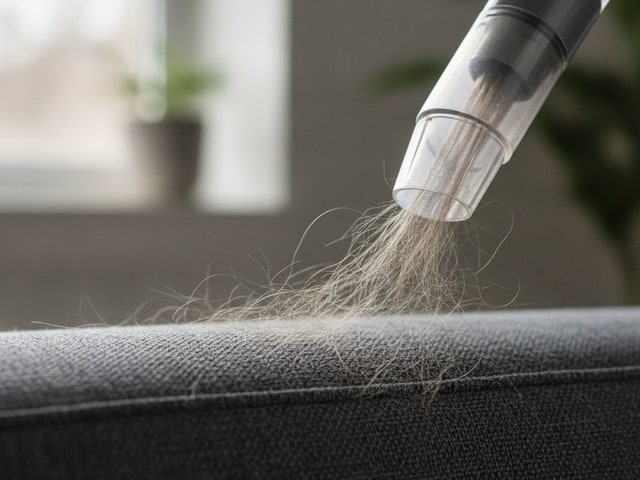
Cordless vacuums need at least 20,000 Pa to extract pet hair from sofa crevices and carpet fibers, while robot vacuums require a minimum of 4,000 Pa to prevent hair tangling in brushes. These thresholds separate vacuums that actually work from those that just push hair around. Suction power measurements use two different scales that confuse most shoppers. Pa (pascals) measures the vacuum's ability to create airflow, while Air Watts combines airflow with suction to show actual cleaning power. You'll see 20,000 Pa cordless models that match 150-200 Air Watts in real-world performance. Cat hair responds to moderate suction combined with proper brush design. Fine feline fur floats easily once disturbed, so excessive power can blow lightweight strands around your room instead of capturing them. You get better results with consistent airflow around 15,000-20,000 Pa than raw power that scatters hair. Dog hair demands aggressive extraction, especially from thick carpet pile. Dogs with heavy shedding produce hair that anchors deep in rug fibers and requires 25,000+ Pa in cordless models to lift completely. Without sufficient power, you'll watch hair spring back up after the vacuum passes over it. Surface type dramatically impacts your suction requirements. Hard floors need less raw power but benefit from sealed systems that prevent hair from blowing out the exhaust. Deep carpet pile demands maximum suction to reach hair pressed deep into fibers, while upholstery requires moderate power with specialized brush attachments. Robot vacuum suction works differently than handheld models. The 4,000 Pa minimum prevents hair from wrapping around brushes and clogging the system. Models below this threshold struggle with anything beyond light dust, leaving pet hair scattered across your floors. Premium robots exceed 6,000 Pa for superior carpet performance. Air Watts provide a more accurate picture of cleaning performance than Pa alone. This measurement accounts for both suction strength and airflow volume, giving you a better sense of how the vacuum will handle real debris. Corded uprights often produce 100-200+ Air Watts, explaining why they outperform many cordless models on thick carpet despite lower Pa ratings.
HEPA filtration: when it matters most
HEPA H13 filtration captures 99.99% of particles down to 0.3 microns, including the microscopic pet dander that triggers allergic reactions and floats invisibly through your home. You need this level of filtration most if you have cats, deal with litter dust, or suffer from pet allergies. Cat owners benefit more from sealed HEPA systems than dog owners because feline households generate far more airborne particles. Fine cat dander stays suspended in air currents for hours, while litter tracking creates additional dust clouds that standard filters miss completely. Without proper filtration, you're just moving these allergens around your home instead of capturing them. True HEPA filters differ dramatically from marketing terms like "HEPA-style" or "HEPA-type" that appear on budget vacuums. Genuine HEPA filtration must meet strict standards for particle capture efficiency, while "HEPA-style" filters often capture only 85-90% of particles. You'll see the difference immediately if you're sensitive to pet allergens. Sealed filtration systems prevent captured particles from escaping through gaps in the vacuum housing. This matters more for pet households because fine dander can leak out of unsealed systems and recirculate through your home. Look for vacuums that specifically mention "sealed HEPA" or "whole-machine filtration" rather than just a HEPA filter somewhere in the system. Filter maintenance costs add up quickly in pet households. HEPA filters typically need replacement every 6-12 months in homes with cats or dogs with heavy shedding, compared to 12-18 months in pet-free homes. Budget an extra $30-60 annually for replacement filters, especially if you're running the vacuum daily during shedding season. Dog owners can often prioritize other features first unless dealing with severe allergies. The larger, heavier nature of dog dander means it settles faster and gets captured more easily by standard filtration systems. However, homes with multiple large dogs or family members with asthma still benefit greatly from HEPA-grade filtration.
Hair-wrap protection: how it works
Dual-roller designs prevent hair wrap by using different brush speeds and materials that grab hair without creating the tangling problems that disable standard vacuum systems. You get continuous cleaning power instead of stopping every few minutes to cut wrapped hair from stuck rollers. Wrap-resistant brush roll technology works through mechanical engineering rather than marketing magic. The most effective systems use two counter-rotating rollers spinning at different speeds, typically one soft roller for large debris and one bristle roller for fine particles. This speed differential prevents long hair from wrapping around both rollers simultaneously. Self-cleaning brush heads automatically remove wrapped hair during operation using built-in combs or scrapers that contact the roller surface. These mechanisms work continuously while you vacuum, pulling wrapped strands off the brush and directing them into the airflow path. You'll notice the difference immediately when vacuuming long-haired pets like Maine Coons or Afghan Hounds. Shark's hair-wrap technology exemplifies this approach with dual rollers that use different materials and rotation patterns. One roller grabs hair while the other prevents it from anchoring and wrapping. The system handles everything from fine cat fur to thick Golden Retriever undercoat without the maintenance interruptions that plague single-brush designs. Removable brush rolls allow manual cleaning when tangles do occur, though well-designed tangle-resistant systems rarely need this intervention. Look for brush heads with quick-release mechanisms or tool-free removal. You shouldn't need screwdrivers to access wrapped hair. Some models include cleaning tools specifically designed for brush maintenance. Rubber rollers work better than bristle brushes for preventing hair wrap, especially with long pet fur. The smooth rubber surface provides fewer anchor points for hair to grab and twist around. Bristle rollers excel at agitating carpet pile but create more opportunities for hair entanglement due to their textured surface. Tangle-free brush roll designs sacrifice some deep-carpet agitation for maintenance convenience. You'll get excellent performance on hard floors and low-pile carpets, but thick shag rugs may require multiple passes. This trade-off makes sense for most pet households where daily hair pickup matters more than occasional deep-carpet cleaning. The effectiveness varies dramatically with hair length and texture. Short pet hair under 2 inches rarely tangles regardless of brush design, while hair longer than 4 inches challenges even the best wrap-prevention systems. Multiple long-haired pets create the ultimate test. If a vacuum handles three Persian cats without clogging, it'll work for almost any household.
Cordless vs robot vs upright for pet hair
Cordless vacuums excel at versatility for stairs and furniture cleaning, robot vacuums provide daily maintenance with minimal effort, while upright models produce maximum suction power for households with heavy shedding. Most multi-pet homes need a combination approach rather than relying on a single vacuum type.
Cordless vacuum advantages for pet hair
Cordless vacuum models shine when you need to tackle pet hair on stairs, furniture, and car interiors where corded models can't reach. You get the flexibility to quickly spot-clean cat hair from curtains or dog fur from upholstery without dragging a heavy machine around your home. Battery runtime becomes critical for pet households. Longer runtime helps you complete more thorough cleaning without recharging interruptions. Models like the Dyson V15 Detect provide extended operation in Eco mode, enough to handle even large homes with multiple pets. The lightweight design makes cordless models perfect for elderly pet owners or anyone who struggles with heavy equipment. You can easily carry them upstairs to tackle pet hair on bedroom furniture or down to basement pet areas without strain.
Robot vacuum benefits for daily hair control
Robot vacuum systems excel at daily maintenance cleaning that prevents pet hair from accumulating into tumbleweeds under furniture. You can schedule them to run while you're at work, returning home to reliably clean floors without any effort on your part. Dual roller designs in premium robots like the Roborock S8 Pro Ultra resist hair tangling better than single-brush systems. These models can handle long pet fur for weeks without requiring manual brush cleaning, making them ideal for busy households. Auto-empty docks solve the capacity problem that plagued earlier robot models. You get weeks of hands-off operation even with dogs that shed heavily, since the robot empties itself into a larger base station container.
Upright vacuum strengths for heavy shedders
Upright models provide the strongest suction power and largest dust capacity for households with multiple large dogs or seasonal shedding challenges. Corded power eliminates battery limitations, giving you consistent performance throughout extended cleaning periods. Large dust cups in uprights handle the volume of hair that would overwhelm smaller cordless or robot bins. You can clean an entire Golden Retriever household without stopping to empty the container multiple times. Deep carpet agitation in uprights extracts hair pressed deep into carpet that other vacuum types leave behind. The aggressive brush action and powerful suction work together to lift hair from thick pile rugs where it tends to anchor.
Multi-pet household strategy
Households with both cats and dogs often benefit from combining vacuum types rather than choosing just one. A robot handles daily floor maintenance while a cordless tackles furniture and stairs where cats spend most of their time. For apartment dwellers with limited storage, cordless stick vacuums for studio apartments offer the best balance of power and convenience in tight spaces. You get pet hair performance without sacrificing precious closet space to bulky upright models. The combination approach costs more upfront but saves time long-term. You spend less effort on manual cleaning when automated systems handle the bulk work, leaving you to focus on problem areas that need human attention.
Noise levels and pet-friendly features
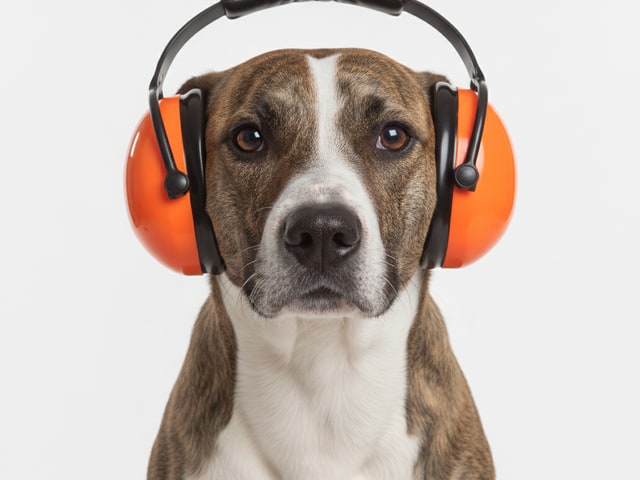
Vacuum noise levels under 70 decibels reduce pet stress during cleaning, while variable speed controls let you gradually introduce noise-sensitive cats and dogs to the cleaning routine. You'll find the biggest difference between budget models that roar at 80+ dB and premium vacuums engineered for quieter operation. Most pets react negatively to sudden, loud vacuum noise. Dogs may bark, hide, or become aggressive, while cats often flee to hiding spots and stay stressed for hours after cleaning. Premium cordless models operate in moderate ranges that most pets can tolerate with gradual introduction. Variable speed controls on premium cordless models allow you to start cleaning at lower power levels. You can begin with quiet mode around 65-68 dB to let anxious pets adjust, then gradually increase suction as they become comfortable. This approach works particularly well for rescue animals or elderly pets with hearing sensitivity. Robot vacuum scheduling solves the noise problem entirely by cleaning when pets are away from home. Quality robot models operate quietly enough to run while you're at work without disturbing neighbors in apartments. You return to clean floors without subjecting your pets to any vacuum stress. Sound dampening technologies in premium models use motor insulation and airflow design to reduce running noise. Budget alternatives under $100 typically prioritize suction power over noise control, often producing higher decibel levels that can traumatize sensitive pets. For apartment dwellers concerned about both pet comfort and neighbor relations, quietest vacuum cleaners under $100 provide specific recommendations for noise-conscious households. Upright vacuums generally produce more noise than cordless or robot models due to their larger motors and direct airflow paths. If you have multiple noise-sensitive pets, cordless models offer the best balance of cleaning power and acoustic comfort, letting you clean around sleeping animals without causing household chaos.
Frequently asked questions
How much suction power do I need for pet hair?
For cordless vacuums, you want at least 20,000 Pa to pull hair pressed deep into carpet fibers and furniture crevices. Robot vacuums need a minimum of 4,000 Pa to handle hair in corners without leaving tangles behind. Higher suction matters more for thick dog hair that gets pressed deep into carpets.
Is a HEPA filter necessary for a pet vacuum?
Yes, especially if you have allergies or multiple cats. HEPA H13 filters capture 99.97% of particles down to 0.3 microns, which includes fine cat dander and microscopic hair fragments that trigger reactions. Dog owners with just one pet can often get by with standard high-efficiency filters.
Do wrap-prevention brush rolls really prevent hair wrap?
The good ones do, but not completely. Dual-roller designs like Shark's work best because one roller feeds hair to the other instead of wrapping around itself. Single tangle-resistant rollers significantly reduce wrapping compared to traditional brushes, but you'll still need to cut away some long hair occasionally.
Are robot vacuums good for pet hair?
Modern high-suction robots handle pet hair well on hard floors and low-pile carpet. Quality models with powerful suction pick up over 90% of hair in testing, and dual rubber rollers resist tangling. They struggle more with thick carpet and long dog hair compared to upright vacuums.
What attachments are best for pet hair on furniture?
Motorized pet tools work better than manual ones because the spinning brush agitates hair loose from fabric fibers. Look for tools with rubber bristles or tangle-resistant combs. The Dyson V15's mini motorized tool and Shark's pet power brush both outperform basic upholstery attachments on hair pressed into fabric.
How many minutes of battery life do I need for pet hair cleaning?
Plan for at least 40 minutes of runtime to clean a typical home without stopping to recharge. Pet hair cleaning takes longer because you'll use higher suction modes and spend extra time on furniture and stairs. Extended runtime in Eco mode gives you enough buffer for thorough cleaning.
What is the quietest vacuum for pets that are scared of noise?
Robot vacuums run quietest at around 68-70 dB in standard mode, which is about as loud as normal conversation. Among stick vacuums, quality models measure around 72 dB compared to louder options in boost mode. Avoid using turbo modes when pets are nearby.
Do I need a larger dust cup for pet hair?
Yes, especially with multiple pets or heavy shedders. Hair takes up more space than regular dirt and compacts as the bin fills. Look for at least 0.5 liters in cordless models or 2+ liters in uprights. Large bins in upright models give you plenty of capacity for extended cleaning sessions.