Robot Vacuum vs Regular Vacuum: Can Robots Replace Manual Cleaning?
Robot vacuums, an autonomous floor-cleaning category, cannot fully replace regular vacuums. They handle daily maintenance on hard floors well, but regular vacuums remain necessary for deep carpet cleaning, stairs, and above-floor surfaces like upholstery.
Robotic cleaners and traditional vacuums handle two different jobs, and no single device does both equally well right now. A robot runs the daily loop of pet hair and crumbs on autopilot, keeping floors tidy between deeper sessions. For the weekly deep clean on carpet, or anything above floor level, you still need a traditional machine.
Testing by VacuumWars, an independent vacuum review and testing site, found uprights pulled about 98% of debris from carpet versus roughly 75% for robots, a gap that matters if you have thick rugs or kids grinding snacks into the pile. Most households that try to run a floor-cleaning robot as their only vacuum end up disappointed within a few months.
The suction gap between these two categories is bigger than most people expect, and understanding why changes how you shop. A mid-range robotic cleaner typically produces 5–20 Air Watts of cleaning power. A cordless stick vacuum at a similar price runs at 150–250 Air Watts. That difference explains almost every complaint you'll read in reviews.
Homeowners with mixed flooring, a pet, or a multi-level house will find the answer here isn't "which one." It's knowing exactly when each type earns its place, and whether buying both actually saves money over five years.
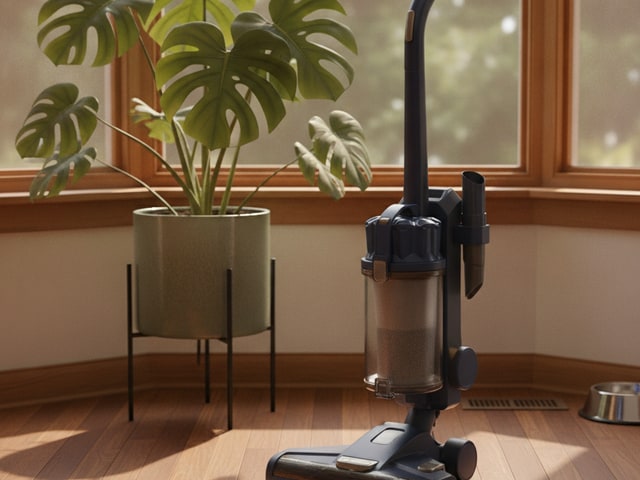
What does "replacing" a regular vacuum actually mean?
Replacing a regular vacuum means taking over its entire job, and that's where the robot vacuum conversation gets muddled, because there are actually two very different jobs involved. Most people conflate them, which is why so many robotic cleaner owners end up frustrated or pleasantly surprised depending on which job they were hoping to hand off.
Surface dust, crumbs, and pet hair make up the first job: maintenance cleaning. Robots handle this well. They run on a schedule, cover the floor without you touching anything, and keep hard floors and shorter-pile rugs looking tidy between deeper sessions. This is the job a floor-cleaning robot can take off your plate.
Carpet fibers, stair treads, and upholstery make up the second job, and it's a different task entirely. Ground-in carpet dirt, heavy debris, furniture surfaces, tight edges along baseboards: none of these respond well to a robot's lighter touch. CHOICE, the Australian consumer testing lab, found this in their own lab work, noting that robots don't clean as well as a good stick or barrel vacuum, especially on carpets and edges.
Consumer Reports, the US product testing organization, put it similarly. You should not expect a stick, handheld, or robotic vacuum to have the same cleaning power as a full-sized canister or upright. RTINGS, an independent testing organization, frames it the same way in their 2026 robot vacuum overview. Robots are built for frequent, low-intensity sessions that prevent buildup rather than tackle it after the fact.
The real question isn't "can a robot replace my vacuum?" It's "which part of my cleaning routine am I actually trying to automate?" A robotic cleaner covers a large portion of the daily floor pass. The whole routine including carpets, stairs, and furniture? No robot on the market does that yet.
A hybrid strategy is where most experts land: a robot running daily for routine upkeep, paired with a conventional vacuum used weekly or bi-weekly for the deeper work. For many households, that combination cuts how often you pull out the upright, sometimes dramatically, without asking you to accept worse results on carpets or corners.
Suction power compared: how big is the gap?
The gap between robot and regular vacuum suction is not a small engineering difference. It's an order of magnitude. Most robot vacuums produce 1,000–3,000 Pa of suction pressure, according to SmartHomeOwl, a smart home product resource. The cheapest handheld conventional vacuums on the market start at around 8,000 Pa.
Currys, the large UK appliance retailer, puts the Air Watts comparison in even starker terms. Mid-range robotic cleaners typically rate at 5–20 Air Watts. Cordless stick vacuums at a similar price point run at 150–250 AW. That's not a modest difference. You're looking at roughly 10 to 30 times the cleaning power for the same money, depending on which models you compare.
Pa and Air Watts measure different things, which is why robot and regular vacuum specs look like they belong to different categories entirely. Pa (pascals) measures static suction pressure, how hard the motor pulls at a sealed point. Air Watts measure actual airflow combined with suction, which is closer to real-world cleaning performance on open surfaces like carpet. The full breakdown of what CFM and Air Watts actually mean makes the numbers a lot clearer in context. For this comparison, the point is that high Pa on a robotic cleaner doesn't translate directly to the same cleaning result as high AW on an upright.
Vacuum Type | Typical Suction (Pa) | Typical Suction (Air Watts) | Carpet Debris Removal |
|---|---|---|---|
Budget to mid-range robot vacuum | 1,000–3,000 Pa | 5–20 AW | ~75% (VacuumWars test data) |
High-end robot vacuum (flagship tier) | 8,000–12,000 Pa | Not typically rated in AW | Improved, but still trails uprights on plush rugs |
Cordless stick vacuum (mid-range) | Not typically rated in Pa | 150–250 AW | Not tested separately in VacuumWars data |
Corded upright vacuum | Not typically rated in Pa | 150–270+ AW | ~98% (VacuumWars test data). Cleverobot, a technical vacuum guide, found corded uprights deliver roughly 3x the vertical lift vs high-end robots on carpet with longer fibers. |
Budget handheld corded vacuum | 8,000+ Pa | Varies | Outpulls most robot vacuums on raw suction |
VacuumWars ran head-to-head carpet tests and found uprights pulled out about 98% of test debris versus about 75% for robots, a 23-percentage-point shortfall that shows up as visible dirt left behind in real homes.
Flagship robots have closed some of this distance. Top-tier models now reach 8,000–12,000 Pa, which sounds competitive until you factor in how corded uprights perform on heavy carpet. Cleverobot's technical analysis found that those corded machines still produce roughly three times the vertical lift on carpet with longer fibers compared to even the most powerful robots at that Pa range. More suction pressure doesn't automatically mean more dirt extracted from the pile. Brush design, airflow volume, and motor continuity all play a role that Pa alone doesn't capture.
Tile, laminate, and shorter-pile rugs are where that performance difference shrinks considerably, which is exactly why robots work well for everyday upkeep on those surfaces. On anything thicker, the suction difference becomes something you notice with your eyes.
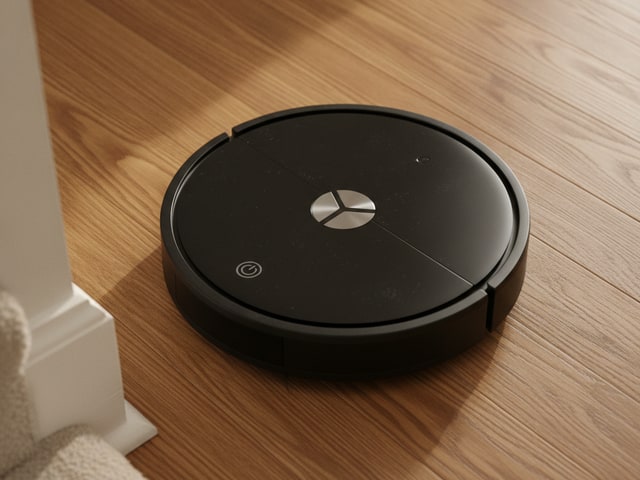
Where robot vacuums outperform regular vacuums
Robot vacuums win on convenience, frequency, and running costs, not raw cleaning power. Once you've accepted that they won't replace a weekly deep clean on carpet, these advantages are worth understanding before you decide whether to add one to your home.
Hands-free automation on a schedule. A robot runs whether you're home, at work, or asleep. You set a daily schedule once, and hard floors and low-pile rugs stay tidy without you touching anything. That value has nothing to do with suction power. It's time you get back every single day.
Frequency beats intensity for surface dirt. A robotic cleaner running daily prevents dust and pet hair from accumulating in the first place. A conventional vacuum used once a week tackles a week's worth of buildup in one session. Both approaches can produce a clean floor, but the robot's approach means you're rarely looking at a visibly dirty surface between sessions. ShavyClean, a cleaning advice site, puts it well: robots won't clean as deep, but they clean more often, keeping your home reliably tidy.
Running costs are a fraction of a corded machine. Robot vacuums draw 30–60 watts per session, according to ProFastClean, a cleaning product resource. Corded uprights pull 700–1,200 watts. Run a robot daily for a year and you're looking at roughly $5–$10 in electricity. A corded upright used weekly costs more per session even though it runs less often. Over five years, that electricity difference adds up to real money.
Under-furniture reach that uprights physically can't match. Most robotic cleaners measure 9–10 cm tall, letting them slide under beds, sofas, and low shelving units where dust and pet hair collect undisturbed for months. An upright or canister can't follow. You'd need an attachment and a flashlight to do manually what a robot handles on every run.
Noticeably quieter operation. Robots typically run at 55–65 decibels, roughly the volume of a normal conversation. Traditional vacuums land in the 70–80 dB range, closer to a busy restaurant. That difference matters when you want to run a cleaning cycle during a video call, while a baby naps, or late at night without disturbing anyone. The quietest vacuum cleaners under $100 guide covers manual options that also keep the volume down, especially when noise is a deciding factor for you.
None of these advantages fix the suction shortfall on heavy carpet. But for a household with mostly hard floors, a pet that sheds daily, and a busy schedule, these five factors make a robot a useful tool, not as a replacement, but as the machine that handles the job you'd otherwise skip.
Where regular vacuums still win
Regular vacuums hold a clear advantage anywhere the job requires raw extraction power, physical reach above the floor, or precision in tight spaces. Robots handle the daily surface pass well, but the five situations below are where a traditional machine is irreplaceable right now.
Deep carpet cleaning on thick and high-pile rugs. CHOICE has found in repeated lab tests that robot vacuums don't clean as well as traditional vacuums on carpet, and the shortfall is most visible on thicker pile. A robot's brush head sits low and moves fast. It picks up what's sitting on the surface but doesn't agitate fibers deeply enough to pull out grit, fine dust, or pet dander that's worked its way down. An upright or canister with a motorized rotating brush drives into the pile and extracts what's actually in there, not just what's on top.
Stairs, upholstery, and anything above floor level. Robots are floor-only machines. They cannot climb stairs, reach a sofa cushion, or clean curtains. A home with carpeted stairs needs a handheld or a full-size vacuum with a hose and upholstery tool for those surfaces regardless of what robot you own. The same applies to mattresses, car interiors, shelving, and any fabric surface above ground. A robot running daily doesn't reduce how often you need to vacuum the stairs. It just handles the floor around them.
Edges, corners, and baseboards. Most robotic cleaners use a spinning side brush to sweep debris toward the main suction inlet, but that design leaves a thin strip along walls and in tight corners. A conventional vacuum with a narrow nozzle attachment gets flush against baseboards and into corners where dust and hair collect. Run a robot for a month and then vacuum manually, and the amount of debris along the edges is usually a clear sign of what the robot missed on every single run.
Heavy debris and large messes. RTINGS notes directly in their robot vacuum overview that most robots aren't powerful enough to handle heavy debris or large piles of material. Cereal, cat litter tracked across the floor, a knocked-over plant, or anything with real weight and volume will either clog a robot, get pushed around, or simply sit there. A traditional vacuum handles those situations in one pass without the risk of jamming or spreading the mess further.
Versatility across surfaces with the right attachment. A conventional vacuum with a full set of tools covers floors, stairs, upholstery, car seats, curtains, shelves, and vents. That flexibility is something no robot can replicate because the robot's entire design is optimized for one surface type. The vacuum attachments guide covers which tools you actually need and what each one does, including the differences between a narrow nozzle tool, a dusting brush, and a turbo pet tool.
Both machine types have different jobs, and a manual vacuum covers the ones a robot physically cannot do. For most households, the question isn't which one to own. It's knowing which one to reach for and when.
Which floor types and home layouts suit each vacuum?
Floor type and home layout are the two factors that most reliably predict whether a robot vacuum will cover your needs, supplement a conventional vacuum, or frustrate you within a week. The table below maps each surface and layout scenario to the machine that handles it best, so you can match your actual home to the right tool before spending anything.
Floor Type or Layout | Robot Vacuum | Regular Vacuum | Recommended Approach |
|---|---|---|---|
Hard floors (tile, laminate, hardwood) | Strong — picks up surface dust, crumbs, and pet hair daily without user effort | Adds little for routine cleaning on these surfaces; useful for edges and corners | Robot handles everyday upkeep; check out best hardwood floor vacuums under $120 for occasional deep passes |
Low-pile rugs and area rugs | Good — manages surface debris and pet hair on shorter pile | Better for ground-in dirt and thorough occasional cleaning | Robot for daily upkeep; manual vacuum monthly or when visible soiling appears |
Thick carpets and high-pile rugs | Weak — picks up surface debris only; cannot extract grit or pet dander from deep fibers | Clearly superior — motorized brush agitates pile and pulls out what's actually in the carpet | Traditional vacuum is the primary tool; robot adds limited value on these surfaces |
Multi-level homes with stairs | Cannot clean stairs at all — physically impossible for any current robot model | Essential — upright, canister, or handheld with hose attachment required for stair treads and risers | Manual or handheld vacuum for stairs regardless of what robot you own; robot covers each floor independently |
Cluttered rooms (cables, toys, small objects) | Requires pre-tidying before each run; cables and small items cause jams and missed areas | Navigates around obstacles with user control — you steer, you decide what to avoid | Traditional vacuum for cluttered spaces; robot works best in rooms you can clear quickly before scheduling a run |
Open-plan layouts | Strong — unobstructed floor space lets mapping and navigation work as intended | Works fine but requires more manual effort to cover the same area | Robot is well-suited here; open layouts are where autonomous navigation performs closest to its potential |
Compartmentalized layouts (narrow doorways, raised thresholds) | Challenged — narrow doorways and raised thresholds can block or strand the robot | No issue — you carry it, you control where it goes | Test your robot's threshold clearance before relying on it for multi-room coverage; a conventional vacuum handles transitions without any adjustment |
A home with mostly hard floors and an open layout is where a robotic cleaner comes closest to handling day-to-day cleaning on its own. Add stairs, heavy carpet, or a floor covered in kids' toys, and a traditional vacuum stops being optional and becomes the machine you actually depend on.
Cost and lifespan: what you'll spend over 5–10 years
Robot vacuums cost more upfront and wear out faster, so the real price comparison only makes sense when you look at what you'll spend across a decade rather than at the checkout. The table below lays out the full picture across both machine types, from purchase price through consumables and eventual replacement.
Cost Factor | Robot Vacuum | Regular Vacuum |
|---|---|---|
Upfront price — budget tier | $150–$300 | $60–$150 |
Upfront price — mid-range | $300–$700 | $80–$600+ |
Upfront price — premium | $700–$1,500+ | $200–$600 |
Typical lifespan | 3–5 years | 10–15 years |
Annual electricity cost | ~$5–$10/year (30–60W per session) | Higher per session (700–1,200W), but used less often |
Ongoing consumables | Roller brushes, filters, mop pads, battery replacement | Bags or filters; fewer wear parts overall |
Replacements over 10 years | 2–3 robots at budget tier; 1–2 at premium | 0–1 replacements for a quality model |
Hybrid setup (robot + budget stick/handheld) | Add a budget stick or handheld to cover stairs, upholstery, and deep carpet cleaning a robot cannot handle |
Budget robots at $250 that last four years cost you $62.50 per year before you factor in a single roller brush or filter. A $200 upright that runs for 12 years works out to under $17 per year. Even a $500 mid-range robot replaced twice over a decade totals $1,000 in hardware alone, while a quality conventional vacuum at the same price point may never need replacing in that window.
Consumables add up differently on each side. Robots go through roller brushes, filters, and mop pads on a regular cycle, and the battery in most models degrades over time enough to noticeably shorten run time. Traditional vacuums need bags or filters replaced periodically, but the motor and brush assembly typically outlast the machine's useful life without intervention. Keeping a robot running well costs more in parts per year than most owners anticipate when they buy one. The Vacuum Maintenance 101 guide covers the specific steps that actually make a difference for stretching the life of any vacuum you own.
A robot paired with a budget stick or handheld changes the budget calculation entirely. Daily floor maintenance from the robot plus a manual option for stairs, upholstery, and carpet passes means two purchases instead of one. For many households that's still a reasonable split, but it's worth knowing going in that "getting a robot vacuum" often means "getting a robot vacuum plus something else" before your cleaning routine is actually covered.
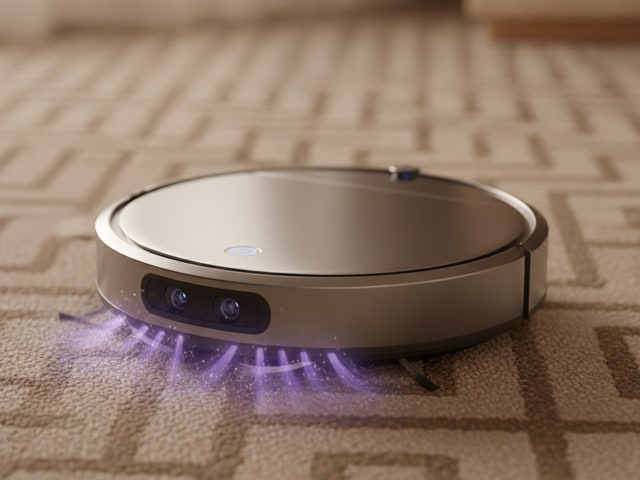
How robot suction is catching up: recent trends
Robot vacuum suction has improved faster in the last two years than in the previous decade, but the distance from corded uprights on heavy carpet hasn't closed as much as the spec sheets suggest. Two models show how far the category has pushed.
Roborock Q Revo MaxV, a flagship robot vacuum, uses HyperForce suction rated at 6,000 Pa. According to RobotSpecialist, a robot vacuum review site, that's roughly double what most robotic cleaners produce. For routine floor passes on hard floors and shorter-pile rugs, that extra pull makes a real difference in how much pet hair and fine dust the machine lifts in a single pass.
Ecovacs DEEBOT X11 OmniCyclone, a combo robot vacuum and mop from Ecovacs, pushes the numbers further. It claims 19,500 Pa and 18 liters per second of airflow using the brand's BLAST technology. On paper, those figures start to look competitive with some corded machines. In practice, Pa measures static pressure at a sealed point, not the sustained airflow that pulls dirt trapped in fibers out of carpet pile. A high Pa rating on a robot doesn't translate to the same carpet extraction you'd get from a corded upright with equivalent Air Watts.
Flagship robots as a category now reach 8,000–12,000 Pa at the top end. Cleverobot's analysis found that corded uprights still produce roughly three times the vertical lift on heavy carpet compared to robots in that Pa range. More suction pressure in a compact, battery-powered chassis doesn't automatically mean more dirt extracted, because brush design, motor continuity, and airflow volume all contribute to what actually comes out of the carpet.
RTINGS confirmed in their 2026 overview that robots remain best suited for routine upkeep despite these suction improvements. The category is getting better at the job it already does well. It hasn't yet changed what that job is.
Combo vacuum-mop robots are the other trend worth watching. More models now handle both vacuuming and mopping in a single run, which sounds like a meaningful step toward replacing a full cleaning routine. For light spills and everyday floor film, they do reduce how often you need to mop manually. For anything heavier, a stuck-on mess or a spill that needs scrubbing, the mop pad on a robot doesn't apply enough pressure or agitation to finish the job. The 2-in-1 Vacuum and Mop Combos guide covers what budget models actually handle versus where they fall short.
Decision guide: should you get a robot, a regular vacuum, or both?
Floor type, home layout, and daily routine determine which setup actually works, and for most households, the answer isn't one or the other. Run through the four scenarios below to find where you land, then check the decision factors at the end before you buy anything.
Small hard-floor apartment, minimal clutter, no pets. A robot vacuum alone can cover most of your cleaning needs here. Hard floors are where autonomous machines perform closest to their potential, and without shedding pets or kids adding daily mess, a scheduled daily run keeps surfaces tidy without much intervention. You'll still want something for edges and any raised surfaces, but a robot paired with a cheap handheld for occasional spot work is a reasonable single-device strategy. The best cordless stick vacuums for studio apartments covers compact options that fill those gaps without taking up much storage space.
Mixed flooring with some carpet, one level, pets. A robot for day-to-day cleaning plus a cordless stick for weekly thorough cleaning is the setup that works best here. The robotic cleaner handles the hard floors and low-pile areas on autopilot, which matters a lot when a dog or cat is shedding daily. The cordless stick covers the carpet passes the robot can't finish, pulling hair and grit out of the pile that the robot only skims. Buying both doesn't have to be expensive: a mid-range robot in the $300–$500 range teamed with a budget stick gives you full coverage without doubling your spend on premium machines.
Multi-level home with stairs, thick carpets, kids or pets. A regular upright or canister vacuum is the non-negotiable tool here, and a robot supplements rather than replaces it. Stairs are physically impossible for any current robot model, heavy carpet requires the kind of sustained airflow that battery-powered machines can't match, and kids plus pets generate the heavy debris loads that RTINGS specifically flags as beyond what most robots handle. A robotic cleaner still earns its place on the hard-floor areas between levels, but the upright does the work that actually matters in this home.
Mobility limitations or physical difficulty with manual vacuuming. A robot handles the floor cleaning that's hardest to do manually, and a lightweight handheld covers stairs and furniture without requiring you to push a heavy machine around. This is one scenario where a robot reduces physical demand rather than just saving time. The floor passes happen automatically. You only pick up the handheld for surfaces the robot can't reach. For the manual portion, the best lightweight vacuums under 8 pounds covers options that are easy to carry up stairs and maneuver around furniture without strain.
Five questions to answer before you buy
Floor type percentage matters more than almost anything else. More than half your home in thick carpet or high-pile rugs means a robot alone will disappoint you. Mostly hard floors with a rug or two means a robot covers the bulk of daily cleaning without help.
Number of levels is a hard cutoff. One floor means a robot can cover the whole space on a single run. Two or more floors mean you either need a second robot for each level or a manual vacuum for the stairs regardless of what else you own.
Pet shedding level changes the math on frequency. A heavy shedder means daily floor passes are necessary, which is exactly where a robot earns its cost. Light or no shedding means the frequency advantage matters less, and a standard vacuum used twice a week may be enough on its own.
Budget for one device versus two is worth thinking through honestly. A robot that handles routine floor passes but leaves you needing a stick vacuum for carpet means two purchases, not one. A single quality upright used three times a week often outperforms a cheap robot plus a cheap stick in actual cleaning results, especially when the combined cost of both stretches your budget.
Tolerance for robot maintenance is the factor most buyers overlook. Robots need roller brushes cleaned, filters replaced, and eventual battery swaps. A traditional machine with fewer wear parts and a 10-to-15-year lifespan is the more practical long-term choice when that kind of upkeep sounds like more hassle than just vacuuming manually.
Tips to get the most out of a robot vacuum
A robot vacuum works best when you set it up to succeed rather than just dropping it on the floor and hoping for the best. A few consistent habits make the difference between a machine that keeps your floors tidy and one that gets stuck under the couch every third run.
Clear the floor before each run. Cables, charging cords, small toys, and loose socks are the most common reasons a robot gets stuck or misses large sections of a room. A two-minute tidy before the robot runs saves you from finding it tangled in a phone charger mid-cycle. The robot handles everything after that quick reset.
Schedule runs when the home is empty or quiet. Most robotic cleaners operate at 55–65 decibels, which is manageable but still noticeable during a video call or while a baby naps. Setting a daily run for mid-morning on a weekday, or during your commute, means the floor is already clean when you get home without the noise being anyone's problem.
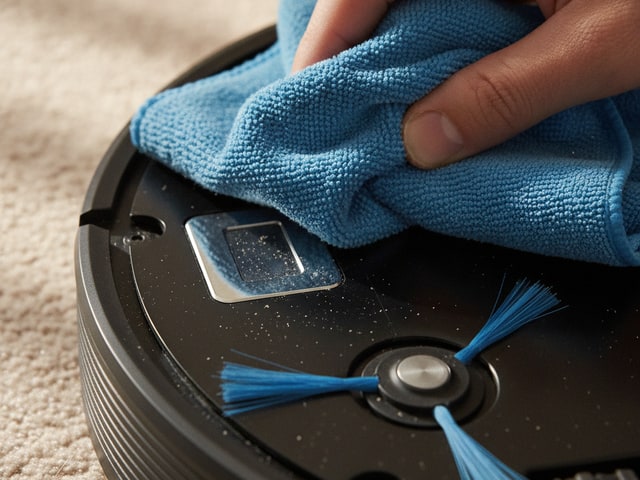
Clean the brushes, filters, and sensors on a regular cycle. Robots last three to five years on average, and that lifespan shortens fast when the roller brush is clogged with hair or the cliff sensors are dusty enough to cause navigation errors. A quick brush clean every week or two and a filter tap-out every few runs keeps suction and mapping accuracy where they need to be. The Vacuum Maintenance 101 guide covers the steps that matter most for extending any vacuum's life.
Use no-go zones and room mapping to protect problem areas. Most mid-range and premium robots let you draw virtual boundaries in the app. Pet water bowls, raised thresholds the robot bumps repeatedly, fragile floor lamps, and areas where cables tend to collect are all worth marking off. Spending ten minutes on the map when you first set up the robot prevents the same jam from happening every single day.
Pair the robot with a weekly manual session for everything it misses. Carpets, stair treads, edges along baseboards, and any surface above floor level need a traditional machine. Running a robot daily and an upright or canister once a week covers both jobs without either one doing the other's work. The Robot Vacuums for Pet Hair Under $200 guide covers which models handle shedding best at that price point, and what a manual vacuum still needs to finish.
Frequently asked questions
Can a robot vacuum fully replace a regular vacuum?
No, and testing from CHOICE backs this up clearly. Robot vacuums handle daily surface cleaning well, but they lack the suction and brush agitation to pull dirt from carpet fibers or reach stairs and upholstery. Most households need both a robot and a traditional vacuum for different jobs, not one instead of the other.
Do I still need a regular vacuum if I have a robot?
Almost certainly yes, unless your home is a small, mostly hard-floor space with minimal foot traffic. Robot vacuums can't clean stairs, raised surfaces, or corners reliably, so a stick or canister vacuum stays useful for those spots. Think of the robot as handling the daily pass and the regular vacuum as your monthly deep-clean tool.
Are robot vacuums good enough for thick carpets?
Not really. VacuumWars testing found uprights removed around 98% of debris from carpet versus roughly 75% for robots, and that shortfall widens on high-pile rugs where robot brushes can't agitate deep enough. A robot vacuum alone won't handle heavy carpet well for most homes.
Can robot vacuums clean stairs?
No robot vacuum on the market can navigate stairs. They stop at the edge, which means every step in your home still needs a handheld or stick vacuum. This is one of the clearest reasons a traditional vacuum stays necessary in multi-level homes.
How much electricity does a robot vacuum use compared to a regular vacuum?
Robot vacuums typically draw 30–60 watts per session, which works out to roughly $5–$10 a year in electricity. A corded upright runs at 700–1,200 watts but gets used far less often. The robot costs less to run annually, though the tradeoff is much lower suction from that smaller motor.
How long do robot vacuums last compared to regular vacuums?
Most robot vacuums last around 3–5 years before battery degradation or component wear becomes a real problem. Quality corded vacuums routinely reach 10–15 years with basic maintenance. Robot vacuums wear out two to three times faster than traditional models, so factor that into the total cost before assuming a robot is the cheaper long-term option.
Is it worth buying both a robot and a regular vacuum?
For most households, yes. The robot handles daily dust, crumbs, and pet hair on hard floors automatically, which means your regular vacuum only needs to come out for deep-cleaning sessions every week or two. You end up pulling out the upright far less often without giving up the cleaning quality that only a full-size machine provides.
Are robot vacuums good for pet hair?
On hard floors and low-pile rugs, robot vacuums do a solid job keeping pet hair from building up between manual cleans. Where they fall short is pulling hair that's worked deep into carpet fibers, where a motorized brush head on a stick or upright vacuum is still more effective. Daily robot runs reduce visible shedding noticeably, but they don't eliminate the need for a deeper pass on carpeted rooms.
How often should I run a robot vacuum vs a regular vacuum?
Running a robot vacuum daily or every other day keeps surface debris from accumulating, especially in homes with pets or kids. A traditional vacuum on carpets and edges once a week or every two weeks is still the standard recommendation from most cleaning experts. The more often the robot runs, the less ground the manual vacuum has to cover each session.