Best Dorm Room Vacuums: College-Friendly Cleaning Solutions
The Bissell Featherweight Lightweight Stick Vacuum, a convertible stick-to-handheld model, dominates dorm cleaning with compact storage and versatile reach for lofted beds and tight corners.
Your shoebox-sized dorm creates vacuum challenges when you're juggling thin walls, zero storage space, and a budget that's already stretched thin. The Bissell Featherweight wins over most students because it converts from a full stick to a handheld duster, letting you clean under lofted beds and inside cramped closets without storing two separate machines. The Tineco A10-D Plus works well on bare floors and edges, exactly what you need for those vinyl dorm floors and baseboards that collect everything. For busy students, the Narwal Freo Pro Vacuum Mop combines powerful suction with silent operation that won't wake your roommate during those late-night study sessions.
Dorm-friendly vacuums prioritize noise levels and storage footprint over cleaning power. Most dorms have paper-thin walls where a regular vacuum sounds like a leaf blower at 2 AM, but the right cordless model runs quietly enough for early morning cleanups without generating roommate complaints.
Carpet-and-vinyl combo rooms require specific cleaning approaches, and you'll discover which vacuum type actually fits your specific dorm layout and cleaning schedule. By the end, you'll know exactly which model to order for delivery to your residence hall.
Top 6 dorm room vacuums for college students
You need a vacuum that fits in a closet the size of a phone booth while staying quiet enough that your roommate won't throw a pillow at you during late-night cleaning sprees.
Bissell Featherweight Lightweight Stick Vacuum
This convertible model gets solid reviews from college students for versatility in cramped spaces, transforming from a full-length stick into a compact handheld duster. It solves the biggest dorm problem: reaching under lofted beds without storing two separate machines.
You get the reach to clean ceiling fans and the compact size to tackle tight corners between immovable furniture. The space-saving design means one machine handles both floor cleaning and detail work on desks, windowsills, and keyboard crumbs.
This model lacks power for thick carpets, but most dorms have thin industrial carpet where suction power matters less than maneuverability.
Tineco A10-D Plus Vacuum Cleaner
This cordless stick works well at edge cleaning on vinyl and linoleum floors common in student housing. The A10-D Plus performs where dorm cleaning gets tricky: along baseboards and in corners where dust bunnies multiply.
This model works well on bare floors but only passably on carpets, which actually matches most dorm layouts perfectly. You're dealing with thin carpet squares and hard flooring, not plush bedroom carpet that needs deep cleaning power.
The Tineco provides enough runtime for most single-room cleanups but you'll need to plan around charging time for deeper cleanups.
Narwal Freo Pro Vacuum Mop
This 2-in-1 robot combines powerful suction with AI-powered mopping and a self-cleaning base that washes and dries its own mop while auto-emptying dust. The Freo Pro handles both vacuuming and mopping without you touching anything for weeks.
Silent operation means you can run cleaning cycles during study hours or while your roommate sleeps. The compact design fits under most dorm furniture, and the self-maintenance system eliminates the daily upkeep that busy students skip.
The Freo Pro costs more than stick models, but you're paying for automated operation that fits your class schedule rather than demanding dedicated cleaning time.
Narwal Freo Z Ultra Robot Vacuum Mop
Dual HD cameras and AI navigation help this advanced model navigate around the obstacle course of backpacks, shoes, and furniture that characterizes student living. The powerful suction tackles everything from cereal spills to hair without requiring you to pre-clean the floor.
Real-time dirt sensing adjusts cleaning intensity automatically, spending more time on high-traffic areas near the door and less on spaces under your bed. The quiet running respects thin dorm walls and sleeping schedules.
Advanced obstacle avoidance means it won't get stuck on charging cables or knock over that precarious stack of textbooks, though you'll still want to pick up loose clothing before each cleaning cycle.
Narwal Freo Z10 Robot Vacuum Mop
Intelligent dirt detection in this model automatically identifies high-mess areas and adjusts cleaning patterns accordingly. The HEPA filter improves air quality in confined areas where particles and allergens build up quickly.
This 2-in-1 model fits the compact footprint requirements of shared spaces while providing both vacuum and mop functions. The intelligent system learns your room layout and optimizes cleaning paths for maximum coverage in minimal time.
The compact charging base takes up less floor space than traditional robot vacuum docks, important when every square foot of your dorm matters for storage and movement.
Eureka Cordless Models
Eureka cordless vacuums work as reliable back-to-school essentials for quick daily cleanups between deeper cleaning sprees. These lightweight vacuum options prioritize portability and ease of use over advanced features.
The straightforward design means fewer parts to break or lose during moves between dorm and home. Basic cordless operation handles routine maintenance like crumb cleanup and dust removal without complicated settings or attachments.
Budget-friendly pricing makes these models accessible for cost-conscious students who need functional cleaning without premium features they won't use in a small dorm environment.
What makes a vacuum perfect for dorm life?
A perfect dorm vacuum must fit in a closet smaller than most bathroom cabinets while running quietly enough that your roommate won't hate you for cleaning at midnight.
Dorm closets offer minimal storage space, which eliminates most upright models immediately. You need something that stores vertically or breaks down into compact pieces. Elevated beds create another challenge (you need enough reach to clean underneath without crawling on your hands and knees, but the vacuum still has to fit in that tiny storage space when you're done).
Noise levels matter more in dorms than other living situations because of minimal sound insulation and shared living spaces. A cordless stick vacuum typically runs quieter than corded uprights, making the difference between cleaning during study hours and waiting until your floor empties out. Most students discover that anything louder than normal conversation volume generates complaints from neighbors.
Mixed flooring presents the biggest cleaning challenge in student housing. Your room probably combines thin industrial carpet with vinyl or linoleum sections, plus that mysterious transition strip where crumbs love to hide. Handheld vacuum cleaners work well at detail work but lack the coverage for full-room cleaning, while traditional uprights struggle with the hard-to-soft transitions common in dorm layouts.
Weight becomes critical when you're hauling your vacuum between dorm and home during breaks. Heavier models can feel cumbersome when you're already managing laundry, textbooks, and everything else that defines college life. Many students find lighter models in the 3-6 pound range more manageable for daily use.
Budget constraints hit hardest here because most students cap vacuum spending around $40 while still needing something that won't break after one semester of abuse. You're looking for that balance where reliability meets affordability (expensive enough to actually work, cheap enough that you won't cry if your roommate's friend accidentally breaks it).
Air quality matters more in small rooms where particles and allergens build up quickly. A HEPA filter captures particles that would otherwise circulate through your room's limited air space, especially important if you're dealing with seasonal allergies or asthma in an environment you can't fully control.
Storage efficiency, noise control, and battery life matter most for dorm vacuums. Compact storage vacuums solve the space problem, but you still need enough versatility to handle everything from cereal spills to the dust that accumulates under immovable furniture.
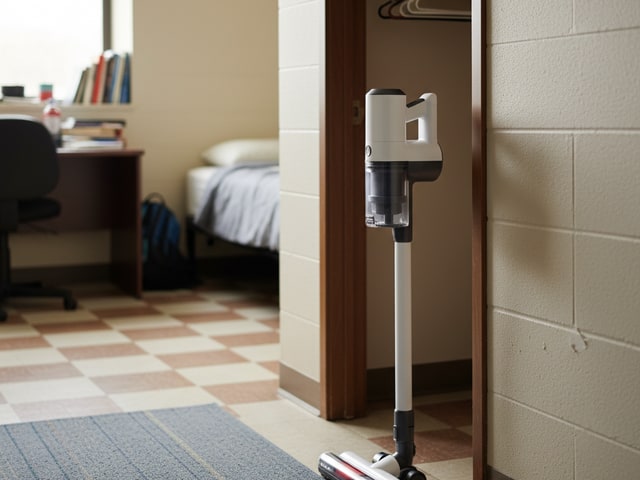
Cordless vs robot vs handheld: which type works best?
Cordless stick vacuums win for most students because they reach under elevated beds while storing in tiny closets, but robot models handle daily maintenance automatically if you can spare the floor space.
You're choosing between three fundamentally different approaches to dorm cleaning. Cordless stick vacuum models give you the reach to clean ceiling fans and under raised beds while folding down for closet storage. Most students prefer this versatility because dorm furniture creates cleaning challenges that handheld models can't handle.
Stick vacuums work well at the vertical cleaning that defines dorm life. You can reach the top of your wardrobe, clean under a bed frame, and tackle baseboards without crawling around immovable furniture. The convertible designs solve storage problems by eliminating the need for separate tools.
Robot vacuum options provide automated operation that fits your class schedule rather than demanding dedicated cleaning time. You set cleaning cycles during lectures and return to a clean room without lifting a finger.
Robotic models require clear floor space for navigation, which eliminates them for students who live in constant clutter. They also cost much more upfront, though the time savings appeal to students juggling heavy course loads. The silent operation means you can run them during study hours without disturbing roommates.
Handheld vacuum cleaners handle quick cleanups and tight spaces better than any other option, making them perfect for keyboard crumbs, desk dust, and car cleaning during trips home. They store in desk drawers and charge via USB in many cases.
The limitation hits when you need full-room coverage. Handheld models lack the power and capacity for thorough floor cleaning, forcing you to empty the bin multiple times during a single room cleanup. They work best as supplements to other cleaning methods rather than primary solutions.
Convertible 2-in-1 designs combine stick reach with handheld precision in one compact unit. This hybrid transforms from full-length cleaning to detail work without storing separate machines, solving the space problem that eliminates most traditional options.
These hybrid models cost more than basic handheld units but less than buying separate stick and handheld vacuums. You get the versatility to handle both daily maintenance and deep cleaning without doubling your storage requirements.
Type
Best For
Storage Space
Price Range
Main Limitation
Cordless Stick
Lofted beds, full room cleaning
Closet or wall mount
$100-$300
Battery runtime
Robot
Busy schedules, daily maintenance
Charging dock on floor
$300-$800
Needs clear navigation paths
Handheld
Quick cleanups, tight spaces
Desk drawer
$30-$150
Limited coverage area
2-in-1 Convertible
Space-conscious versatility
Compact closet storage
$80-$250
Compromise on specialized features
Your dorm layout determines the best option. Students with bed frames need the reach of stick models, while those with busy schedules benefit from robotic automation. Best Cordless Stick Vacuums for Studio Apartments covers the top stick options if you're leaning toward maximum versatility in minimal space.
Noise levels: keeping roommates and neighbors happy
Dorm walls are basically cardboard, so a vacuum that sounds like a jet engine at 7 AM will earn you enemies faster than borrowing someone's charger without asking.
You need to understand that most traditional vacuums run louder than cordless models. In a dorm with walls thinner than pizza boxes, that translates to your neighbors hearing every cleaning session through multiple rooms. Whisper-Quiet Cleaning technology in modern cordless models runs much quieter (closer to normal conversation volume).
Both the Freo Pro and Freo Z Ultra feature quiet performance specifically designed for shared living spaces. These robot models run so quietly you can set cleaning cycles during study hours without disturbing anyone. The advanced motor design eliminates the high-pitched whine that makes traditional vacuums particularly annoying through thin walls.
Timing matters as much as volume when you're sharing space with people who have different sleep schedules. Clean between 10 AM and 8 PM on weekdays to avoid complaints, avoiding early morning classes and late-night study sessions. Weekend mornings before 10 AM are generally off-limits unless you want passive-aggressive notes taped to your door.
Sound-dampening features make the biggest difference in the dorm environment. Look for models with brushless motors, which eliminate the mechanical grinding noise of traditional brush systems. Sealed dust chambers prevent the rattling sound of debris bouncing around inside the vacuum. Variable speed controls let you dial down power for quieter operation during sensitive hours.
Cordless stick models naturally run quieter than corded uprights because they use smaller, more efficient motors. The trade-off comes in cleaning power, but most dorm messes don't require industrial-strength suction anyway. You're handling dust, crumbs, and hair (not ground-in dirt that demands maximum power).
Robot vacuums offer the ultimate noise solution because you can set them to run when nobody's around. Program the Narwal models to clean during your chemistry lab, and you'll come back to a clean room without anyone hearing a thing. The automated approach eliminates the social friction of manual cleaning entirely.
If you're shopping for maximum silent performance on a tight budget, Quietest Vacuum Cleaners Under $100: Neighbor-Friendly Options covers the best low-noise models that won't break your college budget while keeping the peace with everyone around you.
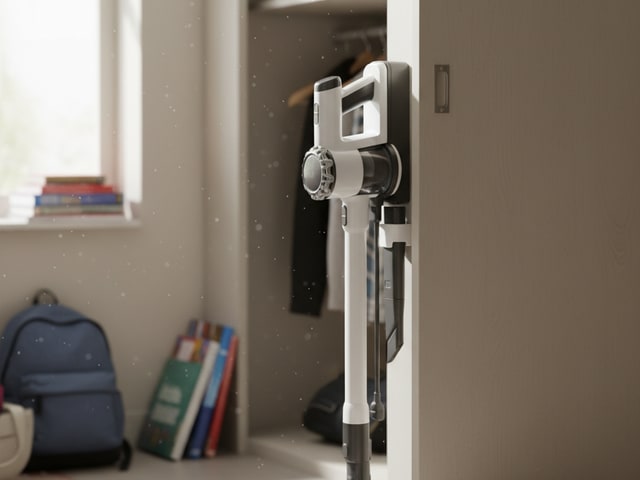
Storage solutions for tiny dorm spaces
Measure your dorm closet dimensions before ordering any vacuum because most models won't fit in the 24-inch-wide, 18-inch-deep storage spaces that define residence hall living.
You need exact measurements of height, width, and depth to avoid the nightmare of a vacuum that arrives but can't fit anywhere in your room. Standard dorm closets barely accommodate hanging clothes, let alone cleaning equipment. Stick vacuums typically measure 44-48 inches tall when assembled, which exceeds most closet heights unless you can remove or adjust the top shelf.
Under-bed storage works perfectly for raised dorm beds where you gain 5-6 feet of vertical clearance underneath. Slide storage bins or vacuum bags under the raised frame to keep your cleaning equipment accessible but out of sight. The Featherweight breaks down into compact pieces that fit in standard under-bed containers.
Raised bed storage requires measuring the clearance height between your mattress and the floor. Most loft systems provide 60-72 inches of space, enough for standing storage solutions that keep vacuums upright and ready to use.
Wall-mounted charging stations solve the storage problem for cordless models while keeping batteries topped off between uses. Over-the-door hooks work in most dorms without violating damage policies, though check your residence hall rules first. Command strips rated for 5+ pounds handle lightweight cordless vacuums without permanent installation.
Charging station placement matters because you need access to electrical outlets that aren't already claimed by your laptop, phone charger, and mini-fridge. The space behind your door combines wall access with outlet proximity.
Shared storage arrangements with roommates cut costs and space requirements in half when you split a single vacuum between two people. Coordinate cleaning schedules and establish ground rules about maintenance responsibilities before making the purchase. The crevice tool and other attachments need designated storage spots that both roommates can access easily.
Roommate sharing works best with models that require minimal maintenance and have simple operation. Robot vacuums eliminate scheduling conflicts because they clean automatically without requiring either person to be present.
Budget breakdown: what to spend on a dorm vacuum
You'll find the best value in the $50-$100 range where decent cordless stick vacuums meet college budgets, though handheld options under $50 work for minimal cleaning needs.
Under $50 gets you basic handheld models like the Black+Decker Dustbuster handheld vacuum, which handles quick cleanups but struggles with full-room coverage. These compact units work well at desk crumbs and spot cleaning but require multiple passes and frequent emptying for anything beyond surface maintenance. Battery life typically runs 10-15 minutes, barely enough for a thorough dorm cleaning.
Handheld limitations become obvious when you're trying to clean under a bed frame or reach ceiling corners. You'll spend more time emptying the tiny dust bin than actually cleaning, and the weak suction won't handle embedded dirt in even thin dorm carpets.
The $50-$100 range provides functional stick vacuums that actually work for college life. This range includes models like the Eureka cordless options and entry-level Bissell stick vacuums that provide real suction power with decent battery life. You get 20-30 minutes of runtime and enough reach to clean under raised furniture without crawling around.
Stick models in this price tier handle the mixed flooring common in dorms (vinyl, thin carpet, and those mysterious transition strips where everything collects). The convertible designs let you detach the handheld portion for detail work while maintaining the reach needed for full-room cleaning.
Premium options between $100-$200 add features like self-cleaning systems and AI navigation found in robot models. The Freo series operates in this range, offering automated operation that fits your class schedule. Advanced models include HEPA filtration, app connectivity, and quiet performance for shared living spaces.
Robot vacuums cost more upfront but eliminate the time investment of manual cleaning. You set cleaning cycles during lectures and come back to a clean room without touching anything. The automation appeals to students juggling heavy course loads who can't dedicate time to regular cleaning routines.
Cost-sharing with roommates cuts expenses in half while solving storage problems. Split a $150 robot vacuum between two people, and you're each paying $75 for automated cleaning that works for both schedules. Establish ground rules about maintenance responsibilities and charging schedules before making the purchase.
Resale value matters more in college than other situations because you'll likely upgrade to apartment-appropriate models after graduation. Stick vacuums from established brands like Bissell and Tineco hold value better than generic models. Robot vacuums depreciate faster but offer higher functionality during ownership.
Consider alternatives before buying anything. Many student housing facilities loan vacuums through front desks or RAs, eliminating the purchase entirely. Swiffer sweeper systems cost $20-30 and handle light maintenance on hard floors, though they won't work for carpeted areas or deep cleaning needs.
If your dorm has minimal carpeting and you're comfortable with basic maintenance, a $30 Swiffer plus occasional borrowed vacuum use saves money. Students with carpeted rooms or higher cleanliness standards need the $75-150 investment in a dedicated vacuum that actually works.
Dorm cleaning alternatives: do you even need a vacuum?
Many colleges provide loaner vacuums through residence hall offices and RAs, making a personal vacuum unnecessary if you're comfortable with basic maintenance and occasional deep cleaning.
You should check with your residence hall front desk before buying anything. Most dorms keep a few vacuum cleaners available for student checkout, typically for 2-4 hour periods. The catch: these shared machines often lack suction power after months of abuse, and you'll need to plan cleaning around availability during busy periods like finals week.
Loaner programs work best for students with minimal carpeting who only need deep cleaning once or twice per semester. You'll still need daily maintenance solutions, but borrowing eliminates the storage and cost problems of ownership.
The Swiffer WetJet system handles most hard floor maintenance in dorms with primarily vinyl or linoleum flooring. You get both dry sweeping and wet mopping in one compact tool that stores in closets easily. Replacement pads cost about $15 per month for regular use, making this cheaper than vacuum ownership over a single semester.
Swiffer limitations become obvious with any carpeted areas or embedded debris that requires actual suction. The system works well at surface dust and spills but won't handle the deep cleaning needed before move-out inspections.
Black+Decker Dustbuster models provide spot cleaning power for quick messes without the storage requirements of full-size models. These compact units handle keyboard crumbs, desk dust, and small spills while charging via standard outlets.
Handheld models work as supplements to other cleaning methods rather than primary solutions. You'll empty the tiny dust bin multiple times during room cleaning, and the 10-15 minute battery life barely covers thorough maintenance.
The cost-benefit analysis depends entirely on your dorm situation and cleaning standards. Students in mostly hard-floor rooms with access to reliable loaner vacuums save $100-200 by skipping personal ownership. A $30 Swiffer plus occasional borrowing covers 80% of cleaning needs without storage headaches.
Carpeted rooms or students with higher cleanliness standards need dedicated vacuum ownership. The time spent coordinating loaner schedules and dealing with weak suction from overused machines quickly outweighs the upfront investment in a personal model.
Consider your move-out requirements before deciding. Many colleges charge cleaning fees for rooms that don't meet inspection standards, and borrowed vacuums often lack the power needed for deposit-saving deep cleaning. A personal vacuum pays for itself if it prevents even one $50 cleaning charge.
Smart features worth paying for in college
AI-powered navigation systems and self-cleaning technology justify their higher price tags in college dorms because they eliminate the daily maintenance that busy students regularly skip.
Smart navigation technology in robot vacuums adapts to the obstacle course of backpacks, textbooks, and furniture that characterizes student living. Dual HD cameras map your room layout and remember where you typically drop your gym bag or stack dirty laundry. This smart mapping prevents the vacuum from getting stuck on charging cables or knocking over that precarious tower of energy drinks.
Traditional robot vacuums require you to pre-clean the floor before each cycle, defeating the purpose for students who barely have time to do laundry. Advanced navigation eliminates this prep work by automatically adjusting cleaning paths around temporary obstacles.
Self-cleaning system features in models wash and dry their own mops while auto-emptying dust bins, reducing maintenance to zero. You can go weeks without touching the vacuum beyond setting cleaning cycles through the app. This automation matters more in college than other situations because manual maintenance gets skipped during finals week, group projects, and social events.
Self-maintenance technology prevents the performance degradation that kills cheaper models after one semester of neglect. The system handles filter cleaning, mop washing, and debris disposal automatically, maintaining consistent cleaning power without your intervention.
HEPA filter systems improve air quality in small rooms where particles and allergens build up quickly with limited ventilation. These medical-grade filters capture particles that would otherwise circulate through your room's confined air space, particularly important for students dealing with seasonal allergies or asthma in environments they can't fully control.
Standard filters in budget vacuums often blow fine dust back into the air during cleaning, making allergy symptoms worse rather than better. HEPA filtration ensures that captured particles stay captured, improving the air you breathe during study sessions.
App connectivity and scheduling features let you run cleaning cycles during chemistry lab or while you're at the library, coming back to a clean room without coordinating with roommates or disrupting study schedules. Smart scheduling adapts to your class timetable, running automatically when your room is empty and avoiding conflicts with sleep or study time.
Remote control through smartphone apps eliminates the noise conflicts that plague manual vacuum use in student housing. You set cleaning for optimal times rather than whenever you remember to clean, keeping both your room and your relationships with neighbors in good shape.
Frequently asked questions
Can you have a vacuum in a dorm?
Yes, most colleges allow personal vacuums in dorm rooms. Check your housing contract for any restrictions on battery-powered devices or wattage limits, as some schools have fire safety rules about lithium batteries. Cordless stick vacuums are typically fine, but shop vacs or high-wattage uprights might need approval.
Should I bring a vacuum to college?
You should bring one if your dorm has carpeting or if you're particular about cleanliness. Many student housing facilities have loaner vacuums available through the front desk or RA office, but they're often heavy uprights that are inconvenient for quick cleanups. A personal handheld or stick vacuum gives you more control over when and how you clean.
What size vacuum fits in a dorm closet?
Look for vacuums under 8 pounds and 4 feet tall when fully assembled. Cordless stick models work best because they're slim and can hang on hooks. Standard dorm closets are about 2 feet deep, so avoid bulky canisters or wide uprights that won't fit alongside your clothes.
Do dorms provide vacuums?
Most student housing facilities have shared vacuums you can borrow from the front desk, custodial closet, or RA office. These are usually heavy upright models that work fine for weekly cleaning but aren't convenient for quick spill cleanup. You'll typically need to leave your student ID as collateral and return it within a few hours.
Are cordless vacuums good for dorm rooms?
Cordless vacuums are ideal for dorms because they're lightweight, quiet, and store easily. The Featherweight converts to a handheld for tight spaces. Battery life is plenty for a typical 120-square-foot dorm room, and you won't need to hunt for outlets in confined areas.
How much does a good dorm vacuum cost?
Expect to spend $50-200 for a reliable dorm vacuum. Budget handhelds start around $40, while quality stick vacuums run under $200. Avoid the cheapest options under $30 - they typically break within a semester and lack the suction for even thin dorm carpeting.
What vacuum won't disturb neighbors in dorm?
Look for models with quiet operation. The Freo Pro operates in silent mode, and most cordless stick vacuums run quieter than traditional uprights. Avoid shop vacs or powerful uprights that can wake roommates through thin dorm walls, especially during quiet hours.
Is a Dyson worth it for college?
A Dyson is overkill for most dorm situations unless you have severe allergies or plan to use it in apartments after graduation. At $400-750, you're paying for premium engineering you won't fully utilize in a small carpeted room. The A10-D Plus or Featherweight handle typical dorm messes for a fraction of the cost.